Pregnancy nutrition · November 13, 2026
First-trimester gut bacteria only modestly separated small or preterm newborn outcomes in 213 pregnancies
A microbiome model performed better for inflammation markers than for birth outcome—and did not reliably predict micronutrient levels or anaemia.
Researchers enrolled 213 women in rural Bangladesh during the first trimester, collected blood and stool samples, and recorded birth outcomes within 72 hours of delivery. Exactly 106 infants met a combined definition of small vulnerable newborn—preterm, low birth weight or small for gestational age—and 107 did not.
A machine-learning model based on the maternal gut microbiome had an area under the curve of 0.653 for distinguishing the two groups. An AUC of 0.5 is no better than chance and 1.0 is perfect, so this was modest discrimination with a wide 95% confidence interval of 0.518 to 0.789.
The microbiome predicted two inflammation markers more clearly: AUC 0.742 for blood alpha-1-acid glycoprotein and 0.793 for faecal calprotectin. It did not reliably predict micronutrient concentrations, anaemia, C-reactive protein or atypical enteropathogenic E. coli.
Higher alpha-1-acid glycoprotein was associated with nearly twice the adjusted odds of the combined newborn outcome, but faecal calprotectin was not. The cohort points to a possible microbiome–inflammation pathway; it does not offer a stool test, probiotic treatment or proof that changing gut bacteria improves birth outcomes.
Prospective pregnancy cohort in Bangladesh (4 November 2026)
213
Women enrolled in trimester one
106 vs 107
Small-vulnerable vs other newborns
0.653
Microbiome model AUC for birth outcome
0.793
AUC for faecal calprotectin
1.98
Adjusted odds ratio for blood inflammation marker
Observational cohort with hold-out testing of machine-learning models. The combined newborn outcome included three different clinical pathways and prediction was modest.
- Small for gestational age, low birth weight and preterm birth overlap but are not the same outcome.
- An AUC reports how often a model ranks a randomly chosen case above a non-case; it does not set a clinically useful cutoff.
- Alpha-1-acid glycoprotein rises with systemic inflammation and is also affected by other health conditions.
- The researchers used held-out samples rather than reporting only performance on the data used to train the models.
- First-Trimester Maternal Gut Microbiome and Small Vulnerable Newborns: A Prospective Cohort StudyBJOG / PubMed · Primary cohort abstract with outcome counts, model performance and inflammation associations. Published 4 November 2026.
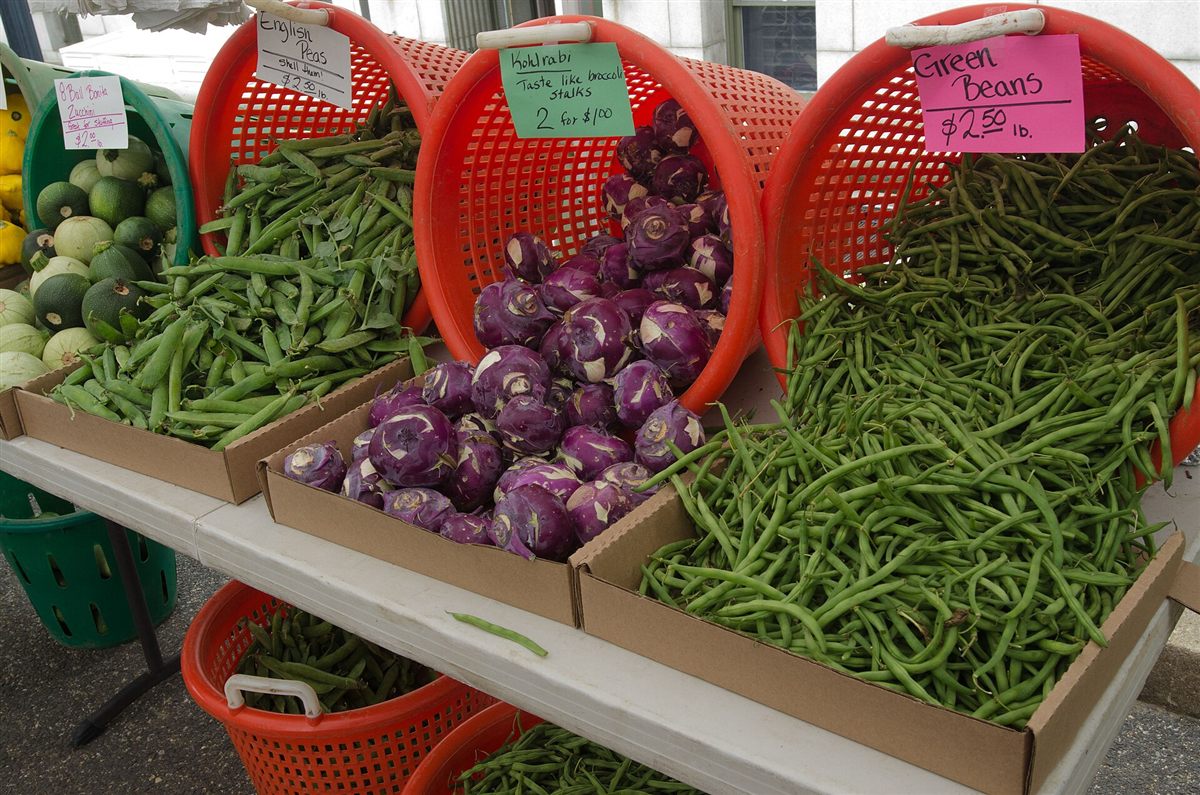
- 2012 USDA Farmers Market OpeningWikimedia Commons · Lance Cheung / USDA, public domain. General maternal-nutrition illustration only.
General information, not prenatal screening or treatment advice. Pregnancy nutrition, infection, growth and preterm-birth risk should be discussed with a qualified maternity-care team.
Analysis by NutroPractic from the sources listed. Written for general readers; it does not replace advice from your own doctor.
From our articles
Our guides on this subject
Plain-language guides on nutrition and wellness, backed by research.
Women's health
Eating while breastfeeding: extra calories, iodine, caffeine, fish and alcohol, with the actual numbers
Breastfeeding usually adds about 330–400 kcal a day, but the smaller numbers can matter more: 290 mcg iodine, 400 IU vitamin D for baby, 8–12 oz fish a week, and a caffeine total you can actually add up.
6 Nov 2026
Women's health
Nausea in pregnancy: ginger, vitamin B6, small meals and when it's hyperemesis, from the trials
Only 1.8% of women in one diary study had nausea just in the morning. Ginger at 1 g a day, B6 at 30 to 75 mg and doxylamine with B6 each have trial data, while diet advice has none. The score to track it, the doses, and the signs that mean a phone call.
5 Nov 2026

Gut health
Probiotic capsules: which ones have trial evidence, what they can do, and when to skip them
Children on antibiotics: 8% got diarrhoea with a probiotic, 19% without. Older hospital patients: 10.8% with, 10.4% without. Which capsules have evidence, what three guidelines say about IBS, what a course costs per case prevented, and who shouldn't take them.
2 Nov 2026
Newsfeed for your website
Want this feed on your website?
Add it to any site with one copy-and-paste snippet. No sign-up, and it updates itself every hour.
Start with a virtual consultation
Tell Dr. Triveni what you want to change. You will leave with a clear next step, whether you are in Toronto, London, New York or Chennai.