Pregnancy · October 27, 2026
Finland's register lists 556 babies with the facial signs of fetal alcohol damage in 28 years. A new model says that, even on cautious assumptions, more than a thousand children a year are born with the full disorder
Researchers pieced together surveys, biomarker studies and school screening from other countries to estimate how many Finnish pregnancies meet alcohol. Exposure has fallen a lot since the 1990s, but about one pregnancy in three still does, often in the weeks before anyone knows there is a baby.
Fetal alcohol spectrum disorders (FASD) are the range of lasting problems, from learning and behaviour difficulties to growth and facial differences, that alcohol can cause when it reaches a baby before birth. They are the leading preventable cause of intellectual disability, and they are badly undercounted almost everywhere. Finland is a stark example. Between 1990 and 2017 its national register of congenital malformations recorded only 556 cases of FASD with the characteristic facial features, while the one earlier national guess, made by an expert in the late 1980s, put the number at 600 to 3,000 children born every year.
A team of Finnish researchers, writing in PLOS ONE on 21 October, tried to close that gap with a mathematical model. Finland has no school screening study of FASD, the method now treated as the gold standard, and only a handful of biomarker or fully anonymous surveys of drinking in pregnancy. So the team combined what exists: Finnish studies of alcohol use in pregnancy, national birth statistics, World Health Organization figures on heavy episodic drinking among women (60 g of pure alcohol or more on one occasion), and school screening studies from nine comparable countries in Europe and North America.
On self-reports, including drinking before the pregnancy was known, the share of Finnish babies exposed to any alcohol in the womb fell from about 75% in the 1990s to about 32% in the early 2020s. Much of that drop followed Finland's explicit advice, from 2004, to avoid alcohol entirely in pregnancy. The authors warn that the same advice makes women less willing to report drinking, so they treat the self-reported figure as a floor rather than the true number. Heavy exposure, estimated mainly from biomarker studies and anonymous reports, fell less: from about 9% of pregnancies to about 6%.
Drinking before a pregnancy is recognised barely moved over the decades, and timing matters. The facial features of fetal alcohol syndrome form around the fifth week of pregnancy, when many women do not yet know they are pregnant. Finnish women also have a long tradition of binge drinking, and across the nine countries with school studies, the share of women who binge drink tracked FASD rates fairly closely (correlation 0.70, though with so few countries this did not reach statistical significance).
Put together, the two modelling approaches suggest FASD in roughly 5% to 7% of each year's births, with a lower bound near 3%. For 2020 to 2024, the cautious versions of the models give an average of 1,243 to 2,352 new children with FASD a year. These are estimates built on many assumptions, borrowed from other countries' data and sensitive to how honest surveys are, and the authors say biomarker studies and real case-finding in Finland are needed to pin them down. Even so, the numbers sit far above the register's count, and the authors call them deliberately cautious next to school studies in Sweden and Poland. Their main message for prevention is to start before pregnancy, because the riskiest drinking often happens before the test turns positive.
Modelled prenatal alcohol exposure and FASD in Finland, 1990 to 2025, from Finnish surveys and biomarker studies, national birth statistics, WHO drinking data and school screening studies in nine comparable countries (PLOS ONE, 21 October 2026)
75% → 32%
Babies exposed to any alcohol in the womb, 1990s vs early 2020s, from self-reports including before pregnancy was known (likely an underestimate)
9% → 6%
Pregnancies with heavy alcohol exposure, 1990s vs early 2020s (uncertainty ranges 7–11% and 4–8%)
5–7%
Modelled share of births with FASD, depending on the model and year (full range 3–10%)
1,243–2,352
Estimated new children with FASD a year in 2020–2024, cautious versions of the two models
556
FASD cases with the characteristic facial features recorded in Finland's malformation register, 1990–2017
0.70
Correlation between women's binge drinking and FASD rates across nine countries with school studies (p = 0.079)
A modelling study, not a count of diagnosed children. Any exposure was estimated from self-reported drinking in pregnancy (treated as a minimum); heavy exposure combined binge-drinking rates, delayed pregnancy recognition, biomarker studies and anonymous reports; FASD was estimated two ways, from a multiplier linking women's binge drinking to FASD rates in school screening studies abroad (Model M) and from a conventional ratio of one FASD case per 13 exposed pregnancies (Model L). A ±20% change in the self-reported drinking input shifted the estimates by about a fifth either way. The abstract and results give slightly different end points for one model (5.6% and 5.0% for the 2020s); the 5–7% range is the authors' own summary in the discussion. Funded by the Emil Aaltonen Foundation; the authors declare no competing interests.
- Finland screens every pregnant woman with the AUDIT alcohol questionnaire at her first antenatal visit, at 8 to 11 weeks, and refers high scorers to specialist clinics. In 2017, 1,094 women attended them, about 2.2% of pregnancies.
- Biomarker studies tell a different story from questionnaires: in Spain, alcohol markers in mothers' hair showed some exposure in 63% of pregnancies but heavy exposure in only 2%, while in Poland the figures were 50% and 10%.
- In US data the average pregnancy is recognised at about 5.5 weeks, and 23% at 7 weeks or later, so drinking before a positive test often overlaps the weeks when the face and brain are forming.
- School screening studies in countries with drinking patterns similar to Finland's have found FASD in 1.8% to 12.2% of the children examined, with 12.2% in Poland and 9.2% observed in Sweden.
- Estimated incidence and number of new cases with prenatal alcohol exposure and fetal alcohol spectrum disorders in Finland 1990–2025PLOS ONE · The study, open access, published 21 October 2026: methods, results, sensitivity analysis and limitations
- Full text, figures and tablesPLOS ONE · Trend figures for exposure and FASD, the Finnish studies used and the school screening studies abroad
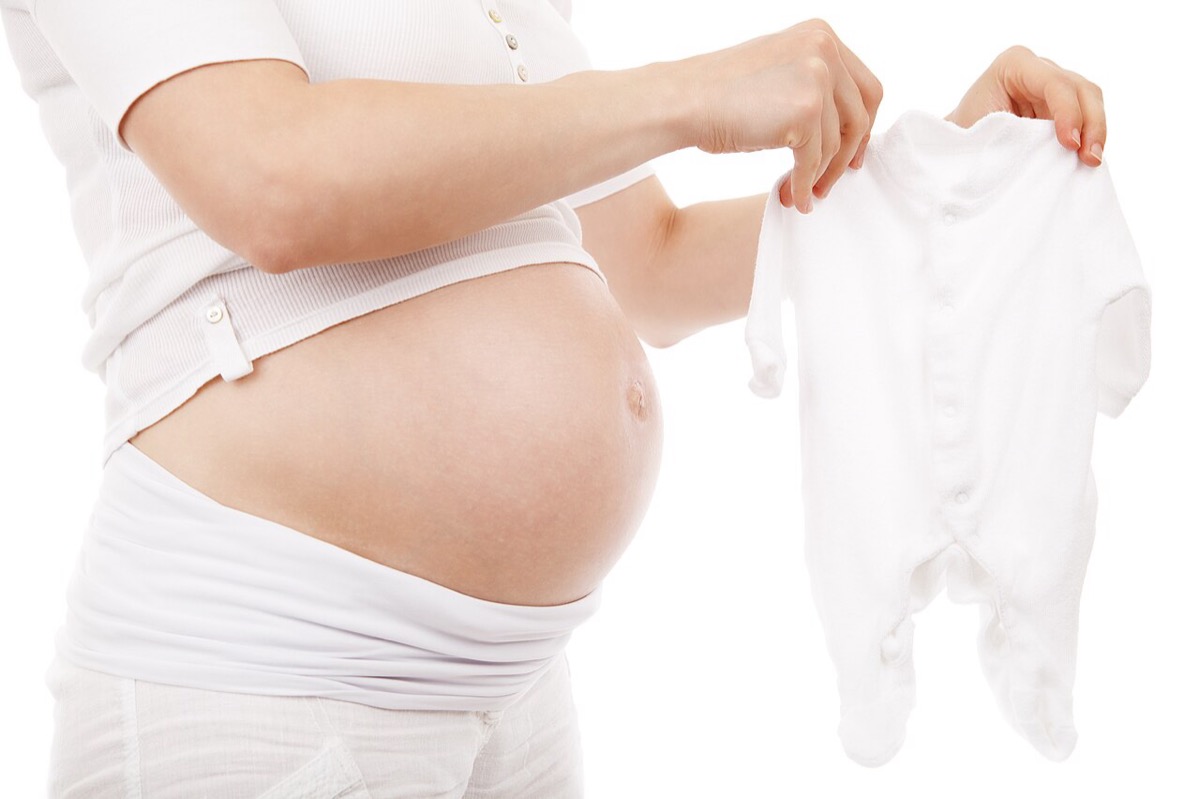
- Pregnant woman holds white babygrow sleeperWikimedia Commons (Petr Kratochvil) · The photo, CC0
General information, not medical advice. This study estimates population numbers from models and does not diagnose any child. If you are pregnant, planning a pregnancy or worried about alcohol use, talk to your doctor, midwife or a registered dietitian; if you are concerned about a child's development, speak to their paediatrician.
Analysis by NutroPractic from the sources listed. Written for general readers; it does not replace advice from your own doctor.
From our articles
Our guides on this subject
Plain-language guides on nutrition and wellness, backed by research.
Women's health
Eating while breastfeeding: extra calories, iodine, caffeine, fish and alcohol, with the actual numbers
Breastfeeding usually adds about 330–400 kcal a day, but the smaller numbers can matter more: 290 mcg iodine, 400 IU vitamin D for baby, 8–12 oz fish a week, and a caffeine total you can actually add up.
6 Nov 2026
Heart health
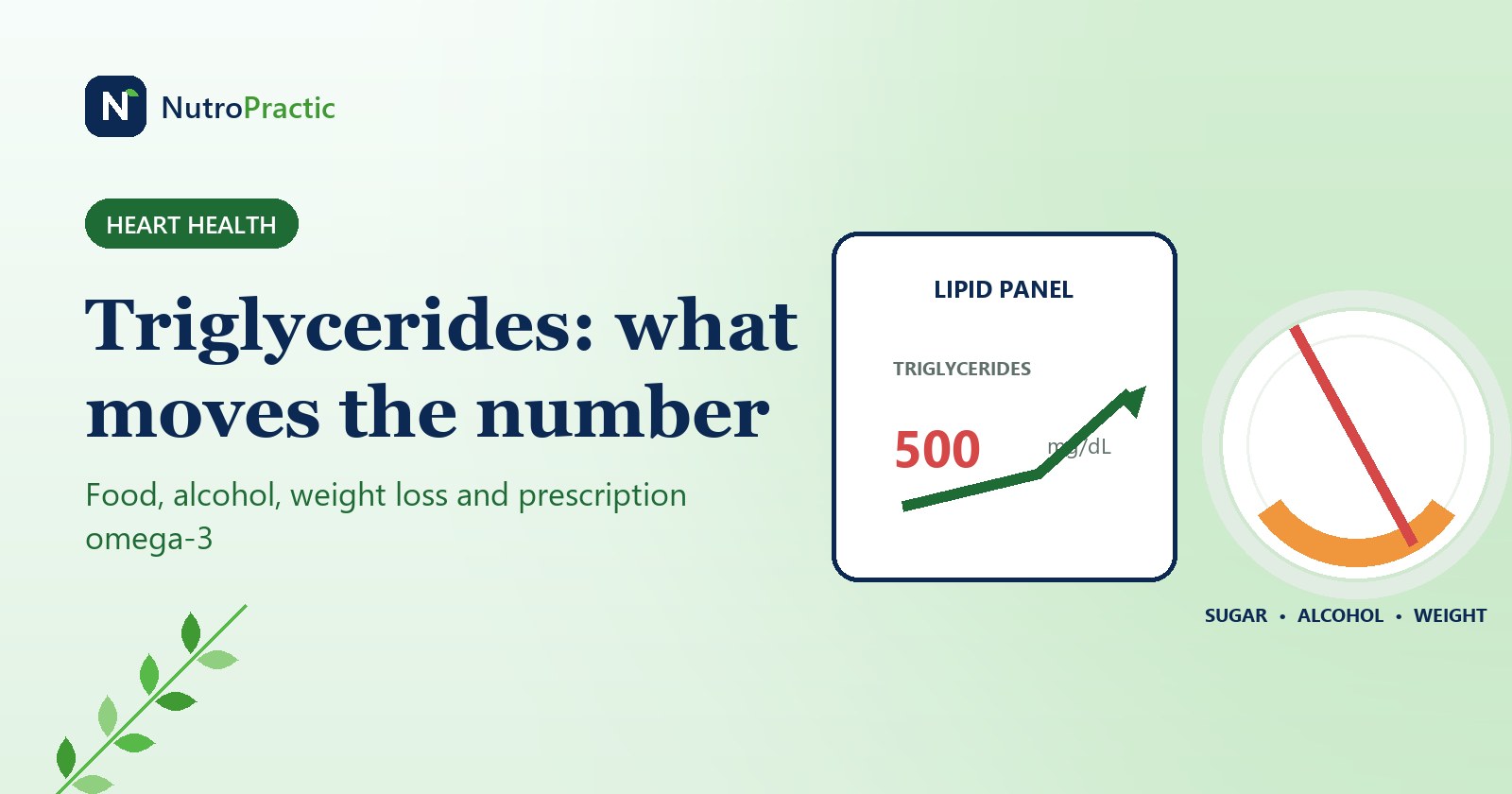
Triglycerides: what food, alcohol, weight loss and omega-3 actually change
A 5-10% weight loss often lowers triglycerides by about 20-30%, as can 4 g/day of prescription omega-3. Here is what 150, 500 and 1,000 mg/dL mean, which changes have numbers behind them, and when a result needs prompt care.
9 Nov 2026
Women's health
Nausea in pregnancy: ginger, vitamin B6, small meals and when it's hyperemesis, from the trials
Only 1.8% of women in one diary study had nausea just in the morning. Ginger at 1 g a day, B6 at 30 to 75 mg and doxylamine with B6 each have trial data, while diet advice has none. The score to track it, the doses, and the signs that mean a phone call.
5 Nov 2026
Newsfeed for your website
Want this feed on your website?
Add it to any site with one copy-and-paste snippet. No sign-up, and it updates itself every hour.
Start with a virtual consultation
Tell Dr. Triveni what you want to change. You will leave with a clear next step, whether you are in Toronto, London, New York or Chennai.