Gut health · October 8, 2026
A fermented brown rice powder for ulcerative colitis: in a trial that waited 20 years to be published, symptoms didn't improve, though an inflammation marker may have
Fifty-two people with ulcerative colitis in Osaka took a daily powder of brown rice fermented with koji mould, or a lookalike made of roasted flour, for 14 weeks. Symptom scores improved in about one in five on either. A blood marker of inflammation fell in more of the rice-powder group, but not by a margin the trial could be sure of. The study ran in 2006 and appeared this month, paid for by the powder's maker.
Fibre has a good reputation in gut disease, but ulcerative colitis, an inflammation of the lining of the large bowel, is one place where the evidence is still patchy. A trial published in JGH Open on 5 October 2026 tested a Japanese health food built around fibre: brown rice and rice bran fermented with Aspergillus oryzae, the koji mould behind sake, miso and soy sauce. The powder, sold in Japan as FBRA, is about a quarter fibre by weight. Mice given it were protected from a chemically induced colitis, but it had never been tried in patients.
The trial itself is old. Researchers recruited 56 adults with ulcerative colitis at Osaka Chuo Hospital between October 2006 and April 2007, and 52 started on the study food. None were on steroids or immune-suppressing drugs, and most were taking the standard anti-inflammatory 5-ASA. Half took the fermented rice powder, building up over two weeks to six 3.5 g sachets a day (21 g); the other half took granules of lightly roasted wheat flour that looked the same and had almost no fibre. Neither the patients nor their doctors knew which was which. After 14 weeks, a three-month break and 14 weeks on the other product, the groups swapped, but the main comparison was the first 14 weeks.
On the question the trial was built to answer, the powder did nothing measurable. The clinical activity index, a 21-point score covering diarrhoea, blood in the stool, pain and general well-being, improved in 6 of 26 people on fermented rice (23%) and 5 of 26 on the dummy (19%), and got worse in more than half of each group. After the swap, fewer people improved on the rice powder than on the dummy. The hopeful signal was in the blood: high-sensitivity C-reactive protein, a marker of inflammation, fell in 17 of 26 on the rice powder (65%) against 10 of 26 on the dummy (38%). That gap is just short of statistical significance, and only clears the line when the six people who stopped taking the powder are left out.
There are good reasons to hold that signal lightly. 'Improved' here meant any fall at all, however small, so the trial counts people rather than measuring how far their inflammation dropped, and it reports no colonoscopy results after treatment. Six of the 26 starting on the rice powder asked to stop in the first 14 weeks, five of them because of nausea or a feeling of fullness, against two on the dummy, both because their colitis got worse. The study was small, ran at one hospital and is published almost 20 years after the last patient joined. Genmaikoso, the Sapporo company that makes the powder, supplied both products and paid for the data centre, while the authors declare no conflicts of interest. The authors call it exploratory and ask for a larger trial, which is the right reading: a hint worth testing, not a reason to add a sachet to treatment.
First 14 weeks, fermented brown rice powder (21 g a day) vs a roasted-flour dummy
52
Adults with ulcerative colitis who started, 26 per group, average age about 41
23% vs 19%
Symptom score improved, rice powder vs dummy (p = 0.73)
58% vs 54%
Symptom score got worse, rice powder vs dummy
65% vs 38%
High-sensitivity CRP fell, rice powder vs dummy (ratio 1.70, 95% CI 0.97–2.98)
6 of 26 vs 2 of 26
Asked to stop the study food, mostly nausea or fullness on the rice powder
2006 → 2026
Recruitment ended in April 2007; the paper came out on 5 October 2026
From the open-access paper (CC BY 4.0) in JGH Open, published online 5 October 2026. A single-centre, double-blind, randomised crossover trial at Osaka Chuo Hospital; the main comparison is the first 14-week period. Any fall in a score or blood value counted as an improvement. Leaving out the people who stopped the powder, CRP fell in 75% vs 42% (ratio 1.80, 95% CI 1.05–3.08). Test foods and data-centre costs were provided by the powder's maker.
- Aspergillus oryzae, or koji, has been used in Japanese kitchens and breweries for well over a thousand years; the Brewing Society of Japan named it the country's 'national fungus' in 2006, the year this trial began.
- At 21 g a day, the fermented rice powder supplied only about 5 g of fibre, less than a fifth of the 30 g a day that UK health guidance suggests for adults.
- C-reactive protein is made by the liver within hours of inflammation starting anywhere in the body, so it can rise with a cold or a sprained ankle as well as a colitis flare.
- Ulcerative colitis affects only the large bowel and always starts at the rectum; Crohn's disease, the other main inflammatory bowel disease, can appear anywhere from mouth to anus.
- Unpublished trials are a known problem in medicine: when results that look disappointing stay in a drawer, the published evidence ends up looking better than the truth. Late publication, as here, still helps fill that gap.
- Efficacy of Fermented Brown Rice by Aspergillus oryzae (FBRA) in Ulcerative Colitis: A Double-Blind Randomized TrialJGH Open, 5 October 2026 · Open access; all trial figures in this item
- Full text on PubMed CentralPMC, US National Library of Medicine · Methods, results tables, funding statement
- PubMed record 42840273PubMed, US National Library of Medicine · Abstract and indexing
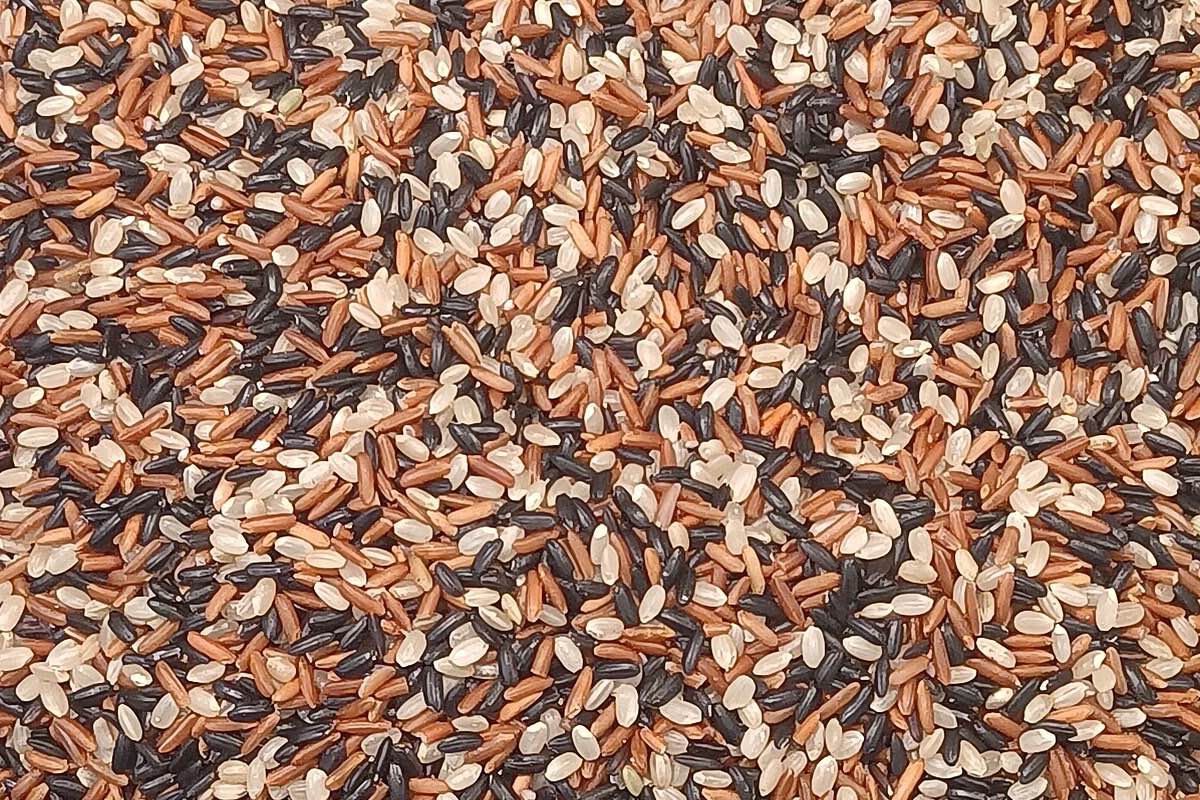
- Tricolor brown rice (photo)Fumikas Sagisavas, via Wikimedia Commons · CC0 image
General information, not medical advice. Ulcerative colitis needs care from a doctor; don't stop or change prescribed treatment or add supplements without talking to your gastroenterologist. Bloody diarrhoea, severe abdominal pain or fever need prompt medical attention.
Analysis by NutroPractic from the sources listed. Written for general readers; it does not replace advice from your own doctor.
Newsfeed for your website
Want this feed on your website?
Add it to any site with one copy-and-paste snippet. No sign-up, and it updates itself every hour.
Start with a virtual consultation
Tell Dr. Triveni what you want to change. You will leave with a clear next step, whether you are in Toronto, London, New York or Chennai.