Tests and results · October 7, 2026
Skipping breakfast before a blood test? Ten million results say it matters for only a few tests
A hospital in South Korea compared almost ten million routine test results by how long patients had gone without food. For most tests the fast made no real difference. For four, it did.
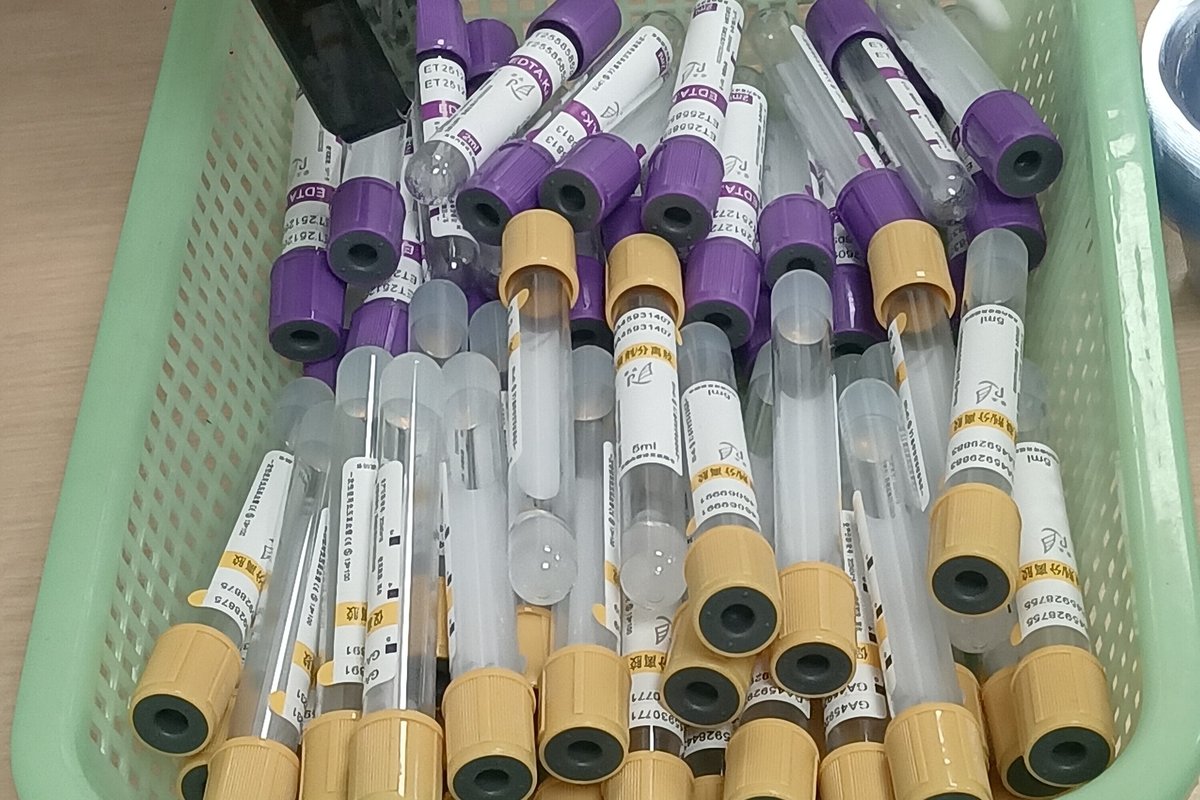
Many people arrive for a blood test hungry, because the instructions said to fast. A study published in JAMA Internal Medicine on 28 September 2026 asked how much that fast actually changes the numbers. Laboratory doctors from Seoul used the records of adult outpatients at a 670-bed university hospital in the Seoul area, collected between February 2021 and December 2023, where the time since the patient's last meal was written down at the blood draw.
The dataset held 9,755,547 results from 101,148 patients across 372 different tests. Comparing groups who had fasted under 8 hours, 8 to 12 hours, and over 12 hours, 27 tests showed differences big enough to matter by European laboratory standards. But when the researchers compared the same people tested on different days, only 10 held up, which suggests the rest came from differences between patients rather than from food. The clearest effects with under 8 hours of fasting were higher glucose (10.8%), triglycerides (20.1%), the liver enzyme GGT (14.8%) and the pancreatic enzyme lipase (36.4%). Fasting beyond 12 hours added nothing: no test differed meaningfully between the 8 to 12 hour and the over 12 hour groups.
The authors conclude that fasting rules should be set test by test rather than applied to every blood draw. This is one hospital in one country, and the data are observational, so it does not change what your own doctor asks of you. If you are told to fast for a glucose or lipid test, do so; and if a long fast makes you dizzy, or you take medicine for diabetes, ask whether you really need to.
The study at a glance
9.76 million
Test results analysed
101,148
Adult outpatients
372
Different laboratory tests
10
Tests with a meaningful fasting effect in the same people
+36.4%
Lipase after less than 8 hours of fasting
Figures checked on the journal abstract (JAMA Internal Medicine, published online 28 September 2026, via its PubMed record). The percentage differences compare under 8 hours of fasting with longer fasts. Differences were judged against the European Federation of Clinical Chemistry and Laboratory Medicine's allowable error limits.
- Fasting for a blood test usually means water only. Plain water is normally allowed and helps the person drawing the blood find a vein.
- Triglycerides rise after a fatty meal and can stay up for hours, which is why they moved most among the common tests in this study.
- Several countries already accept non-fasting cholesterol tests for routine heart-risk checks; fasting is kept for specific situations, such as very high triglycerides.
- Fasting Duration and Differences Across Routine Laboratory TestsJAMA Internal Medicine, 28 September 2026 · Journal article
- PubMed record 42804179US National Library of Medicine · Abstract with all figures used here
General information, not medical advice. Follow the fasting instructions your doctor or laboratory gives you; if you have diabetes or feel unwell when fasting, ask them before your test.
Analysis by NutroPractic from the sources listed. Written for general readers; it does not replace advice from your own doctor.
Newsfeed for your website
Want this feed on your website?
Add it to any site with one copy-and-paste snippet. No sign-up, and it updates itself every hour.
Start with a virtual consultation
Tell Dr. Triveni what you want to change. You will leave with a clear next step, whether you are in Toronto, London, New York or Chennai.