Cancer research · November 9, 2026
Researchers found a fat-cell protein helped breast-cancer cells spread in obese mice — that is a mechanism, not a human treatment
Blocking circulating FABP4 reduced lung metastasis across preclinical models, but neither a food change nor a medicine was tested in people.

Obesity is linked with worse outcomes in several cancers, but a population link does not reveal the molecular route. In mouse models of breast cancer, researchers focused on fatty-acid-binding protein 4, or FABP4, which fat cells release at higher levels in obesity. They found that circulating FABP4 attached to a membrane lipid called PIP2 on a subset of cancer cells and activated signals tied to migration.
The team used complementary models: tumour cells injected into the bloodstream, cells implanted into mammary fat, and mice genetically prone to spontaneous mammary tumours. High-fat-diet obesity increased lung metastasis. Removing FABP4 throughout the animal or specifically from fat cells reduced it, and a neutralising antibody that blocked FABP4 also suppressed metastatic spread in the models.
This work connects a circulating protein to cancer behaviour in cells and mice; it does not show that a particular food causes metastasis or that weight loss, an FABP4 antibody or any supplement treats breast cancer. Mouse tumours and engineered obesity cannot reproduce the full course of human disease. The useful result is a target for further drug and human-tissue research, not an action for patients to take.
A preclinical chain of evidence
3 model types
Injected, implanted and spontaneous-metastasis mouse systems
3–4 months
High-fat feeding before tumour-cell injection in one model
FABP4
Fat-cell-derived circulating protein investigated
PIP2
Cancer-cell membrane lipid identified as its binding partner
Preclinical
Cell and mouse evidence; no treatment trial in people
Mechanistic animal and cell study. Multiple models strengthen biological plausibility but do not establish effectiveness or safety in humans.
- Metastasis means cancer cells have spread from the original tumour to another organ.
- FABP4 normally helps handle fatty acids inside fat cells and immune cells.
- A target can work in a mouse and still fail as a human medicine because biology, dose and toxicity differ.
- Cancer treatment decisions should never be based on a single preclinical paper.
- Circulating FABP4 promotes obesity-associated breast cancer lung metastasis through PIP2Cell Reports, 2 November 2026 · Primary preclinical study; models, FABP4 source, PIP2 mechanism and antibody findings checked against the open article summary and results.
- Strawberry sundaeWikimedia Commons · Fumikas Sagisavas; CC0; general food illustration only.
General information, not medical advice. This was cell and animal research, not a diet or treatment trial. People with cancer should discuss nutrition and treatment only with their oncology team.
Analysis by NutroPractic from the sources listed. Written for general readers; it does not replace advice from your own doctor.
From our articles
Our guides on this subject
Plain-language guides on nutrition and wellness, backed by research.
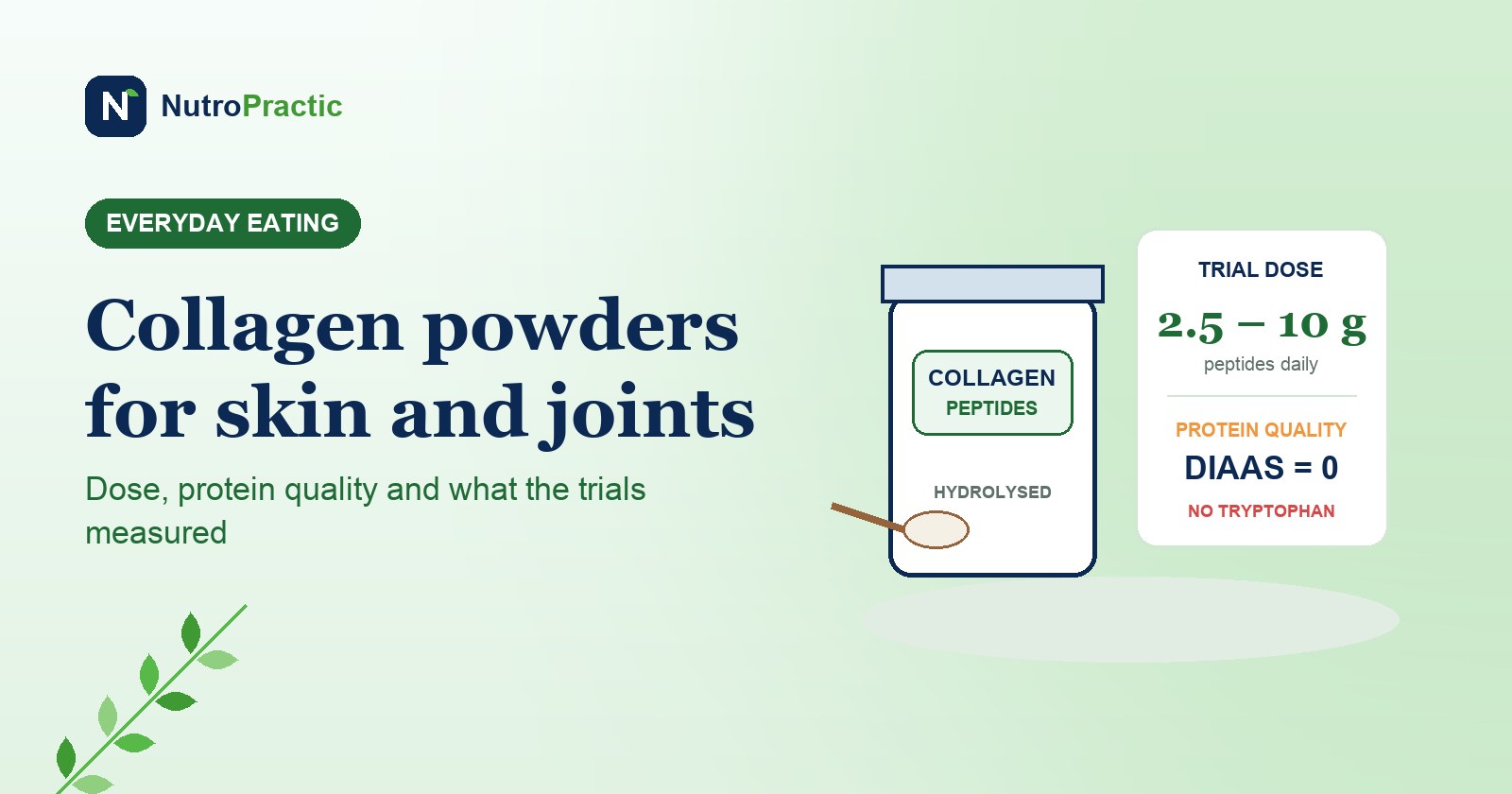
Everyday eating
Collagen powders for skin and joints: dose, protein quality and what the trials measured
A 10 g scoop gives 9 g protein, but its protein quality score is zero. Here is what 19 skin trials and knee studies measured at 2.5 g to 10 g daily—and what collagen cannot do.
10 Nov 2026
Everyday eating
Protein bars and shakes: what you get per 100 calories
Four current labels range from 6.3 to 20 g protein per 100 kcal. Here is how bars, shakes, eggs, yogurt and lentils compare—and when a supplement actually helps.
6 Nov 2026
Everyday eating
Food label claims decoded: 'no added sugar', 'multigrain', 'natural' and 'high protein'
A no-added-sugar biscuit with only 13% fewer calories. A 7-grain loaf with refined flour listed first. A 'high protein' bar that clears the legal line at 21%. What each claim legally requires in the EU/UK, US and India, with worked reads of real packs.
2 Nov 2026
Newsfeed for your website
Want this feed on your website?
Add it to any site with one copy-and-paste snippet. No sign-up, and it updates itself every hour.
Start with a virtual consultation
Tell Dr. Triveni what you want to change. You will leave with a clear next step, whether you are in Toronto, London, New York or Chennai.