Clinical nutrition & critical care · November 15, 2026
Very low early protein tracked with higher ICU mortality—more protein beyond the threshold did not keep improving outcomes
An international analysis of 9,068 critically ill adults found a risk signal below roughly 0.45 g/kg adjusted body weight per day, but no clear dose-response above it.

Protein targets in intensive care are difficult to study: the sickest patients may receive little nutrition precisely because they are unstable, while survivors have more time to be fed. Researchers examined whether protein prescribed using adjusted body weight was associated with outcomes in adults with overweight or obesity.
The analysis drew on an international point-prevalence survey covering 785 intensive-care units. It included 9,068 adults with a BMI of at least 25 who had been in intensive care for 96 hours or longer. Average protein delivery over days one to four was related to death in the ICU and discharge alive.
Protein below about 0.45 grams per kilogram of adjusted body weight per day was associated with a higher hazard of ICU death. At zero intake, the adjusted hazard rate was 1.41, reported as an estimated 38% higher risk. Above the approximate threshold, there was no clear evidence that progressively higher intake further lowered mortality. Protein intake was not associated with faster ICU discharge among survivors.
This does not set a bedside target. It is observational, residual differences in illness and feeding tolerance can remain after adjustment, and the model used adjusted—not actual—body weight. Feeding critically ill patients requires clinical judgement about stability, kidney and liver function, procedures and tolerance.
International critical-care analysis
9,068
Patients with BMI 25 or higher
785
Intensive-care units represented
~0.45 g/kg/day
Point below which risk rose
1.41
Adjusted death hazard at zero intake
Observational competing-risk analysis. Association does not prove that increasing protein would reduce mortality, especially when illness severity affects feeding.
- Adjusted body weight sits between ideal and actual weight; this study used ideal weight plus 25% of the difference.
- A hazard ratio describes the rate of an event over time, not the percentage of patients who experienced it.
- The analysis considered ICU death and discharge alive as competing events.
- There was no clear association between early protein intake and time to discharge among survivors.
- Prognostic relevance of protein prescriptions based on adjusted body weight in critically ill overweight or obese patientsCritical Care / PubMed · Primary observational study record with ICU and patient counts, adjusted-body-weight method and outcome model. Published 12 November 2026.
- Intensive care unit bedWikimedia Commons · Ismael Olea, CC BY 4.0. General ICU illustration.
General information, not medical advice. Nutrition in intensive care is prescribed and monitored by the treating critical-care and dietetic teams.
Analysis by NutroPractic from the sources listed. Written for general readers; it does not replace advice from your own doctor.
From our articles
Our guides on this subject
Plain-language guides on nutrition and wellness, backed by research.
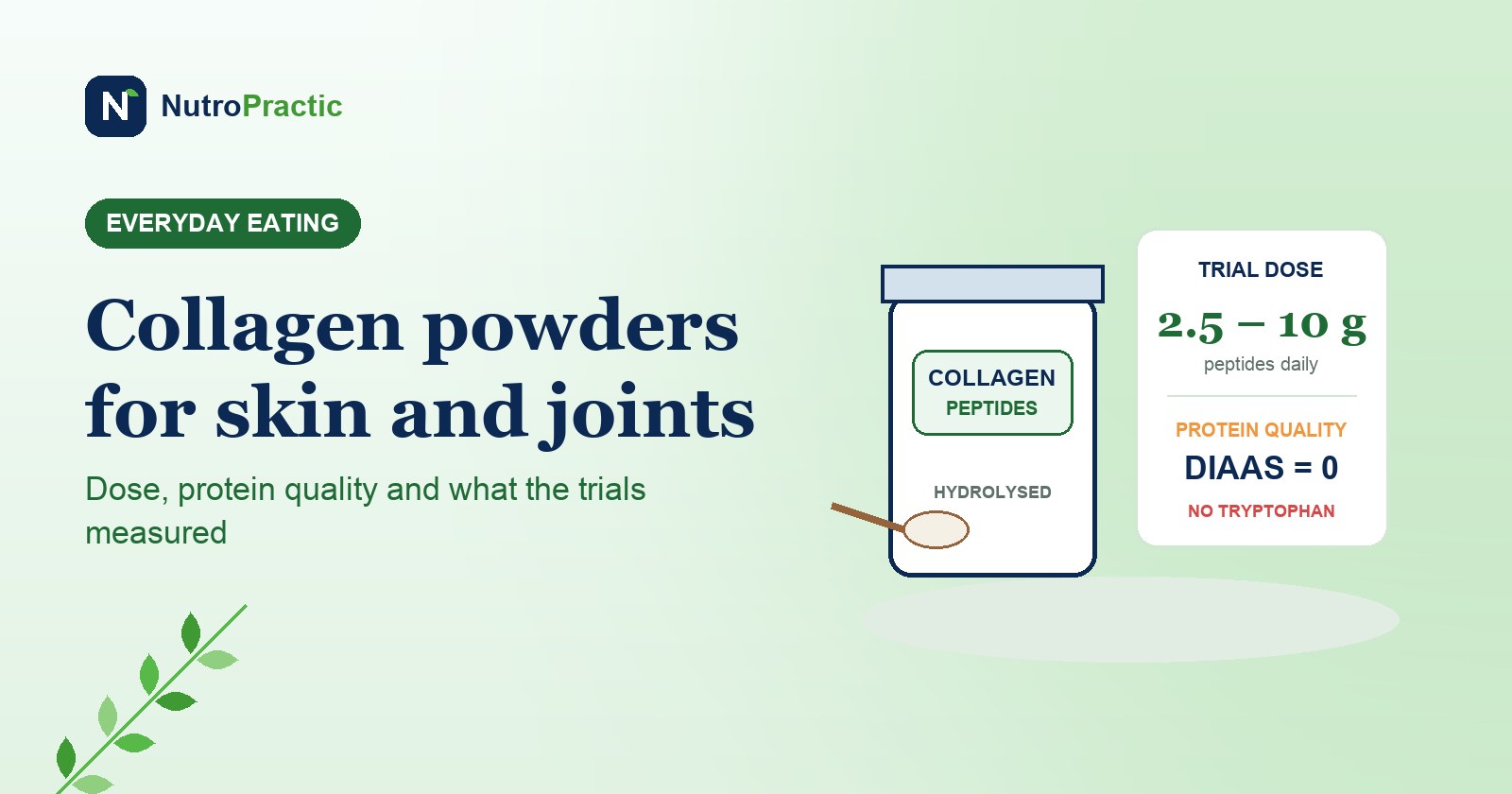
Everyday eating
Collagen powders for skin and joints: dose, protein quality and what the trials measured
A 10 g scoop gives 9 g protein, but its protein quality score is zero. Here is what 19 skin trials and knee studies measured at 2.5 g to 10 g daily—and what collagen cannot do.
10 Nov 2026
Everyday eating
Protein bars and shakes: what you get per 100 calories
Four current labels range from 6.3 to 20 g protein per 100 kcal. Here is how bars, shakes, eggs, yogurt and lentils compare—and when a supplement actually helps.
6 Nov 2026
Everyday eating
Food label claims decoded: 'no added sugar', 'multigrain', 'natural' and 'high protein'
A no-added-sugar biscuit with only 13% fewer calories. A 7-grain loaf with refined flour listed first. A 'high protein' bar that clears the legal line at 21%. What each claim legally requires in the EU/UK, US and India, with worked reads of real packs.
2 Nov 2026
Newsfeed for your website
Want this feed on your website?
Add it to any site with one copy-and-paste snippet. No sign-up, and it updates itself every hour.
Start with a virtual consultation
Tell Dr. Triveni what you want to change. You will leave with a clear next step, whether you are in Toronto, London, New York or Chennai.