Hospital nutrition · November 3, 2026
Pancreatitis patients who started eating within two days went home sooner. The ones kept waiting were already sicker
A hospital in southern China looked back at 650 people with mild or moderate acute pancreatitis. Early feeders left about two days earlier on average, and fared better on almost every count. The catch is in the first two tables, and the authors say it themselves.
For a long time, the standard response to acute pancreatitis was to stop food altogether and let the pancreas rest. That advice has been turning around for years, and a study published in Frontiers in Nutrition on 29 October adds a large set of everyday hospital records to the case for feeding people early. It also shows, quite clearly, why records like these can't settle the question on their own.
Researchers at the Second Affiliated Hospital of Hainan Medical University in Haikou went through four years of admissions, January 2022 to December 2025. After removing duplicates, people with severe disease, chronic pancreatitis, cancer, earlier pancreatic surgery and patchy notes, they had 650 adults with mild or moderately severe acute pancreatitis. Most cases came from gallstones or other bile duct disease (55%), followed by very high blood fats (19%) and alcohol (14%). Anyone who started eating or tube feeding within 48 hours of arriving counted as early (392 people). The other 258 counted as delayed.
One detail matters before anything else. The paper's term is enteral nutrition, which sounds like a feeding tube, but here it covers ordinary eating too. In 87% of patients the first nutrition was simply food or drink by mouth. Only 13% started with a tube. So this is mostly a study of how soon people were allowed to eat again.
On the face of it, early eating wins everywhere. Median hospital stay was 5.5 days against 7.4. Pain settled in 2.0 days against 2.7. Feeding problems such as vomiting, bloating or worsening pain after a meal hit 8.7% of early feeders and 18.6% of the delayed group. ICU transfers were 3.3% against 8.1%. Deaths (8 in all) and readmissions within 30 days did not differ significantly.
Now the catch. The delayed group arrived sicker. They were more often moderately severe (25% against 17%), more often vomiting (68% against 53%), more often in moderate or severe pain, with higher inflammation (median CRP 65 against 45 mg/L), lower albumin and higher nutritional risk scores. And the reasons written in their notes for waiting were persistent vomiting (32%), pain (26%), a gut that had stopped moving (16%) and a doctor's instruction to fast (31%). People who feel well enough to eat get fed sooner, and people who feel well also tend to go home sooner. The authors put it plainly in their discussion: the differences 'may reflect disease severity rather than feeding time'.
They did try to separate the two. After adjusting for 12 factors, including severity, CRP, albumin and vomiting, early feeding was still linked to a stay 1.21 days shorter, down from the raw gap of about 1.9 days in the medians. Each extra 12 hours of waiting went with about 0.28 more days in hospital. Adjustment helps, but it can only correct for what was written down, and a nurse's sense that a patient 'isn't ready' rarely is. The rarer outcomes (ICU, procedures, deaths) had too few events for the adjusted models to be trusted, which the authors flag, and the many secondary results were not corrected for multiple testing.
What does this add? Not proof, but a real-world picture that agrees with randomised trials and guidelines that already favour feeding people with mild pancreatitis as soon as they can tolerate it, rather than fasting by habit. The useful number may be the 31% of the delayed group whose notes record a doctor's order to fast. Those patients, not the ones who couldn't keep food down, are where a feed-early policy could make a difference. That's for hospital teams to test properly, ideally in a trial.
Timing of enteral nutrition and clinical outcomes in mild-to-moderate acute pancreatitis (Frontiers in Nutrition, 29 October 2026)
650
Adults with mild or moderately severe acute pancreatitis, 2022 to 2025, one hospital in Haikou, China: 392 fed within 48 hours, 258 later
31 h vs 70 h
Median time from admission to first nutrition in the early and delayed groups
87%
Patients whose first nutrition was ordinary food or drink by mouth rather than a tube
5.5 vs 7.4 days
Median hospital stay, early against delayed feeding
−1.21 days
Difference in stay after adjusting for 12 factors including severity, inflammation and vomiting (95% CI −1.58 to −0.84)
8.7% vs 18.6%
Feeding problems after eating started; adjusted odds ratio 0.52
68% vs 53%
Vomiting at admission in the delayed and early groups: the delayed group arrived sicker
31%
Delayed-group patients whose notes record a doctor's instruction to fast
All figures are from the paper's Tables 1 to 4 and 7, except the 1.9-day raw gap in the story, which is our subtraction of the two medians. This is a retrospective look at medical records from a single hospital, not a randomised trial, so it shows associations, not cause and effect. The authors call their adjusted results for ICU transfer, invasive procedures and death exploratory because of the small numbers of events, and their secondary outcomes were not adjusted for multiple testing. One inconsistency: the methods section says a scatter plot covers 271 patients, while the figure legend says 650. People with severe pancreatitis were excluded, so the results say nothing about them.
- The old practice of 'resting' the pancreas came from the worry that food would stimulate it and worsen the inflammation. Current guidance from the European nutrition society ESPEN favours early feeding by mouth when the patient can tolerate it.
- Very high blood triglycerides caused almost one case in five in this group (18.6%), more than alcohol (14.3%). The authors call it an under-recognised cause.
- About half of the early group (189 of 392) started eating within the first 24 hours of arriving in hospital.
- Early feeders were more often started on a soft or solid low-fat diet (57% against 41%). Clear liquids came first for about a third of patients in both groups.
- Patients scored as being at nutritional risk on admission (NRS-2002 score of 3 or more) had about 1.6 times the odds of having their feeding delayed (adjusted odds ratio 1.61), even after the other factors were taken into account.
- Timing of enteral nutrition and clinical outcomes in mild-to-moderate acute pancreatitis: a retrospective cohort studyFrontiers in Nutrition, 29 October 2026 · Open access (CC BY 4.0). Cohort selection, definitions, Tables 1 to 8, discussion and limitations.
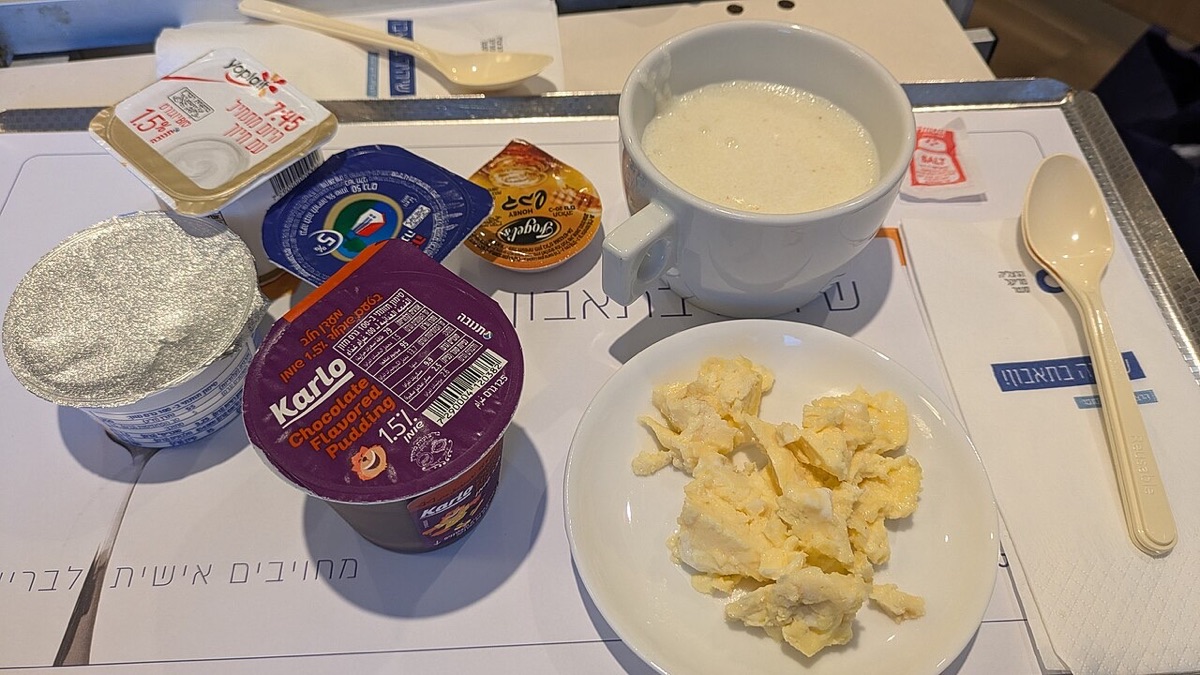
- Hospital meal in IsraelWikimedia Commons · CC BY 4.0 image by Nizzan Cohen.
General information, not medical advice. Acute pancreatitis needs hospital care, and when and how to start eating is a decision for the treating team. This study looked back at records from one hospital and cannot show that earlier eating caused the better outcomes.
Analysis by NutroPractic from the sources listed. Written for general readers; it does not replace advice from your own doctor.
From our articles
Read, then eat a little better
Plain-language guides on nutrition and wellness, backed by research.
Everyday eating
Food label claims decoded: 'no added sugar', 'multigrain', 'natural' and 'high protein'
A no-added-sugar biscuit with only 13% fewer calories. A 7-grain loaf with refined flour listed first. A 'high protein' bar that clears the legal line at 21%. What each claim legally requires in the EU/UK, US and India, with worked reads of real packs.
2 Nov 2026
Gut health
Probiotic capsules: which ones have trial evidence, what they can do, and when to skip them
Children on antibiotics: 8% got diarrhoea with a probiotic, 19% without. Older hospital patients: 10.8% with, 10.4% without. Which capsules have evidence, what three guidelines say about IBS, what a course costs per case prevented, and who shouldn't take them.
2 Nov 2026
Gut health
Gluten-free without coeliac disease: who actually benefits, and what the blinded gluten challenges found
In blinded trials only 16% of people who said gluten made them ill reacted to gluten rather than placebo, and in Oslo fructans caused more bloating than gluten. Who really needs to avoid it, how to get tested before you stop, how much gluten is in a slice of bread or a roti, and what gluten-free food costs (159% more in the UK) and lacks.
1 Nov 2026
Newsfeed for your website
Want this feed on your website?
Add it to any site with one copy-and-paste snippet. No sign-up, and it updates itself every hour.
Start with a virtual consultation
Tell Dr. Triveni what you want to change. You will leave with a clear next step, whether you are in Toronto, London, New York or Chennai.