Protein nutrition & longevity · November 28, 2026
Adults with higher essential amino acid intake profiles had about 13% to 16% lower all-cause mortality across two large cohorts
Pooling UK Biobank and NHANES data on 161,420 adults, moderate to very-high amino acid intake patterns were tied to lower death risk than the lowest pattern.
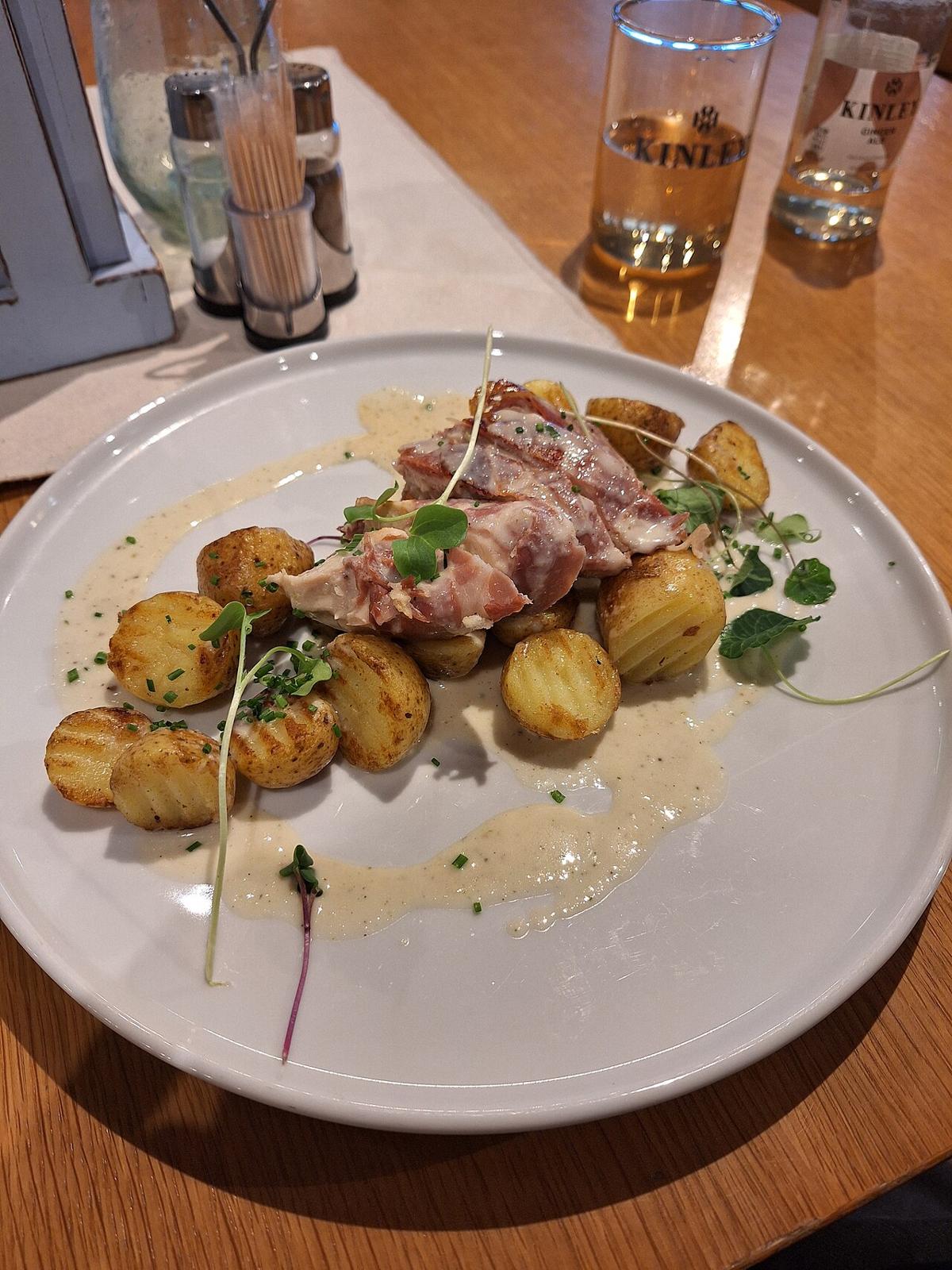
Essential amino acids (EAAs) are those the body cannot make, so they must come from food. A study in GeroScience, led by Sun, looked at the pattern of EAA intake as a whole rather than one amino acid at a time.
The team used two prospective cohorts: the UK Biobank (126,336 adults) and NHANES (35,084). Latent profile analysis grouped people into four EAA intake profiles: low, moderate, high and very high. Over a median 14.2 years, 14,518 deaths were recorded.
Compared with the low profile, all-cause mortality in the pooled analysis was lower for the moderate profile (hazard ratio 0.87, 95% CI 0.83 to 0.92), high profile (0.84, 0.78 to 0.90) and very-high profile (0.87, 0.77 to 0.97). Similar protective associations appeared for cardiovascular and cancer mortality. In exploratory analysis in the UK Biobank, the link looked stronger in people 65 and older.
This is observational, so it does not show that amino acids themselves reduce deaths; the authors say interventional evidence is needed to establish causality.
Essential amino acid intake profiles and mortality
161,420
adults in the UK Biobank (126,336) and NHANES (35,084)
14,518
deaths over a median 14.2 years
HR 0.84
all-cause mortality, high vs low EAA profile (95% CI 0.78 to 0.90)
Pooled analysis of two prospective cohorts, GeroScience, 17 Nov 2026. Observational: association only.
- Nine amino acids are classed as essential for humans: histidine, isoleucine, leucine, lysine, methionine, phenylalanine, threonine, tryptophan and valine.
- Latent profile analysis lets the data sort people into intake patterns instead of the researchers choosing the cut-offs.
- Association of dietary essential amino acid intake profiles with all-cause, cardiovascular, and cancer mortalityGeroScience, 17 Nov 2026 · Abstract and results.
This article is general information about published research, not medical advice. It does not diagnose, treat or replace care from a qualified health professional. Talk to your doctor before starting a supplement or changing your diet, especially if you are pregnant, have a medical condition or take medicines.
Analysis by NutroPractic from the sources listed. Written for general readers; it does not replace advice from your own doctor.
From our articles
Our guides on this subject
Plain-language guides on nutrition and wellness, backed by research.
Everyday eating
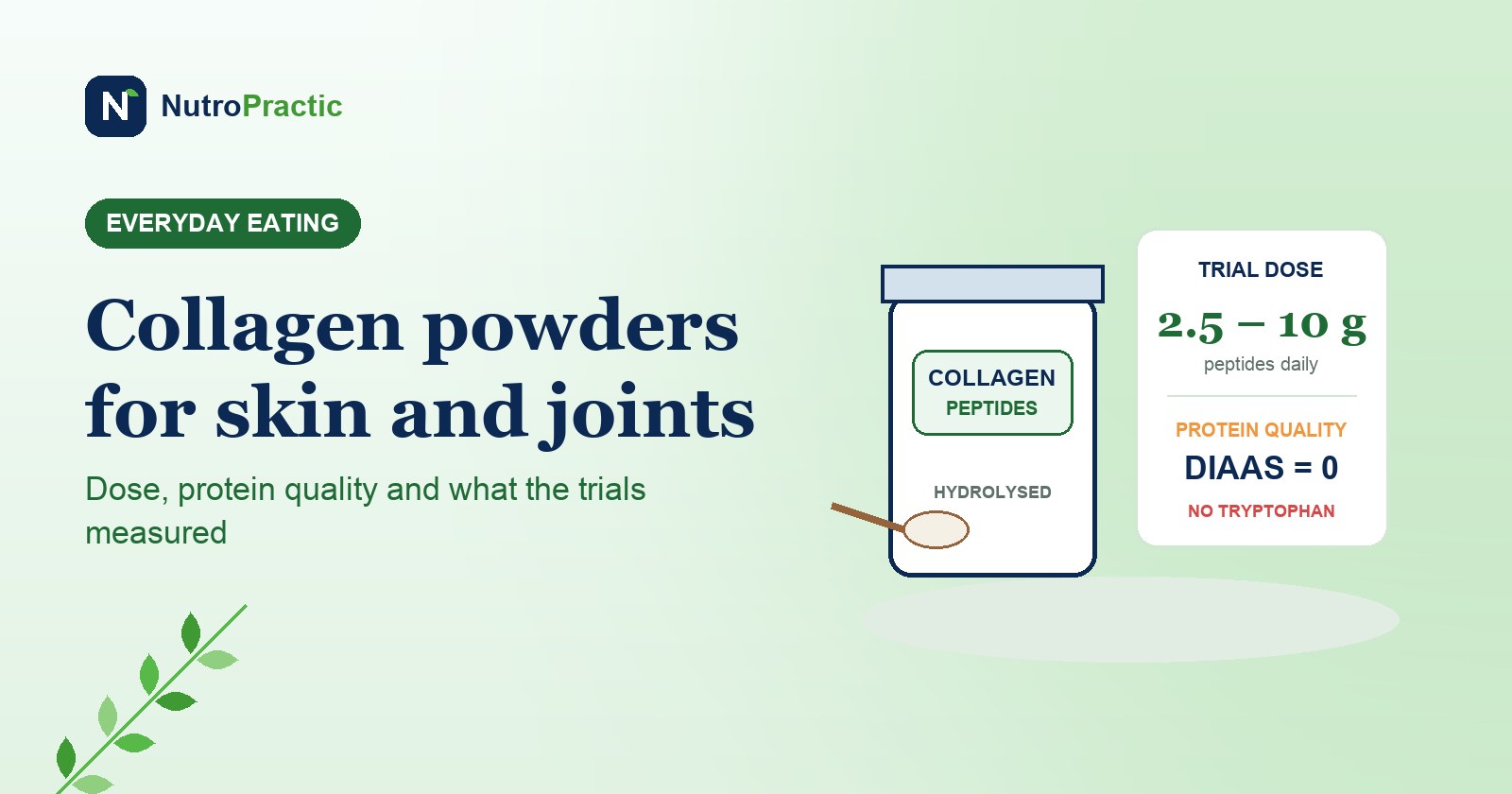
Collagen powders for skin and joints: dose, protein quality and what the trials measured
A 10 g scoop gives 9 g protein, but its protein quality score is zero. Here is what 19 skin trials and knee studies measured at 2.5 g to 10 g daily—and what collagen cannot do.
10 Nov 2026
Everyday eating
Protein bars and shakes: what you get per 100 calories
Four current labels range from 6.3 to 20 g protein per 100 kcal. Here is how bars, shakes, eggs, yogurt and lentils compare—and when a supplement actually helps.
6 Nov 2026
Everyday eating
Food label claims decoded: 'no added sugar', 'multigrain', 'natural' and 'high protein'
A no-added-sugar biscuit with only 13% fewer calories. A 7-grain loaf with refined flour listed first. A 'high protein' bar that clears the legal line at 21%. What each claim legally requires in the EU/UK, US and India, with worked reads of real packs.
2 Nov 2026
Newsfeed for your website
Want this feed on your website?
Add it to any site with one copy-and-paste snippet. No sign-up, and it updates itself every hour.
Start with a virtual consultation
Tell Dr. Triveni what you want to change. You will leave with a clear next step, whether you are in Toronto, London, New York or Chennai.