Mental health · October 9, 2026
Vegetables, calcium and fizzy drinks tracked depression in 1,039 young South Africans, until income came into the sums
Nearly three in ten young adults in a South African study scored high for depression. Those who did ate fewer vegetables, less calcium and drank more sugary drinks. But once the researchers allowed for income, education, sex and race, almost every link faded, and five years later only milk still stood out. What a careful null result tells us about food and mood.
Most of what we know about diet and depression comes from Europe, North America and Australia. A study published in Depression and Anxiety on 29 September 2026 looks somewhere the evidence is thin: young adults in South Africa, a country whose diet has been shifting from mostly plant foods toward refined sugar, fat and ultra-processed food. It is part of an international project that wants lifestyle risks for depression and anxiety added to the Global Burden of Disease study, the reference that health ministries use to set priorities.
The data come from the African-PREDICT cohort in the North West Province: 1,039 apparently healthy people aged 20 to 30 (average 24.6), about half Black and half White, about half women, recruited between 2013 and 2017. Trained fieldworkers took three separate 24-hour food recalls from each person, one of them on a weekend day, using food models and photo books for portion sizes. Depression was measured with the PHQ-9 questionnaire; a score of 10 or more, the usual marker of moderate to severe symptoms, counted. At the start, 29.5% met that mark. They were more often Black (62% against 43% of the others) and more often on a low income (58% against 31%).
At first glance diet lined up with mood. People with high scores ate less fruit, vegetables, whole grains, fibre and calcium and drank more sugary drinks. Allowing for how much people ate in total, each extra 100 g of vegetables a day went with 26% lower odds of depression, each extra gram of calcium with 52% lower odds, and each 50 g of sugary drink with about 5% higher odds. But when the team also allowed for age, sex, race and socioeconomic status, those links weakened, and after correcting for the 13 food factors tested at once, none was left. About five years later, 551 people were assessed again. Of the 403 without depression at the start, 50 had developed it. Only one link survived every correction, and only in one of four models: each extra 10 g of milk a day (about two teaspoons) went with 6% lower risk. Ultra-processed food, about 46% of everyone's energy intake, showed no link at all, and more than 90% reported eating no legumes, nuts or seeds, so those foods couldn't be tested.
This is an observational study, so it can't show that any food causes or prevents depression, and it may run the other way: people who are depressed often eat differently. Diet was recorded only once, years before the second check; 42% of the starting group didn't come back; the PHQ-9 is a questionnaire, not a clinical interview; and everyone came from one area and was screened as healthy. The authors themselves call one result, sugary drinks seeming to protect over time, probably a fluke. The useful lesson is the one they stress: in this group, low income and the poorer diet that often comes with it were tangled together, and food advice for mental health is unlikely to work if it ignores the circumstances people eat in.
Diet and depression in young South Africans
29.5%
Of 1,039 adults aged 20 to 30 who scored 10 or more on the PHQ-9 depression questionnaire at the start
OR 0.74
Odds of depression per extra 100 g of vegetables a day, allowing for total food intake; lost after allowing for income, education, sex and race
OR 0.48
Odds of depression per extra gram of calcium a day, same model; also lost once social factors were included
RR 0.94
Risk of new depression over about 5 years per extra 10 g of milk a day, the only link that survived correction for multiple tests
50 of 403
People free of depression at the start who had it at the follow-up visit
46%
Share of daily energy from ultra-processed food on average, with no link to depression either way
Figures from the open-access paper in Depression and Anxiety (published 29 September 2026), an analysis of the African-PREDICT cohort (ClinicalTrials.gov NCT03292094) in the North West Province of South Africa, baseline 2013 to 2017 and follow-up 2018 to 2024. OR is an odds ratio from the cross-sectional analysis and RR a relative risk from the follow-up analysis; values below 1 mean lower odds or risk. Funded by the South African Medical Research Council, the National Research Foundation and other public and corporate grants; the authors state their conclusions are independent of the funders.
- The PHQ-9 asks nine questions about the past two weeks, each scored from 0 (not at all) to 3 (nearly every day), for a total out of 27.
- People with high depression scores ate less in total at the start, about 579 kJ (roughly 140 kcal) a day less on average, which is why the team ran every analysis with and without allowing for total intake.
- Earlier African-PREDICT work found that more than half of this cohort, across every income group, didn't meet the estimated average requirement for calcium.
- In South Africa, sugary drink intake fell by about a third between 2018 and 2023, the authors note, which may help explain why the long-term sugary drink result went the unexpected way.
- The researchers tested 13 food factors in four models each; with that many tests some results turn up by chance, so they used a statistical correction (the Simes procedure) to weed them out.
- Cross-Sectional and Longitudinal Associations Between Dietary Intake and Depressive Symptoms in Young South African Adults: The African-PREDICT StudyDepression and Anxiety, 29 September 2026 · The study (open access, CC BY); methods, results, limits and funding in this item come from its full text
- Full text on PubMed Central (PMC13624545)PubMed Central, US National Library of Medicine · Free full text, including the intake and regression tables
- PubMed record 42818990PubMed, US National Library of Medicine · Abstract and indexing
- African-PREDICT study registration NCT03292094ClinicalTrials.gov · The registered cohort the data come from
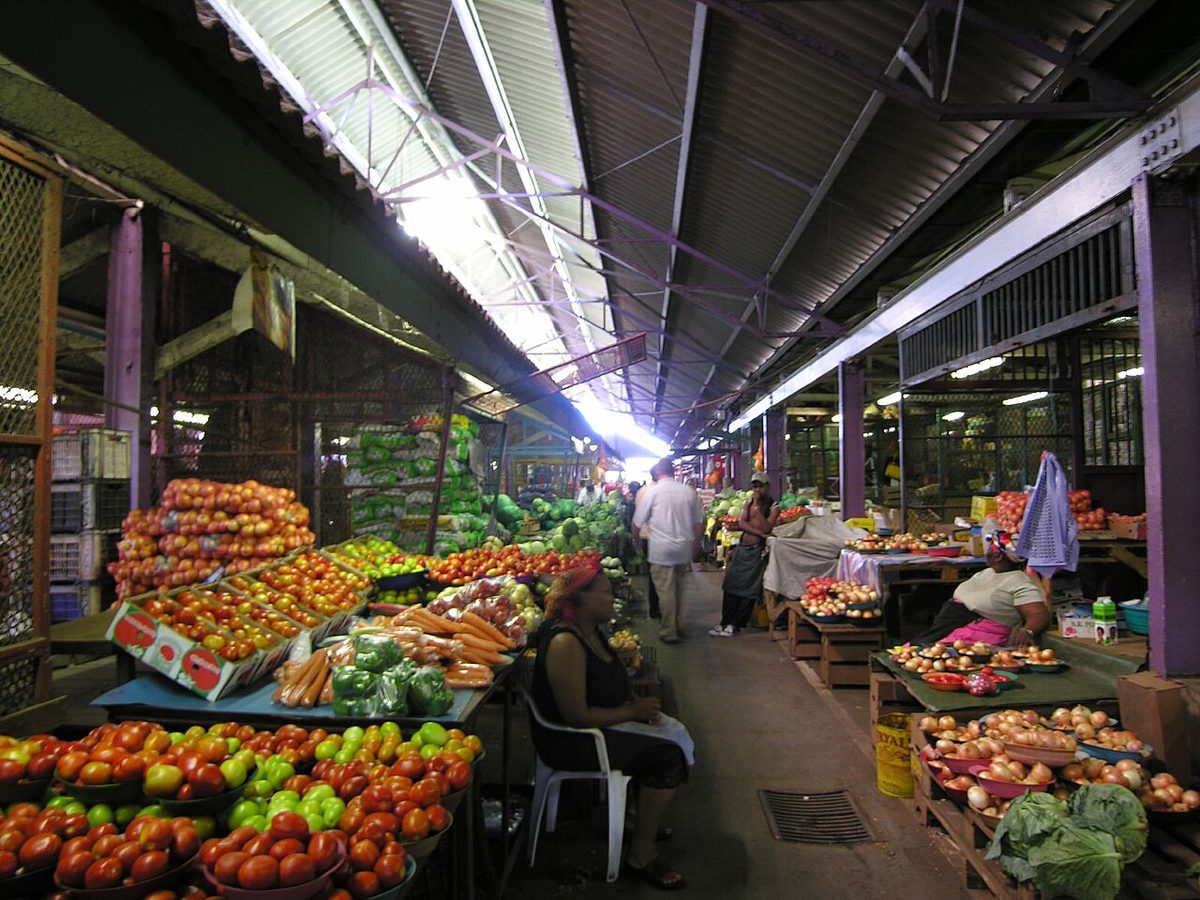
- Durban Fruit Market (photo)Mister-E, via Wikimedia Commons · CC BY 2.0 image, resized
General information, not medical advice. This observational study shows links, not causes, and it doesn't show that any food treats or prevents depression. If you have low mood that lasts more than two weeks, or thoughts of harming yourself, please talk to a doctor or mental health professional, or contact your local emergency or crisis line.
Analysis by NutroPractic from the sources listed. Written for general readers; it does not replace advice from your own doctor.
Newsfeed for your website
Want this feed on your website?
Add it to any site with one copy-and-paste snippet. No sign-up, and it updates itself every hour.
Start with a virtual consultation
Tell Dr. Triveni what you want to change. You will leave with a clear next step, whether you are in Toronto, London, New York or Chennai.