Nutrigenomics & liver health · November 29, 2026
Gut bacterial myrosinase and host GST genes strengthen the link between cruciferous vegetables and lower MASLD risk in 1,451 adults
In a prospective cohort of 1,451 Chinese adults, higher cruciferous vegetable intake was linked to a 15% lower risk of fatty liver disease per standard deviation. The link was strongest in people with abundant gut bacterial myrosinase genes who also carried certain GST gene variants.
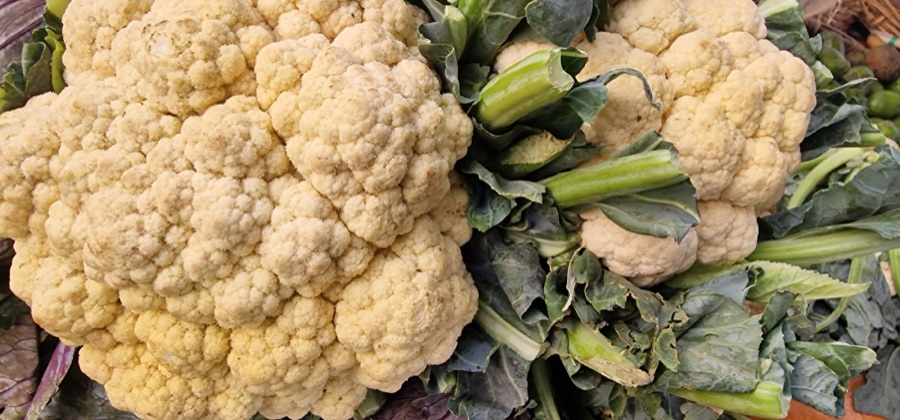
Cruciferous vegetables like broccoli, cabbage, and bok choy contain glucosinolates that convert into bioactive isothiocyanates (ITCs). However, cooking frequently inactivates plant myrosinase enzymes, making gut bacteria the primary driver of isothiocyanate release.
In The American Journal of Clinical Nutrition, investigators followed a community-based prospective cohort of 1,451 Chinese adults from 2020 to 2025. Dietary intake was measured with a validated food frequency questionnaire. Fecal metagenomic sequencing quantified gut microbial myrosinase gene abundance, and host glutathione S-transferase genes (GSTP1 rs1695 and GSTA1 rs3957357) were genotyped. Metabolic dysfunction-associated steatotic liver disease (MASLD) was diagnosed by vibration-controlled transient elastography, identifying 517 incident cases over follow-up.
Each standard deviation increase in cruciferous vegetable intake was associated with a 15% lower risk of incident MASLD (HR = 0.85, 95% CI 0.75 to 0.97). Gut bacterial myrosinase modified this association: in adults with high myrosinase gene abundance the risk was 36% lower per standard deviation (HR = 0.64, 95% CI 0.50 to 0.82; P for interaction = 0.030).
In a joint analysis, participants with both high bacterial myrosinase and carrier genotypes for GSTP1 rs1695-G or GSTA1 rs3957357-T had the strongest inverse association (HR = 0.41, 95% CI 0.26 to 0.67). As an observational study it shows associations, not cause and effect, but it points to a diet, gut microbiome and host genetics interplay that the authors suggest could inform personalised prevention.
Cruciferous intake, gut myrosinase, and host GSTs in MASLD (n = 1,451)
HR 0.85
overall MASLD risk per 1-SD increase in cruciferous vegetables (95% CI 0.75-0.97)
HR 0.64
MASLD risk per 1-SD cruciferous intake in adults with high gut myrosinase abundance (95% CI 0.50-0.82)
HR 0.41
MASLD risk per 1-SD intake with high myrosinase and GSTP1/GSTA1 carrier genotypes (95% CI 0.26-0.67)
517
incident MASLD cases diagnosed by transient elastography, 2020-2025
Prospective community cohort in The American Journal of Clinical Nutrition, November 2026. 1,451 adults followed 2020-2025. Fecal metagenomics and host genotyping.
- High-temperature cooking inactivates plant myrosinase, leaving gut microbes as the primary source of enzyme activity.
- Isothiocyanates such as sulforaphane activate the Nrf2 pathway, which switches on many of the body's antioxidant and detoxification enzymes.
- Original Research Article Gut microbial myrosinase and host GSTs jointly modify the association of cruciferous vegetable intake with MASLD risk in a Chinese cohortThe American Journal of Clinical Nutrition, 27 Nov 2026 · Prospective cohort analysis integrating metagenomic sequencing and host genetics.
This article is general information about published research, not medical advice. It does not diagnose, treat or replace care from a qualified health professional. Talk to your doctor before starting a supplement or changing your diet, especially if you are pregnant, have a medical condition or take medicines.
Analysis by NutroPractic from the sources listed. Written for general readers; it does not replace advice from your own doctor.
From our articles
Our guides on this subject
Plain-language guides on nutrition and wellness, backed by research.

Gut health
L-glutamine for gut barrier integrity: what the post-infectious IBS and permeability trials measured, and the dose in grams
At 15 g a day, glutamine took 79.6% of post-infection IBS-D patients to a clinical response against 5.8% on placebo. Trials that measured gut permeability directly in Crohn's, pancreatitis and heat stress found no clear benefit, and a 10-trial meta-analysis found none overall. The doses, the 14 g a day safe level, and who might try it.
27 Nov 2026

Women's wellness and nutrition
Probiotics for recurrent UTI: what the Lactobacillus trials found strain by strain, and how they compare with antibiotics
Recurrence was 15% vs 27% with a vaginal L. crispatus probiotic (a gap that could be chance), 31.8% vs 70.4% for vaginal plus oral lactobacilli in a 174-woman trial, and oral GR-1 and RC-14 failed to show noninferiority to antibiotics over 12 months. Strains, doses, worked numbers and the resistance trade-off.
26 Nov 2026

Supplements and vitamins
Zinc carnosine for the gut lining: what the two human trials gave, the zinc in each dose, and the copper catch
Zinc carnosine is only about 22.6% zinc, so 75 mg twice a day is roughly 34 mg of zinc a day. Here are the doses and results of the 10-person NSAID permeability trial and the 20-person aspirin pilot, and the copper cautions.
22 Nov 2026
Newsfeed for your website
Want this feed on your website?
Add it to any site with one copy-and-paste snippet. No sign-up, and it updates itself every hour.
Start with a virtual consultation
Tell Dr. Triveni what you want to change. You will leave with a clear next step, whether you are in Toronto, London, New York or Chennai.