Sports supplements · October 18, 2026
48 army cadets in Tehran, six weeks of Tabata and cinnamon capsules: the paper says the spice boosted their fitness gains. There was no placebo, and its own weight and BMI figures don't add up
Cadets got high-intensity Tabata workouts, 1.5 g of true cinnamon a day, both, or neither. The training-plus-cinnamon group improved most on an army fitness test and the authors credit the spice. But the control group took no dummy capsule, the groups started far apart, and in one group BMI fell more than twice as fast as body weight.
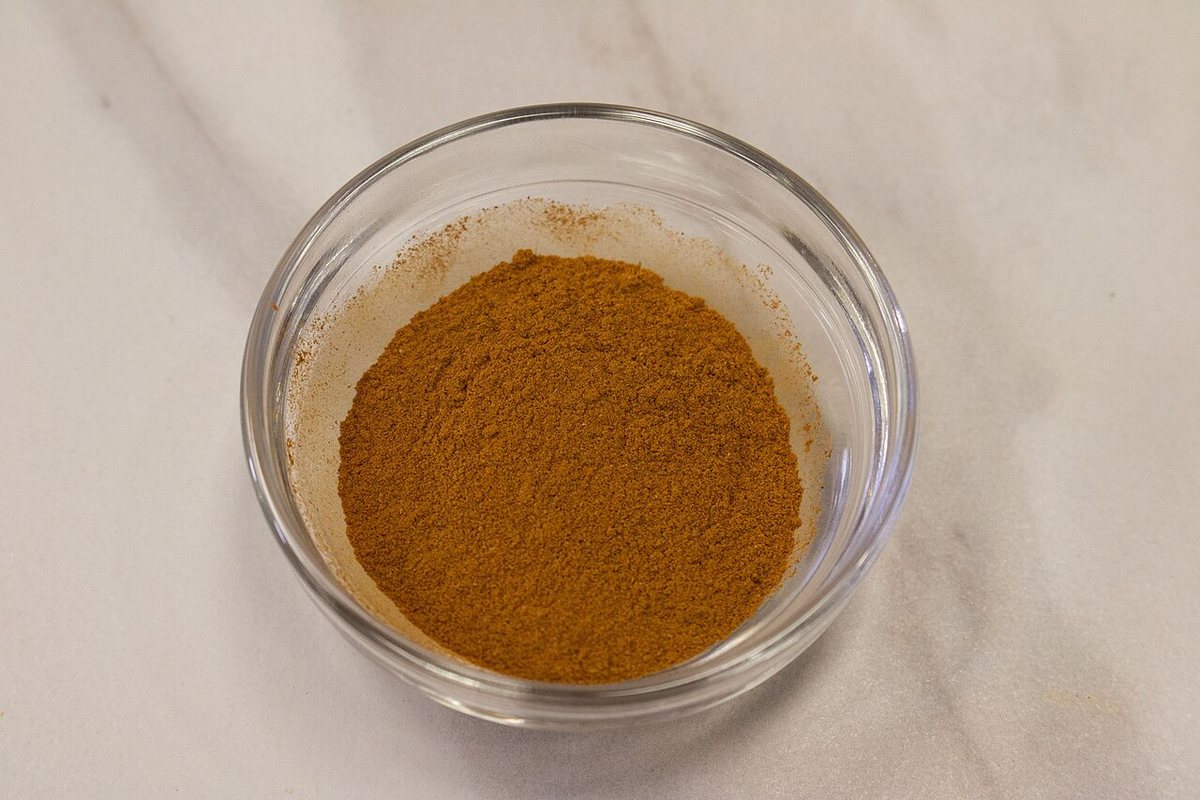
Cinnamon is sold as a supplement for blood sugar and weight loss, and some researchers think it might also help the body respond to hard exercise. A trial published on 7 October 2026 in the Journal of the International Society of Sports Nutrition set out to test that in soldiers in training. Two exercise physiologists from the University of Mohaghegh Ardabili in Iran ran it at a military training academy in Tehran with 48 healthy male officer cadets aged 20 to 25, none of them smokers, supplement users or doing regular high-intensity exercise.
A computer split the cadets into four groups for six weeks. Fourteen did supervised Tabata-style circuit training three evenings a week: 20 seconds of all-out work such as burpees, lunges and push-ups, then 10 seconds of rest, repeated in 4-minute sets, building from four to six sets per session at 87 to 95% of maximum heart rate. Ten took 1.5 g of Ceylon ("true") cinnamon powder a day in capsules, 500 mg with each meal, and did no extra training. Fourteen did both, and ten carried on with normal academy life. Everyone kept eating the military diet, and food diaries showed about 2,400 to 2,500 kcal a day in every group, before and after. Three cadets dropped out for unrelated medical leave, so 45 finished.
The main result was the Army Combat Fitness Test, a six-event US Army test scored out of 600: a heavy deadlift, a backward medicine-ball throw, hand-release push-ups, a sprint-drag-carry shuttle, leg tucks on a bar and a 2-mile run. The training-plus-cinnamon group's score rose 12%, from 444 to 497 points, against 8.6% for training alone, 6.1% for cinnamon alone and no change in the controls, and the authors report that the combined group beat training alone. Blood levels of irisin, a hormone muscles release during exercise, rose 58% with both, about 41% with training alone and 31% with cinnamon alone. The combined group also lost the most weight, 78.2 to 72.5 kg on average, and its body fat, measured by a bioimpedance scale, fell from 21.3% to 17.3%. The authors conclude that cinnamon adds to the benefits of high-intensity training.
The design leaves room for doubt. The cinnamon was not compared with a dummy capsule, so the cadets knew whether they were getting it, a weakness the authors list themselves. The groups also started a long way apart: the control group's average fitness score was 51 points higher than the training-only group's at the start (481 vs 430), and its cadets managed about 9 leg tucks against 2 to 3. With 9 to 13 cadets per group and no trial registration (the paper lists its trial number as "not applicable"), there is no public record of which outcomes were planned in advance.
Some of the published numbers do not fit together either. In the combined group, average body mass fell 7.2% but BMI is reported to have fallen 16.4%, from 23.4 to 19.5. Height does not change in six weeks, so BMI should fall by about the same share as weight; at that group's average height of 177 cm, 72.5 kg works out to a BMI of about 23, not 19.5. The results text says lean mass rose 15% in that group, while the table shows 59.95 to 61.5 kg, about 2.6%. Cadets taking cinnamon with no extra training are reported to have thrown the medicine ball almost 30% further and to have lost 2.2 kg. Smaller slips include food diaries described as taken after an "eight-week" intervention that lasted six weeks, daily calorie totals labelled per kilogram of body weight, and thanks to "the patients and their families" in a trial of healthy cadets.
What is left is a familiar finding: six weeks of hard interval training made young men fitter and leaner. Whether 1.5 g of cinnamon a day added anything is not something this trial can show. The authors call for longer, placebo-controlled studies with more precise body-scan methods, and say their results should be read as "potential or additive rather than definitively synergistic". The study was funded by the Iran National Science Foundation, the authors declared no conflicts of interest and used ChatGPT only for language editing, and the paper is open access under a CC BY licence.
Tabata training, cinnamon, both or neither: 48 male military cadets in Tehran for six weeks
48
Healthy male officer cadets aged 20 to 25, randomised to four groups of 10 to 14 (45 finished)
1.5 g/day
Ceylon cinnamon powder in capsules, 500 mg with each meal, for 6 weeks
+12%
Army fitness test score with training plus cinnamon (444 to 497 of 600), vs +8.6% training alone and +6.1% cinnamon alone
+58%
Rise in blood irisin with training plus cinnamon, vs about 41% training alone and 31% cinnamon alone
No placebo
Controls took no dummy capsule, so cadets knew who was getting cinnamon
51 points
Head start of the control group over the training-only group on the fitness test at baseline
−7.2% vs −16.4%
Reported fall in body mass vs BMI in the combined group; with no change in height they should match
15% vs 2.6%
Lean mass gain in the combined group: as stated in the text vs as shown in the table
Figures from Sabzevari Rad R and Siahkouhian M, 'Effects of Tabata-style functional training and cinnamon supplementation on army combat fitness test performance, serum irisin, and body composition in military cadets: a randomized controlled trial', Journal of the International Society of Sports Nutrition, published online 7 October 2026, doi 10.1080/15502783.2026.2743157 (open access, CC BY 4.0). Percentages are the paper's own pre-to-post changes within each group. The BMI estimate of about 23 is our arithmetic from the paper's mean weight (72.5 kg) and mean height (177 cm). Body composition was measured by bioimpedance (InBody 380).
- The original Tabata study, run in Japan in 1996, had seven young men do seven or eight 20-second bursts on an exercise bike at about 170% of their maximal aerobic power, with 10 seconds of rest, five days a week for six weeks. Their anaerobic capacity rose 28%.
- A cinnamon stick is rolled-up tree bark. Ceylon or "true" cinnamon comes mainly from Sri Lanka, while most cinnamon sold in North America is cassia, from Southeast Asia.
- Cassia cinnamon can contain enough coumarin to matter for people with liver disease if taken in large amounts for a long time; Ceylon cinnamon has only traces, which is one reason supplement trials should name the species.
- Irisin was first described in 2012, in mice, as a hormone released by working muscle that can turn white fat cells more like heat-burning brown fat. How it works in people is still debated.
- The US National Center for Complementary and Integrative Health says research doesn't clearly support using cinnamon for any health condition, including diabetes or weight loss, and that it is likely safe in the amounts used in food.
- Effects of Tabata-style functional training and cinnamon supplementation on army combat fitness test performance, serum irisin, and body composition in military cadets: a randomized controlled trialJournal of the International Society of Sports Nutrition, 7 October 2026 · The trial: methods, results tables, limitations, funding and declarations
- Full text of the trial (PMC13647388)PubMed Central, US National Library of Medicine · Open-access copy with Tables 1 to 4, used to check the figures
- Cinnamon: usefulness and safetyNational Center for Complementary and Integrative Health (NIH) · What the evidence says about cinnamon supplements, cassia vs Ceylon, and coumarin
- Effects of moderate-intensity endurance and high-intensity intermittent training on anaerobic capacity and VO2maxMedicine & Science in Sports & Exercise, 1996 · The original Tabata interval-training study
- A PGC1-α-dependent myokine that drives brown-fat-like development of white fat and thermogenesisNature, 2012 · The paper that first described irisin
General information, not medical advice. This small trial in healthy young men had no placebo and some inconsistent figures, so it does not show that cinnamon improves fitness or fat loss. Cinnamon supplements, especially cassia, may not suit people with liver disease or those taking some medicines; talk to your doctor, pharmacist or a registered dietitian before taking them, and to a qualified coach or doctor before starting high-intensity training.
Analysis by NutroPractic from the sources listed. Written for general readers; it does not replace advice from your own doctor.
From our articles
Read, then eat a little better
Plain-language guides on nutrition and wellness, backed by research.
Supplements and vitamins
Spermidine from food or capsules: measured milligrams in wheat germ, soybeans and cheese, and what the one year-long trial found
Wheat germ holds about 22 to 34 mg of spermidine per 100 g, matured cheese about 0.12 mg. The only year-long capsule trial used 0.9 mg a day and found no memory benefit. Measured values, worked doses and safety.
22 Nov 2026

Supplements and vitamins
Zinc carnosine for the gut lining: what the two human trials gave, the zinc in each dose, and the copper catch
Zinc carnosine is only about 22.6% zinc, so 75 mg twice a day is roughly 34 mg of zinc a day. Here are the doses and results of the 10-person NSAID permeability trial and the 20-person aspirin pilot, and the copper cautions.
22 Nov 2026

Women's health
Inositol for PCOS: the 40:1 ratio, trial doses, and food milligrams
Why do randomized trials in polycystic ovary syndrome prioritize the 40:1 myo to D-chiro inositol ratio? Here is the science behind the ovarian epimerase paradox, clinical ovulation and insulin metrics, and why cantaloupe cannot replace 4,000 mg trial powder.
21 Nov 2026
Newsfeed for your website
Want this feed on your website?
Add it to any site with one copy-and-paste snippet. No sign-up, and it updates itself every hour.
Start with a virtual consultation
Tell Dr. Triveni what you want to change. You will leave with a clear next step, whether you are in Toronto, London, New York or Chennai.