Children's nutrition · November 3, 2026
One short school video changed the drink picked at the table: 36% chose the full-sugar option, down from 57%
A video under five minutes long about sugary-drink harms and label reading shifted an immediate real-world choice among Chinese pupils. It did not test whether the change lasted, or whether a lesson can overcome the drinks available around a school — but it offers an unusually concrete result for health education.
Health lessons often end with a questionnaire, which leaves a fair question: do they change what a child chooses when a drink is actually on the table? Researchers working with six Chinese schools tried a more direct test. They showed some classes a video lasting under five minutes about sugar-sweetened drinks and nutrition labels, then offered students a real choice between a full-sugar and a lower-sugar fermented milk drink.
The trial randomised classes, not individual pupils. Twelve classes with 653 students were assigned to a control video on eyesight protection, while 12 classes with 649 students saw the nutrition video. The researchers analysed 1,269 students. This cluster design is useful in schools because classmates receiving different lessons could easily share information, but it also means the result comes from six schools and one setting rather than every child everywhere.
At the actual drink choice, 367 of 641 students in the control group — 57.3% — chose the full-sugar drink. In the nutrition-video group, 228 of 628 students did: 36.3%. After the authors' adjustment, that was an absolute difference of 21 percentage points (95% confidence interval 15 to 28 points), or an odds ratio of 0.39. The result is about a choice made straight after a brief lesson, not a measured fall in daily sugar intake, body weight or tooth decay.
The study also asked pupils to make choices between hypothetical drink profiles. Sugar content combined with drink type mattered most in those stated choices, accounting for 49.6% of relative importance, with price next at 38.4%. The intervention shifted preferences toward healthier options, especially among primary-school students. That is encouraging, but hypothetical preferences and choices made at a school study table are not the same as a week of purchases near home.
The practical point is modest. Clear, child-friendly information can affect a choice in the moment, yet a video alone cannot decide what is stocked, affordable or promoted. The authors call for clearer sugar information and school policies that make healthier drinks easier to choose. Families do not need a special video to start: offering water routinely and reading the serving size and sugar line together can make the label a usable tool — without turning one drink or one lesson into a moral test.
A brief school health-literacy video and sugary-drink choices in six Chinese schools (Social Science & Medicine, 29 October 2026)
6
Chinese schools in the cluster-randomised trial
24
Classes randomised: 12 control and 12 nutrition-video classes
1,269
Students analysed: 641 control and 628 intervention
<5 min
Length of the video on sugary-drink harms and nutrition-label understanding
57.3% vs 36.3%
Students choosing the full-sugar fermented milk drink in the control and intervention groups
−21 points
Adjusted absolute difference in choosing the full-sugar drink (95% CI −28 to −15; p < 0.0001)
0.39
Adjusted odds ratio for choosing the full-sugar drink (95% CI 0.30 to 0.51)
49.6%
Relative importance of beverage profile in the hypothetical choice experiment; price was 38.4%
All figures are from the article's abstract. The trial was run from September to October 2022 and published 29 October 2026. It measured an immediate selection of a fermented milk drink and stated preferences, not long-term beverage intake or health outcomes. Classes were randomised within schools, and the intervention group saw a different video from controls, so neither students nor staff could be blinded. The authors declare no known competing financial interests or personal relationships.
- In a cluster-randomised trial, whole classes were assigned together. That reduces the chance that pupils in the same class receive different lessons and immediately pass the message on.
- The researchers used both a real choice experiment, where pupils selected an actual drink, and a discrete choice experiment, where they chose between described drink profiles.
- The control video was about eyesight protection, rather than no video at all. That helps separate the nutrition message from simply receiving extra attention.
- The absolute difference is easier to picture than the odds ratio here: about 21 fewer pupils per 100 chose the full-sugar option immediately after the nutrition video, in this study setting.
- A fermented milk drink can still contain added sugar; its name or dairy content does not by itself tell you how much sugar is in a serving.
- Effect of a school-based health literacy intervention on sugar-sweetened beverage choices among children and adolescents in China: A cluster-randomised controlled trialSocial Science & Medicine, 29 October 2026 · Original trial; abstract reports the class allocation, actual and hypothetical choice outcomes and effect estimates.
- PubMed record: PMID 42970999US National Library of Medicine · Publication details, structured abstract and conflict-of-interest statement.
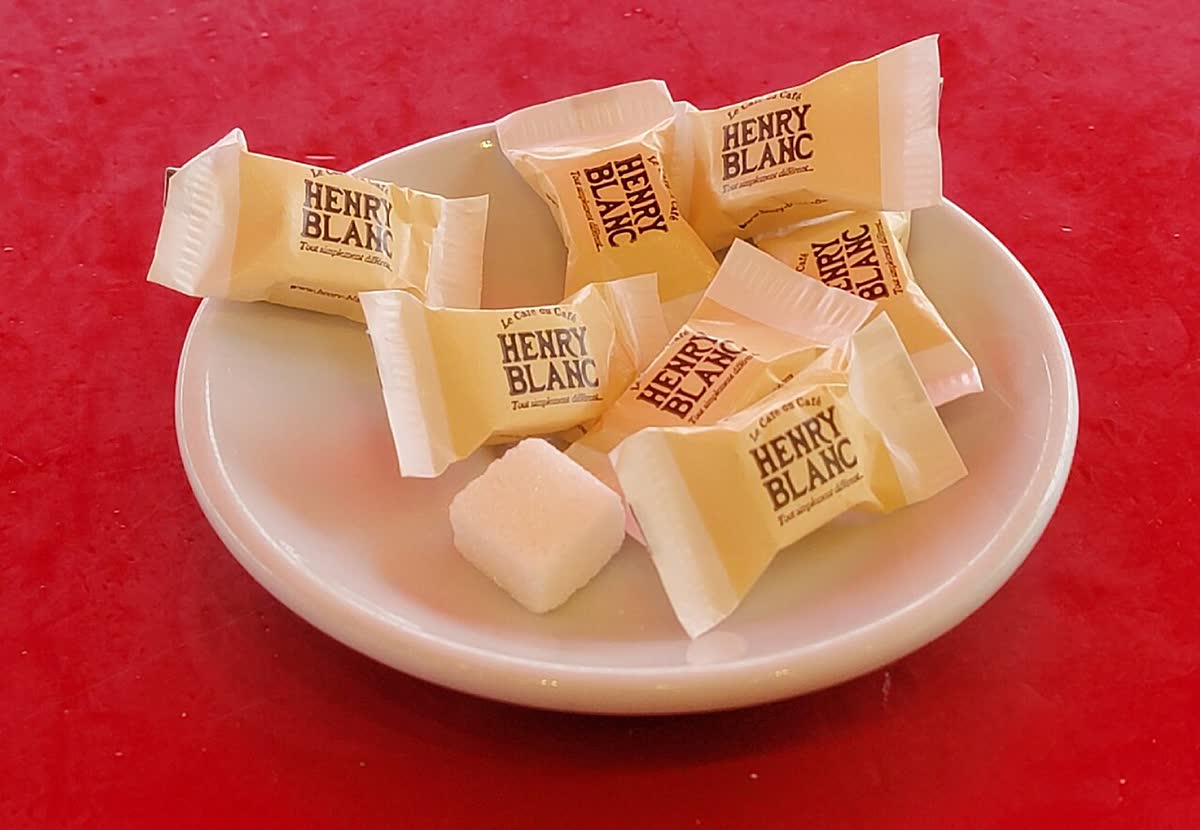
- Individually wrapped sugar cubesWikimedia Commons · CC BY 4.0 photograph by Викидим, used as a general illustration.
General information, not medical advice. This short school-based trial measured an immediate drink choice, not a child's long-term diet or health. If you are concerned about a child's eating, growth, teeth or relationship with food, ask a paediatrician, dentist or registered dietitian for individual advice.
Analysis by NutroPractic from the sources listed. Written for general readers; it does not replace advice from your own doctor.
From our articles
Read, then eat a little better
Plain-language guides on nutrition and wellness, backed by research.
Everyday eating
Food label claims decoded: 'no added sugar', 'multigrain', 'natural' and 'high protein'
A no-added-sugar biscuit with only 13% fewer calories. A 7-grain loaf with refined flour listed first. A 'high protein' bar that clears the legal line at 21%. What each claim legally requires in the EU/UK, US and India, with worked reads of real packs.
2 Nov 2026
Gut health
Probiotic capsules: which ones have trial evidence, what they can do, and when to skip them
Children on antibiotics: 8% got diarrhoea with a probiotic, 19% without. Older hospital patients: 10.8% with, 10.4% without. Which capsules have evidence, what three guidelines say about IBS, what a course costs per case prevented, and who shouldn't take them.
2 Nov 2026
Gut health
Gluten-free without coeliac disease: who actually benefits, and what the blinded gluten challenges found
In blinded trials only 16% of people who said gluten made them ill reacted to gluten rather than placebo, and in Oslo fructans caused more bloating than gluten. Who really needs to avoid it, how to get tested before you stop, how much gluten is in a slice of bread or a roti, and what gluten-free food costs (159% more in the UK) and lacks.
1 Nov 2026
Newsfeed for your website
Want this feed on your website?
Add it to any site with one copy-and-paste snippet. No sign-up, and it updates itself every hour.
Start with a virtual consultation
Tell Dr. Triveni what you want to change. You will leave with a clear next step, whether you are in Toronto, London, New York or Chennai.