Supplements and the heart · October 23, 2026
23 heart patients in Beijing, 12 of them given berberine for 12 weeks. Their gut bacteria changed and the paper's title says their cholesterol improved, yet by its own averages LDL fell further in the 11 who never took it
Berberine, a yellow plant compound sold as a cholesterol and blood sugar supplement, was added to the usual heart medicines of a dozen people with stents. Butyrate-making gut bacteria went up and the patients reported less constipation. The heart results are thinner than the title suggests: a small, unblinded trial with no dummy pill, and two groups that differed in age, sex and starting cholesterol.
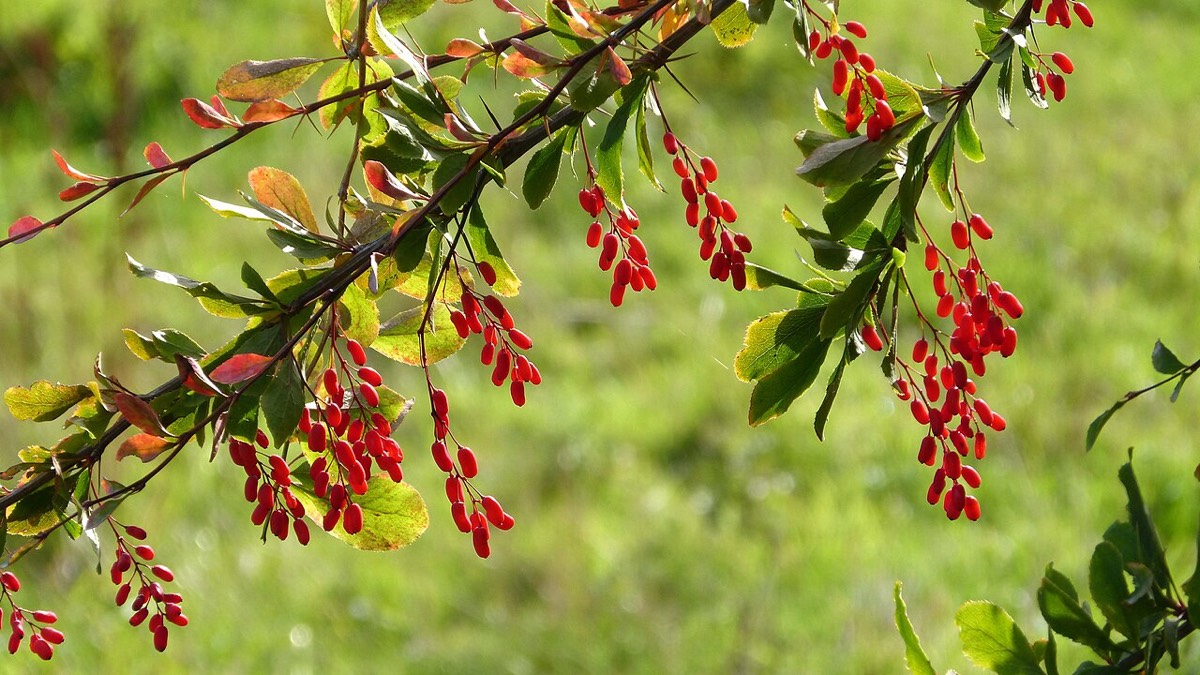
Berberine is a bitter yellow alkaloid from plants such as barberry and the Chinese herb huanglian (Coptis). It has a long history as a remedy for diarrhoea and a newer one as a supplement for cholesterol and blood sugar. Very little of a swallowed dose gets into the blood, so researchers suspect much of what it does happens in the gut, through the bacteria that live there. A cardiology team at Peking Union Medical College Hospital in Beijing set out to see what it does to the gut bacteria of people with coronary artery disease.
They recruited 23 people with stable coronary artery disease who had had a stent or similar procedure 8 to 40 weeks earlier, and allocated them by random sequence. Twelve took berberine tablets on top of their usual heart medicines; 11 carried on with the medicines alone. The dose rose in steps: 300 mg a day for four weeks, then 600 mg, then 900 mg, split into three doses. Nobody got a dummy pill, and only the technicians measuring blood-vessel function were told to stay unaware of who was in which group. The trial ran in 2020 and 2021 and was published in Frontiers in Nutrition on 20 October. One person in the berberine group dropped out.
The gut changes were the clearest part. Across 68 stool samples, 17 species shifted enough to pass the team's statistical bar after 12 weeks of berberine, among them more Roseburia, Ruminococcus and Anaerostipes hadrus, bacteria known for making butyrate, a short-chain fatty acid that feeds the cells lining the colon. The median butyrate level in the berberine group's stools nearly doubled, from 11.5 to 21.3, and those patients reported less constipation. Fecal L-dopa and a few other breakdown products of the amino acids phenylalanine and tyrosine also rose with berberine.
The heart-related results are where to read carefully. The paper's title says berberine improves lipid levels, and its statistics report a significant group-by-time difference for LDL cholesterol. But the averages it gives show LDL falling from 1.74 to 1.55 mmol/L (about 67 to 60 mg/dL) with berberine and from 2.33 to 2.01 mmol/L (about 90 to 78 mg/dL) without it: the larger drop, in units and in percent, was in the group that never took it. Flow-mediated dilation, a measure of how well the arm artery widens, went from 6.7% to 9.7% in the berberine group, a change that missed statistical significance (p = 0.07). Inflammation markers such as IL-1α, IL-17 and MCP-1 fell in the berberine group, but that is a before-and-after comparison within one group. The comparison group's CRP, another inflammation marker, started far higher and fell from 8.5 to 0.7 mg/L.
The groups were not well matched. The berberine group averaged 56 years old and two in three were men; the comparison group averaged 68 and only about one in three were men. The authors call it a pilot, say a definitive trial would need far more people, and acknowledge that age, sex, smoking, drinking, diet and exercise could all have muddied the comparison. What the study adds is a careful map of how berberine reshapes gut bacteria in heart patients already on statins and blood thinners. Whether that helps their hearts is still open. The work was funded by Chinese national science and medical research grants, and the authors declare no commercial conflicts. We read the full open-access paper.
Berberine plus usual heart medicines versus medicines alone for 12 weeks: 23 people with stable coronary artery disease after a stent procedure, Beijing
12 vs 11
Patients given berberine plus usual medicines vs usual medicines alone; no placebo
300 → 900 mg
Daily berberine dose, raised every four weeks (100 to 300 mg three times a day)
−0.19 vs −0.32 mmol/L
Average LDL cholesterol change: berberine group vs comparison group
6.7% → 9.7%
Artery widening (flow-mediated dilation) in the berberine group; p = 0.07, not significant
11.5 → 21.3
Median stool butyrate in the berberine group, start to week 12 (p = 0.04)
56 vs 68 years
Average age of the berberine and comparison groups; 67% vs 36% men
Study: Liu H, Feng S, Tang M, Sun J, Tian R, Zhang S, 'Berberine improves lipid levels, vascular function, and gut microbial-dependent metabolites in stable coronary artery disease patients', Frontiers in Nutrition 13, published 20 October 2026, doi 10.3389/fnut.2026.1945710, open access; ClinicalTrials.gov NCT04434365. Single-centre parallel-controlled trial at Peking Union Medical College Hospital, 2020–2021: 2-week run-in, 12-week treatment, allocation 1:1 by computer-generated sequence (block size 4) in sealed envelopes; no placebo; flow-mediated dilation read by technicians blinded to group. Berberine 100 mg three times daily weeks 1–4, 200 mg weeks 5–8, 300 mg weeks 9–12; adherence by pill count (no one below 80%); one berberine participant withdrew. Baseline: berberine group 8/12 men, mean age 55.6; standard-therapy group 4/11 men, mean age 67.5. LDL-C 1.74 → 1.55 mmol/L (berberine) vs 2.33 → 2.01 (standard therapy); the authors report a group × time interaction p = 0.027 and describe a greater reduction with berberine; the changes shown here are computed from those reported means (mg/dL conversions ours, ×38.67). Total cholesterol interaction p = 0.057. Table 2 (paired tests, mean ± SEM): hs-CRP 8.5 → 0.7 mg/L in standard therapy (p = 0.03) and 1.2 → 0.7 with berberine (p = 0.09); triglycerides 1.5 → 1.3 mmol/L with berberine (p = 0.02). FMD 6.7 ± 0.9 → 9.7 ± 1.1% with berberine (p = 0.07). Constipation assessment scale fell (p = 0.01); Bristol stool form unchanged. IL-1α, IL-17, MCP-1, MIP-1β and VEGF lower at week 12 than baseline within the berberine group. Shotgun metagenomics on 68 stool samples: 43 species changed vs standard therapy, 17 key berberine-responsive taxa (q < 0.05); overall community different between groups at week 12 (PERMANOVA p = 0.018). Stool butyrate median 11.5 → 21.3 (p = 0.04); fecal L-dopa higher with berberine at week 12 (3.67 vs 1.05, p = 0.006). Limitations stated by the authors: pilot sample size, groups differing in age and sex, residual confounding, missing data for some clinical measures. Funding: National Natural Science Foundation of China, CAMS Innovation Fund for Medical Sciences, China Postdoctoral Science Foundation; no commercial or financial conflicts declared.
- Berberine is a yellow compound found in several plants; the trial's tablets came from a drug maker, and the paper names Indian barberry (Berberis aristata) and huanglian (Coptis chinensis) as plant sources.
- Flow-mediated dilation is measured with ultrasound: a blood-pressure cuff on the arm is pumped up for a few minutes, and when it is released the main artery of the upper arm should widen. Healthier artery linings widen more.
- Butyrate, the fatty acid that rose with berberine, is made by gut bacteria from fibre and is a main fuel for the cells lining the colon.
- The US National Center for Complementary and Integrative Health warns that goldenseal, a berberine-containing herb, can change how the body handles many medicines; in one study it lowered blood levels of the diabetes drug metformin.
- The trial finished in 2021, five years before the results were published; it was registered beforehand on ClinicalTrials.gov as NCT04434365.
- Berberine improves lipid levels, vascular function, and gut microbial-dependent metabolites in stable coronary artery disease patientsFrontiers in Nutrition · The paper, open access
- NCT04434365: trial registrationClinicalTrials.gov · The trial's registry entry
- GoldensealNational Center for Complementary and Integrative Health (NIH) · Berberine absorption and medicine interactions
- Berberis vulgaris berries.Wikimedia Commons · The photo, CC BY 2.0 (gailhampshire)
General information, not medical advice. This was a small pilot trial in people with heart disease who were also taking prescribed medicines. Berberine and herbs that contain it can change how the body handles medicines, including a common diabetes drug, and are not for pregnancy, breastfeeding or babies. If you have heart disease, do not swap or add to your prescribed treatment without talking to your doctor.
Analysis by NutroPractic from the sources listed. Written for general readers; it does not replace advice from your own doctor.
From our articles
Our guides on this subject
Plain-language guides on nutrition and wellness, backed by research.

Cardiovascular wellness
Psyllium husk: how much soluble fibre lowers LDL cholesterol and stabilizes post-meal glucose in clinical trials
Viscous soluble fibre forms a thick gel matrix in the small intestine that binds bile acids and blunts post-meal glucose spikes. Across dozens of randomized controlled trials, 7 to 10.2 grams of psyllium daily lowers LDL cholesterol by 6% to 12% without stripping HDL, while reducing postprandial glucose surges by 15% to 25% in metabolic syndrome and type 2 diabetes. Discover the bile acid sequestration mechanism, trial meta-analyses, exact timing before meals, water ratios, and titration protocols to avoid gas and cramping.
13 Nov 2026

Gut health
Probiotic capsules: which ones have trial evidence, what they can do, and when to skip them
Children on antibiotics: 8% got diarrhoea with a probiotic, 19% without. Older hospital patients: 10.8% with, 10.4% without. Which capsules have evidence, what three guidelines say about IBS, what a course costs per case prevented, and who shouldn't take them.
2 Nov 2026
Heart health
Oats and beta-glucan: how many grams lower LDL, and how much steel-cut, rolled and instant oats it takes
The 3 g a day of beta-glucan behind the FDA and EFSA claims lowers LDL by about 0.25 mmol/L (10 mg/dL). That is roughly 60 to 68 g of dry oats or 50 g of oat bran a day. Grams per portion, glycaemic index by oat type and the gluten caveat.
17 Nov 2026
Newsfeed for your website
Want this feed on your website?
Add it to any site with one copy-and-paste snippet. No sign-up, and it updates itself every hour.
Start with a virtual consultation
Tell Dr. Triveni what you want to change. You will leave with a clear next step, whether you are in Toronto, London, New York or Chennai.