Infant nutrition · October 18, 2026
Researchers timed 625 babies eating their first foods. Pouch-fed babies were no faster, but the ones feeding themselves were slower
Fast eating is linked to weight gain in older children, and baby food pouches get blamed for it. A New Zealand study clocked 7 to 10 month olds by diet recall and on video: faster eaters took in more food, pouches made no difference to speed, and self-feeding and breastfed babies ate more slowly.
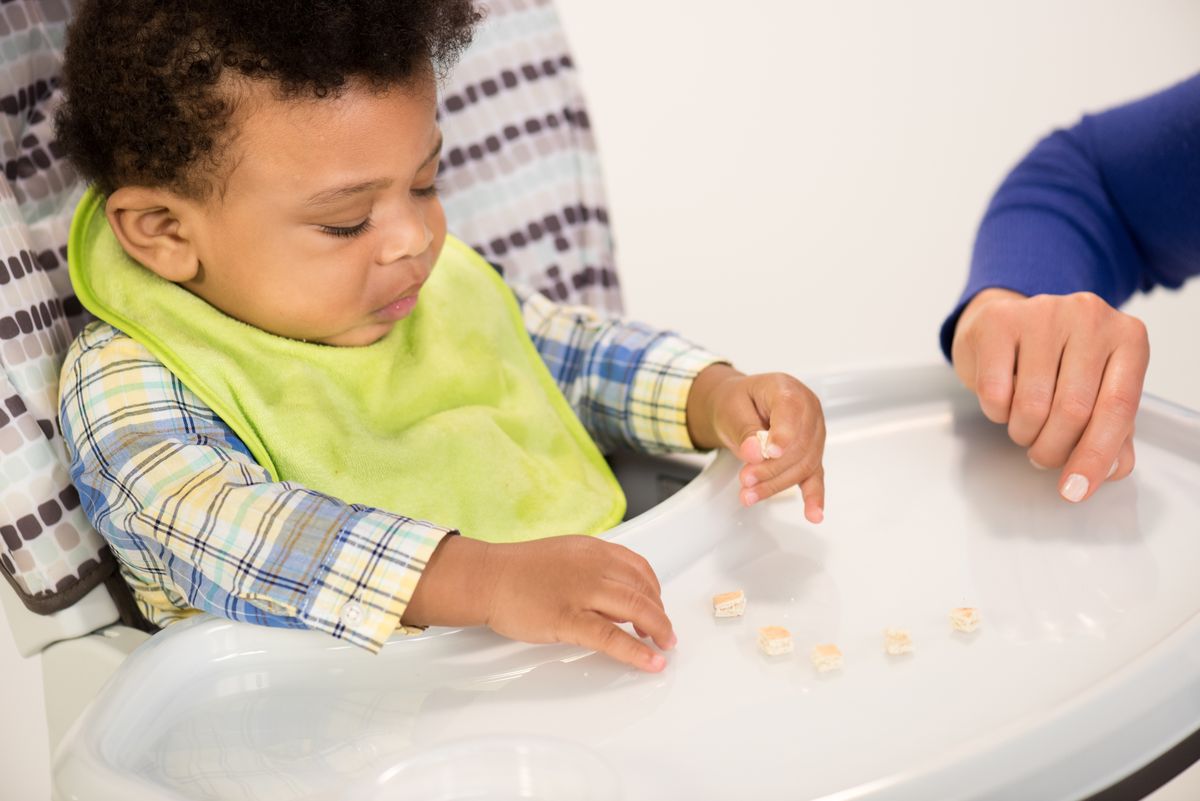
In older children, eating quickly goes hand in hand with eating more and, in many studies, with carrying extra weight. So when babies start solid food, how fast they eat could matter. Two modern habits have raised questions: squeezable baby food pouches, which critics worry let babies take in smooth purée very quickly through the nozzle, and baby-led weaning, where babies feed themselves soft finger foods instead of being spoon-fed. Nobody had measured eating speed at this age, say researchers from the University of Otago and Massey University in New Zealand, who published their study in the International Journal of Obesity on 8 October 2026.
They used First Foods New Zealand, a study of 625 babies aged 7 to 10 months in Dunedin and Auckland, recruited between July 2020 and February 2022. Parents went through everything their baby ate on two separate days, including how long each meal took, and answered a standard questionnaire on how slowly their baby eats. In Dunedin, 205 families also filmed one meal at home with a camera the team provided, and 176 of those videos could be used. Researchers timed each video from the first to the last mouthful, taking out any gaps of more than 30 seconds when the baby had no food. Each baby was weighed and measured.
Across 4,405 meals and snacks, the babies ate solid food 3.6 times a day on average, spent about 19 minutes on each occasion and ate at about 22 kilojoules (about 5 kcal) a minute. Faster eaters took in more: every extra 10 kJ a minute went with about 253 kJ more from solids a day, roughly 19% more. That is a big step, though, as 10 kJ a minute is half the average speed. Babies who spent longer at meals also ate more, about 198 kJ a day more for every extra 10 minutes. Neither measure of speed was linked to a baby's weight for length. Longer meals went with slightly lower weight in the diet records, but the filmed meals did not confirm it.
Pouches did not make babies faster. Babies given food from a pouch at least five times a week ate at much the same speed as the rest, although on video their meals were about three minutes shorter. Few were actually eating from the nozzle, though: by an earlier count from this study, only about 5% of babies were frequent pouch users who regularly ate straight from it, and only 8 of the 176 filmed babies did so on camera. So the worry about nozzle-feeding itself is still untested, and the authors say it should be studied directly.
The clearer differences were in who held the food. Babies who mostly fed themselves spent nearly 4 minutes longer per meal and ate a little more slowly than babies who were mostly spoon-fed, and their parents rated them as noticeably slower eaters. Babies still getting breast milk (two-thirds of the group) also ate their solids more slowly than babies on formula alone, by about 3 kJ a minute in the diet records and 9 kJ a minute on video, and their filmed meals lasted about 3.4 minutes longer. Breastfed babies were also more likely to be following baby-led weaning, which may explain part of that. Faster eaters were, as expected, a little less likely to stop when full and a little more keen on food, but these links were weak.
The authors list the limits plainly. This was a snapshot, so it cannot show that eating speed causes anything. The form and energy density of the food (purée or soft pieces) may explain some of the speed differences. Only one meal was filmed per baby, mostly in Dunedin, whose families were less ethnically diverse than the full sample, and the parents (99% mothers) were more educated than average. The results apply to babies new to pouches and may not hold for older toddlers who can feed themselves from one. The study was funded by the Health Research Council of New Zealand, and the authors declared no competing interests. For parents, the message is reassuring rather than alarming: pouch use did not speed babies up here, and letting a baby set the pace, whether with finger foods or an unhurried spoon, fits with responsive feeding advice.
Eating speed in 625 babies aged 7 to 10 months: diet records, a parent questionnaire and filmed meals, First Foods New Zealand
625
Babies aged 7 to 10 months in Dunedin and Auckland (average age 8.4 months)
4,405
Meals and snacks timed in two days of diet records per baby, plus 176 filmed meals
22 kJ/min
Average eating speed for solid food, about 19 minutes per eating occasion
+253 kJ/day
Extra daily energy from solids for every 10 kJ/min faster eating (about 19% more)
No link
Between eating speed and babies' weight for length (BMI z-score)
No faster
Frequent pouch users (5+ times a week) vs others, although their filmed meals were 3.1 min shorter
3.7 min longer
Per meal for babies who mostly fed themselves vs mostly spoon-fed, and slightly slower (−3 kJ/min)
8 of 176
Filmed babies who ate straight from a pouch nozzle
Figures from Cox AM, Heath AM, Haszard JJ, Taylor RW and colleagues, 'Eating speed in complementary fed infants: associations with energy intake, weight status, breastfeeding, baby food pouch use and baby-led weaning', International Journal of Obesity, published 8 October 2026, doi 10.1038/s41366-026-02234-9 (open access, CC BY 4.0). Differences are adjusted for infant age. Energy counts solid food only, not breast milk, formula or other drinks. Cross-sectional data, so links are not proof of cause. 1 kJ is about 0.24 kcal.
- In the diet records, babies ate solids about 3.6 times a day and took in about 1,322 kJ (roughly 316 kcal) a day from food, on top of their milk.
- Eating speed rose with age: the amount eaten at each meal went up from the youngest to the oldest babies while meal times stayed about the same.
- The usual questionnaire for children's eating pace mixes two different things, how long a meal takes and how fast a child eats, which is one reason the team also timed meals on video.
- Two-thirds of the 625 babies (414) were still getting breast milk at 7 to 10 months, and 92.6% had been born at full term.
- The World Health Organization advises starting solid foods at 6 months while breastfeeding continues, and feeding responsively: watching for a baby's hunger and fullness cues and letting them eat at their own pace.
- Eating speed in complementary fed infants: associations with energy intake, weight status, breastfeeding, baby food pouch use and baby-led weaningInternational Journal of Obesity, 8 October 2026 · The study: methods, eating speed results, pouches, baby-led weaning, breastfeeding and limitations
- First Foods New Zealand (ACTRN12620000459921)Australian New Zealand Clinical Trials Registry · The study's prospective registration
- WHO guideline for complementary feeding of infants and young children 6–23 months of ageWorld Health Organization, 2023 · Current international advice on starting solids and responsive feeding
General information, not medical advice. This was an observational study of healthy babies in New Zealand and does not show that eating speed, pouches or feeding style cause weight changes. For questions about starting solids, choking safety or your baby's growth, talk to your doctor, Plunket nurse or a registered dietitian.
Analysis by NutroPractic from the sources listed. Written for general readers; it does not replace advice from your own doctor.
From our articles
Read, then eat a little better
Plain-language guides on nutrition and wellness, backed by research.

Supplements and vitamins
Spermidine from food or capsules: measured milligrams in wheat germ, soybeans and cheese, and what the one year-long trial found
Wheat germ holds about 22 to 34 mg of spermidine per 100 g, matured cheese about 0.12 mg. The only year-long capsule trial used 0.9 mg a day and found no memory benefit. Measured values, worked doses and safety.
22 Nov 2026

Supplements and vitamins
Zinc carnosine for the gut lining: what the two human trials gave, the zinc in each dose, and the copper catch
Zinc carnosine is only about 22.6% zinc, so 75 mg twice a day is roughly 34 mg of zinc a day. Here are the doses and results of the 10-person NSAID permeability trial and the 20-person aspirin pilot, and the copper cautions.
22 Nov 2026

Women's health
Inositol for PCOS: the 40:1 ratio, trial doses, and food milligrams
Why do randomized trials in polycystic ovary syndrome prioritize the 40:1 myo to D-chiro inositol ratio? Here is the science behind the ovarian epimerase paradox, clinical ovulation and insulin metrics, and why cantaloupe cannot replace 4,000 mg trial powder.
21 Nov 2026
Newsfeed for your website
Want this feed on your website?
Add it to any site with one copy-and-paste snippet. No sign-up, and it updates itself every hour.
Start with a virtual consultation
Tell Dr. Triveni what you want to change. You will leave with a clear next step, whether you are in Toronto, London, New York or Chennai.