Sustainable eating · October 15, 2026
Pork sausage in paper or plant-based sausage in plastic? Most of 475 American shoppers called the pork greener. In every pair where carbon was worked out, they picked the higher-emission option
A Michigan State survey asked US adults which groceries were better for the planet. They judged mostly by the wrapper: glass over plastic, paper over trays, no packaging over less waste. The food inside, and the food thrown away, barely registered.
Ask people what makes a grocery item 'sustainable' and they tend to look at the outside of it. A team from Michigan State University and the University of Massachusetts Amherst set out to measure how far that goes. They surveyed 475 adults living in the United States, recruited through the paid research platform Prolific as a sample matched to the US census on sex, age and ethnicity. Their average age was about 46, and nine in ten did all or some of their household's food shopping. The paper was published on 10 October 2026 in the Journal of Food Science.
The first task was a ranking game. People saw 12 sets of five product features, drawn from a list of 19, and picked the most and least important for sustainability in each. 'Locally produced' came out on top, closely followed by recyclable and compostable packaging. Only two features of the food itself scored as important more often than not: being made with plant-based ingredients and being minimally processed. At the bottom sat 'certified vegan', then 'includes preservatives' and 'processed to extend shelf life'.
The second task was more revealing. People faced 10 pairs of products where each option was greener in a different way, and chose the one they thought more sustainable. Seven of the ten pairs had a clear winner. A glass bottle of milk beat a plastic jug (81%), even when the survey said neither could be recycled. Local strawberries grown conventionally beat organic ones from a national brand (80%). Yogurt and sausage in paper beat the same products in plastic (76% and 71%). And 69% thought buying more food than they needed with no packaging was greener than buying a smaller packaged amount and wasting nothing.
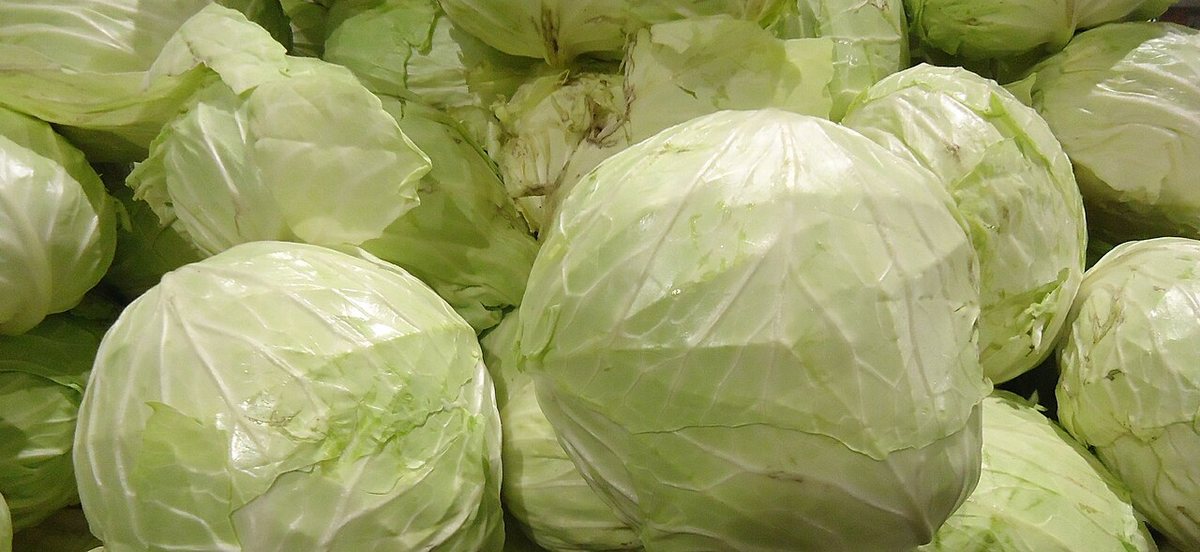
For six of the products, the authors estimated carbon emissions with a commercial calculator, My Emissions. That covered three of the pairs: a whole unwrapped head of cabbage against half a head in plastic, glass against plastic milk bottles with no recycling, and pork sausage wrapped in paper against plant-based sausage in a plastic tray. In all three, most people chose the option with the higher estimated emissions. The pork sausage was the highest of the set at nearly 2,500 g of CO2 equivalents; both cabbage options were under 600 g. In the authors' words, the packaging material was winning over the protein source.
Asked what drives their everyday shopping, 76% said taste 'sometimes' or 'always' comes first and 72% said price. Recyclable packaging (67%) and choosing a smaller pack to avoid wasting food (63%) came next, ahead of buying local (60%). Swapping meat or dairy for plant-based options was the least common habit: 44% and 46% said they never do it. Age and gender did not predict anyone's choices. People's attitudes to eco-friendly packaging did, and one result ran the wrong way: those most convinced that green packaging helps the planet were less likely to pick products with less packaging, or local ones.
The authors' reading is that recycling campaigns have taught people to see sustainability as a packaging problem, so they overlook bigger levers such as what the food is and how much of it ends up in the bin. They point out that glass is heavy to transport, that preservatives and freezing can cut household waste, and that food waste is a large source of landfill methane. Their answer is education that goes beyond recycling, and for companies, packaging that matches what is genuinely greener about the product inside.
There are real limits. This was one online survey of paid volunteers, answering questions rather than shopping, so it shows what people believe, not what they buy. Carbon was worked out for only 6 of the 20 products, because the calculator could not handle the rest, and carbon is only one part of sustainability: water, land, plastic pollution and local economies are not in the number. The amounts behind each estimate were the authors' own choices (for example a 2-pound whole cabbage against a 1-pound half). The paper also gives two different shares for the sausage choice: 71% in the results for paper over plastic, 76% in the discussion for pork in paper over plant-based in plastic. The authors declare no conflicts of interest; the paper does not name a funder.
Online survey of 475 US adults (Prolific, census-matched on sex, age and ethnicity; mean age 45.7; 49.9% women): which product features and which of two competing products they judged more sustainable, with carbon estimates for six products
81%
Chose a glass milk bottle over a plastic jug as more sustainable, even when neither could be recycled
3 of 3
Pairs with a carbon estimate where most people chose the higher-emission option (cabbage, milk, sausage)
~2,500 g
Estimated CO2 equivalents for 1 lb of pork sausage wrapped in paper, the highest of the products costed
69%
Thought more food than needed with no packaging beat a smaller packaged amount with no waste
80%
Picked local conventional strawberries over organic ones from a national brand
44–46%
Said they never swap meat or dairy for a plant-based option, the least common habit asked about
Figures are from Ahonen, Wagner, Mulheron, Nolden and Mayhew, 'What Makes a Product Sustainable? A US-Based Consumer Survey Finds That Consumers Overemphasize the Impact of Packaging on Product Sustainability', Journal of Food Science 91(10):e71511, doi 10.1111/1750-3841.71511, published 10 October 2026 (open access, CC BY 4.0). Feature rankings come from a maximum-difference task (12 sets of 5 out of 19 features), scored as the share of 'most important' minus 'least important' picks. Pair choices were tested with binomial tests; 7 of 10 pairs differed significantly. Carbon figures were estimated by the authors with the My Emissions calculator for 6 of 20 products, and serve as a proxy for sustainability; the exact gram values for each product appear only in the paper's Figure 3B, so we quote just the two numbers given in the text. The sausage share is 71% in the results section and 76% in the discussion; we report both. Shopping habits are the share answering 'sometimes' or 'always' on a 4-point scale. Glass, paper and plastic recycling rates, food-waste figures and the frozen-food comparison in 'Did you know' are as cited by the authors from US EPA, USDA and other sources. Stated beliefs, not observed purchases.
- The authors cite US EPA figures that 31.3% of glass packaging made in the US was recycled, against 80.9% of paper and paperboard and 13.6% of plastic.
- Glass packaging can carry a bigger carbon footprint than plastic, the paper notes, mostly because it is heavier and takes more energy to transport.
- Food left to rot in landfills was behind roughly 58% of landfill methane emissions in the US in 2020, according to a study by Krause and colleagues that the authors cite.
- A British study quoted in the paper found households wasted 47% more fresh food than frozen food.
- Most participants rated 'includes preservatives' among the least sustainable features of a product, although making food last longer is one of the main ways to stop it being thrown away.
- What Makes a Product Sustainable? A US-Based Consumer Survey Finds That Consumers Overemphasize the Impact of Packaging on Product SustainabilityJournal of Food Science, published 10 October 2026 (open access, CC BY 4.0) · The study: survey design, rankings, product pairs, carbon estimates, regression and discussion
- Full text on PubMed Central (PMC13654058)US National Library of Medicine · Open-access full text
- PubMed record 42859393US National Library of Medicine · Abstract and publication details
- White cabbages at Asian supermarket in New JerseyWikimedia Commons · Image, CC0, by Tomwsulcer
General information, not medical or dietary advice. This was a survey of what 475 people believed, not a full environmental assessment, and its carbon figures are estimates for a few products. If you are changing your diet, for example cutting down on meat or dairy, talk to your doctor or a registered dietitian about getting enough protein, calcium, iron and vitamin B12.
Analysis by NutroPractic from the sources listed. Written for general readers; it does not replace advice from your own doctor.
From our articles
Read, then eat a little better
Plain-language guides on nutrition and wellness, backed by research.
Supplements and vitamins
Spermidine from food or capsules: measured milligrams in wheat germ, soybeans and cheese, and what the one year-long trial found
Wheat germ holds about 22 to 34 mg of spermidine per 100 g, matured cheese about 0.12 mg. The only year-long capsule trial used 0.9 mg a day and found no memory benefit. Measured values, worked doses and safety.
22 Nov 2026

Supplements and vitamins
Zinc carnosine for the gut lining: what the two human trials gave, the zinc in each dose, and the copper catch
Zinc carnosine is only about 22.6% zinc, so 75 mg twice a day is roughly 34 mg of zinc a day. Here are the doses and results of the 10-person NSAID permeability trial and the 20-person aspirin pilot, and the copper cautions.
22 Nov 2026

Women's health
Inositol for PCOS: the 40:1 ratio, trial doses, and food milligrams
Why do randomized trials in polycystic ovary syndrome prioritize the 40:1 myo to D-chiro inositol ratio? Here is the science behind the ovarian epimerase paradox, clinical ovulation and insulin metrics, and why cantaloupe cannot replace 4,000 mg trial powder.
21 Nov 2026
Newsfeed for your website
Want this feed on your website?
Add it to any site with one copy-and-paste snippet. No sign-up, and it updates itself every hour.
Start with a virtual consultation
Tell Dr. Triveni what you want to change. You will leave with a clear next step, whether you are in Toronto, London, New York or Chennai.