Fertility · October 13, 2026
Eight women trying for a baby spent a week on broth and juice in a Berlin fasting trial. All of them were tired, half found it hard, and the trial itself closed early without saying whether it helps
A hospital team in Berlin put women with infertility on a supervised seven-day fast of vegetable broth and juice, then interviewed eight of them. They talked about a clear head, calm, and the relief of finally doing something themselves. They also talked about flat moods, bland broth and sitting out dinners. What nobody can tell them yet is whether it did anything for their chances of getting pregnant.
Fertility treatment asks a lot of waiting. You wait for a cycle, for a scan, for a phone call. So it isn't hard to see the pull of something you can do yourself, at home, starting Monday. Fasting is one of the things people try, and a team at Charité, Berlin's university hospital, and the Immanuel Hospital set out to test it properly: a randomised trial of a medically supervised fast for women who had not been able to conceive. A paper published on 9 October 2026 in BMC Women's Health reports one part of that work. It is the part where the women describe what the week was like.
The fast was the kind German clinics have offered for decades. No solid food for seven days, with the option of going on to ten. Each day the women had vegetable juices and broths adding up to no more than 300 calories, and were told to drink two to three litres of water or herbal tea. They did it at home, around their jobs, with a dietitian phoning at least once before the fast and twice during it, and on call if something went wrong. Women aged 25 to 45 with a body mass index between 20 and 40 could join; anyone with a past or present eating disorder or a serious medical condition could not.
Eighteen women were assigned to the fasting group and 13 started the fast. Ten agreed to be contacted for an interview and eight gave one, online, within five weeks of finishing. They were between 30 and 44. All but one had a university degree. Two already had children. Some had been through several rounds of IVF and were done with it, some had decided against it, some were still making up their minds. For six of the eight, this was the first fast of their lives.
Seven of the eight got through the full seven days. The eighth stopped after six, and not because she was struggling: she had a work meeting coming up and didn't trust her concentration. Nobody took up the offer of going past a week.
The good parts will sound familiar to anyone who has read about fasting. Women described feeling light, alert and oddly calm. 'I really had, like, a razor-sharp mind,' said one, who was 44 and on her second fast. 'I didn't forget anything.' Another, 39, said her mood usually swings and she reacts strongly to things that annoy her, and that week it was 'much more balanced'. With no meals to shop for or cook, several found they had time to walk, rest and think.
The hard parts were just as consistent. Every one of the eight reported fatigue. Most had cravings, which came more often than plain hunger. The broths and juices were called tasteless and monotonous. Low and wobbly moods were the thing women found hardest to manage, and some put it down simply to losing the pleasure of eating. Dinner with other people became a problem: sitting there with a cup of broth made the deprivation worse, so some stayed away, and then minded being alone. Many thought it would have been easier in a group. Half the women said the week was fairly easy. The other half did not. One, aged 32, summed it up as 'a necessary evil'.
What kept them going is the most revealing part. The first reason was the obvious one, the hope that it might help them conceive. 'It was just really motivating to have the feeling, okay, I can actually do something,' said a 41-year-old. But as the days went on a second reason took over: they were in a study and didn't want to let it down. The 44-year-old said she nearly ate on day three, and that if it hadn't been part of a study she would not have lasted the seven days. A first-time faster said that without the dietitian 'I think I would have quit'. The authors are frank that neither of those props would be there for someone trying this at home.
Afterwards, the women did not all end up in the same place. One became pregnant during or after the fast, and took that as proof. Some felt more hopeful about going back to treatment. And some went the other way. A 39-year-old said the week left her 'more relaxed regarding the fact that it might not work out. It will happen or it won't happen.' The researchers suggest that getting through something difficult may have let a few women feel they had tried everything, which can make it easier to stop.
Now the limits, and they are large. This paper does not say whether fasting improves fertility. It was never meant to; that is the job of the trial it sits inside, and the paper says that trial ran into recruitment trouble, was closed early, and will report its results elsewhere. So one pregnancy among eight women tells us nothing either way. Eight interviews is a small number even for this kind of research, and the authors say they did not reach the point where new interviews stop turning up new themes. The five women who started fasting and weren't interviewed may have had a rougher time. Nearly everyone was a university-educated woman in Berlin with a job flexible enough to slow down for a week. And the people asking the questions were not neutral. The paper says some of the team work in fasting medicine and have 'a personal interest' in its benefits. Two of the authors co-founded a fasting academy and sit on the board of Germany's medical association for therapeutic fasting, and one co-founded a fasting company.
There is also a number that doesn't quite match. The paper's summary describes the fast as under 500 calories a day; its methods section says up to 300. Either way it is very little food, for a week, in women who may be about to try for a pregnancy. That is why this was done with screening, a study doctor and a dietitian on the phone, and it is not something the paper suggests anyone should copy on their own.
Qualitative interview study nested in a randomised trial of a medically supervised, outpatient, fluid-only fast (seven to ten days, vegetable juices and broths) for women with infertility, Berlin; eight women interviewed online between February 2022 and January 2023
8 women
Interviewed, aged 30 to 44. Eighteen were assigned to fasting, 13 started, 10 agreed to be contacted
≤300 kcal
Daily allowance as vegetable juice and broth, according to the methods (the paper's summary says under 500), plus two to three litres of water or herbal tea
7 of 8
Completed the full seven days. One stopped after six because of a work meeting. Nobody chose to go on to ten
8 of 8
Reported fatigue. Most also reported cravings, which came more often than hunger
4 and 4
Half described the week as relatively easy, half as difficult
0
Fertility results in this paper. The trial was closed early and its outcomes are to be published elsewhere
Figures and quotations are from the full open-access paper in BMC Women's Health (doi 10.1186/s12905-026-04978-y, published 9 October 2026), read in PubMed Central. Interviews were held in German and lasted 37 to 68 minutes (53 on average); the quotations are the authors' English translations, lightly trimmed here. Two of the eight women had fasted before. One participant became pregnant during or after the fast; with no comparison reported, that cannot be read as an effect. Participants were recruited from December 2021 to December 2022 at three Berlin fertility centres and later through social media. The trial is registered as NCT04942457. Funding came from the Karl und Veronica Carstens Foundation, which supports research in complementary medicine. Declared interests: two authors co-founded the Academy of Integrative Fasting and are board members of the Medical Association for Therapeutic Fasting and Nutrition; one of them also co-founded the company SALUFAST and the other consults for a plant-based supplement company.
- The paper cites a World Health Organization estimate that about 17.5% of couples worldwide, roughly one in six, experience infertility, defined as not conceiving after a year of trying.
- Male factors contribute wholly or in part to about 45% of infertility cases, the authors note, yet most of the medical treatment is done to women.
- In Germany, only 15% to 22% of fertility treatment cycles end in a live birth, according to the figures the paper quotes.
- About a quarter of couples drop out of IVF after the first full cycle and nearly half by the fifth, the paper says, with stress one of the common reasons given.
- The women in this study had cravings more often than hunger. Several said the hardest thing to give up wasn't food itself but eating with other people.
- Women's experiences of a medically supervised fasting intervention for infertility: a qualitative studyBMC Women's Health, 9 October 2026 (open access) · The new paper: fasting protocol, who was interviewed, themes, quotations, limitations and declared interests
- Full text in PubMed Central (PMC13653389)US National Library of Medicine · Free full text, read in full for this item
- Trial registration NCT04942457ClinicalTrials.gov · The randomised trial these interviews belong to; its fertility results have not been published
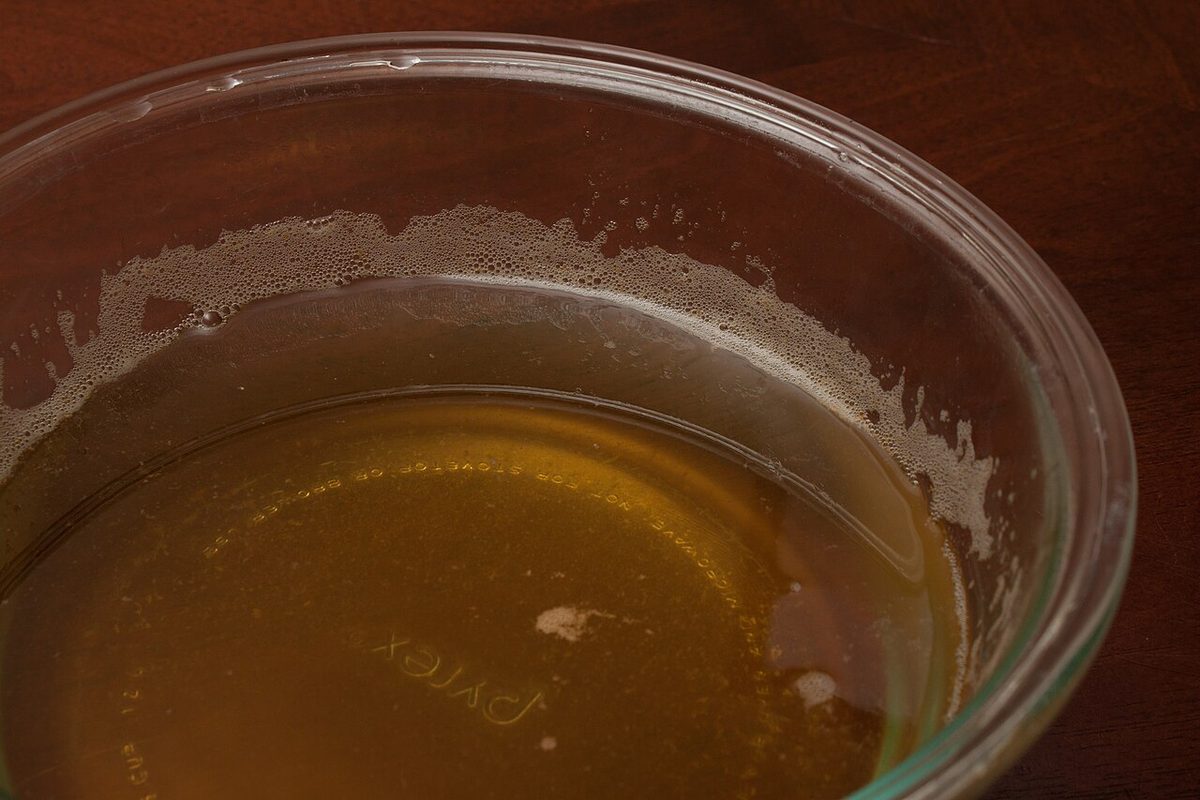
- Vegetable broth (42275070695)Wikimedia Commons · Image, CC BY 2.0, Joey Doll
General information, not medical advice. This study describes how eight women felt during a supervised fast; it does not show that fasting improves fertility. A fast of this kind is not safe for everyone and is not suitable in pregnancy, while breastfeeding, or for anyone with a history of an eating disorder. If you are trying to conceive or having fertility treatment, talk to your doctor before making any large change to how you eat.
Analysis by NutroPractic from the sources listed. Written for general readers; it does not replace advice from your own doctor.
From our articles
Read, then eat a little better
Plain-language guides on nutrition and wellness, backed by research.

Global data
Diabetes, obesity, child malnutrition and hunger, 1980 to 2050: what the numbers show
How diabetes, obesity, child malnutrition and hunger have changed since 1980, with sourced figures and a basic projection to 2050. Click a condition to explore the chart and its facts.
5 Oct 2026

Indian kitchen
Rice, roti and blood sugar: building a balanced Indian plate with the ICMR-NIN 2024 guidelines
About one in nine Indian adults has diabetes and many more have prediabetes. You don't have to give up rice or roti. How the ICMR-NIN Dietary Guidelines for Indians (2024) suggest building a plate, plus simple habits that help keep blood sugar steady.
3 Oct 2026

Micronutrients
Vitamin D and B12: two common gaps, from northern winters to vegetarian kitchens
Vitamin D runs low in Canadian and European winters, and surprisingly often in sunny India too. Vitamin B12 is a risk for vegetarians, people over 50 and people on certain medicines. Who is at risk, what the official advice is in North America, Europe and India, and where to get both.
3 Oct 2026
Newsfeed for your website
Want this feed on your website?
Add it to any site with one copy-and-paste snippet. No sign-up, and it updates itself every hour.
Start with a virtual consultation
Tell Dr. Triveni what you want to change. You will leave with a clear next step, whether you are in Toronto, London, New York or Chennai.