Belly fat · October 11, 2026
Walnuts in place of part of the starch at every meal: deep belly fat fell from 113 to 97 cm² in 12 weeks. At the finish, the walnut group and the comparison group still could not be told apart
A hospital team in Suzhou, China, put 80 adults with large waistlines on the same calorie-cutting diet, then swapped some of one group's staple food for bags of walnuts. The paper's conclusion calls the result a 'solid evidence-based foundation' for treating belly fat. The tables underneath it are more careful than that, and they contain one odd thing: both groups said they were eating about the same number of calories, and only one of them lost much weight.
Fat around the middle is not all the same. The fat packed around the organs, called visceral fat, is tied more closely to diabetes and heart disease than fat on the hips and legs. So a diet that moved fat away from the trunk, or stopped it settling there, would be worth having even if the scales barely changed. That is the idea a team at the First Affiliated Hospital of Soochow University set out to test, and their results are in the October 2026 issue of the Asia Pacific Journal of Clinical Nutrition.
They recruited 80 adults aged 18 to 60 with central obesity by the Chinese definition: a waist of at least 90 cm for men or 85 cm for women, and a body mass index between 24 and 32.5. Everyone was put on the same reduced-calorie plan drawn from China's 2021 obesity guidelines: 500 g of vegetables a day, 200 g of fruit, 100 g of staple food at each meal, five protein foods, 30 g of oat bran, three spoons of oil. Half were then told to take 50 g of staple out of each meal and eat walnuts in its place. That turned a diet of roughly 57% carbohydrate and 24% fat into one of about 39% carbohydrate and 42% fat.
Twelve weeks later the walnut group's visceral fat area had dropped from 113 to 97.4 cm², taking the average below the 100 cm² line used in Asia to mark visceral obesity. Their BMI fell from 27.6 to 26.1. In the comparison group visceral fat went from 116 to 109 cm² and BMI from 27.3 to 27.0. The ratio of trunk fat to leg fat, the measure of where fat sits, edged down from 1.80 to 1.74 with walnuts and stayed put, 1.82 to 1.81, without.
The statistics need reading slowly. The test that asks whether one group changed more than the other over time came out in the walnut group's favour on all three measures. But when the two groups were compared directly at week 12, none of the three differences was statistically significant. The paper says so in its results, and then concludes that the walnut diet achieves 'significantly greater and faster fat reduction'. Greater, by the first test. Faster is hard to support: body composition was measured twice, at the start and at the end.
Then there is the calorie puzzle. By their own three-day food diaries, the walnut group ended up eating 1,162 calories a day and the comparison group 1,211, down by about 580 and 680 calories from where they started. On paper the comparison group cut slightly more. Yet its BMI moved by 0.3 while the walnut group's moved by 1.5. Either the walnut diet did something that calories don't explain, or the diaries are not telling the whole story. The authors list self-reporting bias among their limitations, and say they did not strictly hold calories equal between the groups.
Other things to weigh. Sixteen of the 80 people did not finish, and they were not spread evenly: 5 from the walnut group and 11 from the comparison group, so the main results are from 35 against 29. Fat was estimated by bioelectrical impedance, a machine you stand on and grip, not by a scan. The walnuts were free for two weeks and after that the participants paid for them, because the grant ran short. And the gut-hormone results the paper leans on to explain its findings, higher GLP-1 and PYY and lower C-peptide in the walnut group, come from a single blood sample at week 12. Nobody measured them at the start, so there is no way to say the diet changed them.
Our reading: this is a small, honest-looking trial with an oversold last sentence. It cannot separate the walnuts from the low-carb. The walnut group ate 63 g less carbohydrate a day than the comparison group by the end, and any food that pushed the starch off the plate might have done the same. What it does add is modest and useful. Swapping some starch for a measured portion of unsalted nuts, inside a diet that is already cutting calories, did not slow fat loss and may have helped it. The measured portion is the part to keep. Walnuts are dense in calories, and eating them on top of a normal diet is a different experiment from the one run here.
Walnut-based low-carbohydrate diet against a high-carbohydrate, low-fat diet: 12-week randomised trial, Suzhou, China (80 randomised, 64 analysed)
113 → 97.4
Visceral fat area in cm², walnut group, start to week 12 (35 people). Comparison group: 116 → 109 (29 people). Change over time differed between groups (P = 0.014); the gap at week 12 on its own did not reach significance (P = 0.132)
27.6 → 26.1
Body mass index, walnut group. Comparison group: 27.3 → 27.0. Change over time differed (P = 0.001); the gap at week 12 did not (P = 0.180)
1.80 → 1.74
Trunk-to-leg fat ratio, walnut group. Comparison group: 1.82 → 1.81. Change over time differed (P = 0.039); the gap at week 12 did not (P = 0.154)
1,162 vs 1,211
Calories a day at week 12 from three-day food diaries, walnut group against comparison group. They started at 1,746 and 1,892
112 g vs 175 g
Carbohydrate a day at week 12, walnut group against comparison group. Fat went the other way: 55.2 g against 31.3 g
5 vs 11
People who left the trial, out of 40 in each group: 12.5% of the walnut group and 27.5% of the comparison group
Figures are from the full paper (Asia Pacific Journal of Clinical Nutrition, October 2026, volume 35, issue 5, pages 766 to 778), read on PubMed Central. The journal's own online date is 16 September 2026; the paper was listed in PubMed on 30 September and its full text went live on PubMed Central on 2 October. The main analysis covers the 64 people who finished. An intention-to-treat analysis of all 80, carrying forward the last measurement for those who left, is reported as agreeing in general, with one difference: the waist-to-hip ratio result, a trend in the main analysis (P = 0.072), became significant (P = 0.037). The abstract describes the swap as 150 g of staple food a day replaced by walnuts; the methods describe 50 g of staple replaced at each meal and walnuts handed out in bags of 50 g for men and 45 g for women. The paper does not state plainly how many grams of walnuts were eaten a day. Our inference, not the authors': a reported fat intake of about 55 g a day fits roughly one bag a day far better than three. Hormone values at week 12 (walnut against comparison): GLP-1 2.10 against 1.59 pmol/L, PYY 33.1 against 26.8 pg/mL, C-peptide 1.11 against 1.61 ng/mL, all within the normal range. Mean age was 37; 35 of the 64 were women. The trial was registered (ChiCTR2300068330) and funded by a Suzhou city health technology grant; the authors declare no conflict of interest.
- According to figures cited in the paper, central obesity has risen from 31.3% to 48.3% of people worldwide over the past four decades, and from 18.6% to 37.4% in China.
- The waist cut-offs used here are China's: 90 cm for men and 85 cm for women. Cut-offs differ between countries and ethnic groups, so the same waist can count as central obesity in one guideline and not in another.
- Before the trial started, everyone went a week with no nuts at all, walnuts, almonds and peanuts included, so that both groups began from the same place.
- The walnuts had to be raw or dry-roasted. Salt-baked, five-spice and caramelised walnuts were off the list.
- The comparison group lost visceral fat too, a smaller but statistically significant amount. The authors suggest the 30 g of oat bran a day that both groups ate may have played a part.
- Effect of a walnut-based low carbohydrate diet on fat redistribution and visceral fat accumulation in people with central obesity: A randomized controlled trialAsia Pacific Journal of Clinical Nutrition, October 2026 · The trial
- Full text on PubMed Central (PMC13626808)US National Library of Medicine · Read in full: text and tables 1 to 3
- PubMed record (PMID 42815962)US National Library of Medicine · Abstract and indexing dates
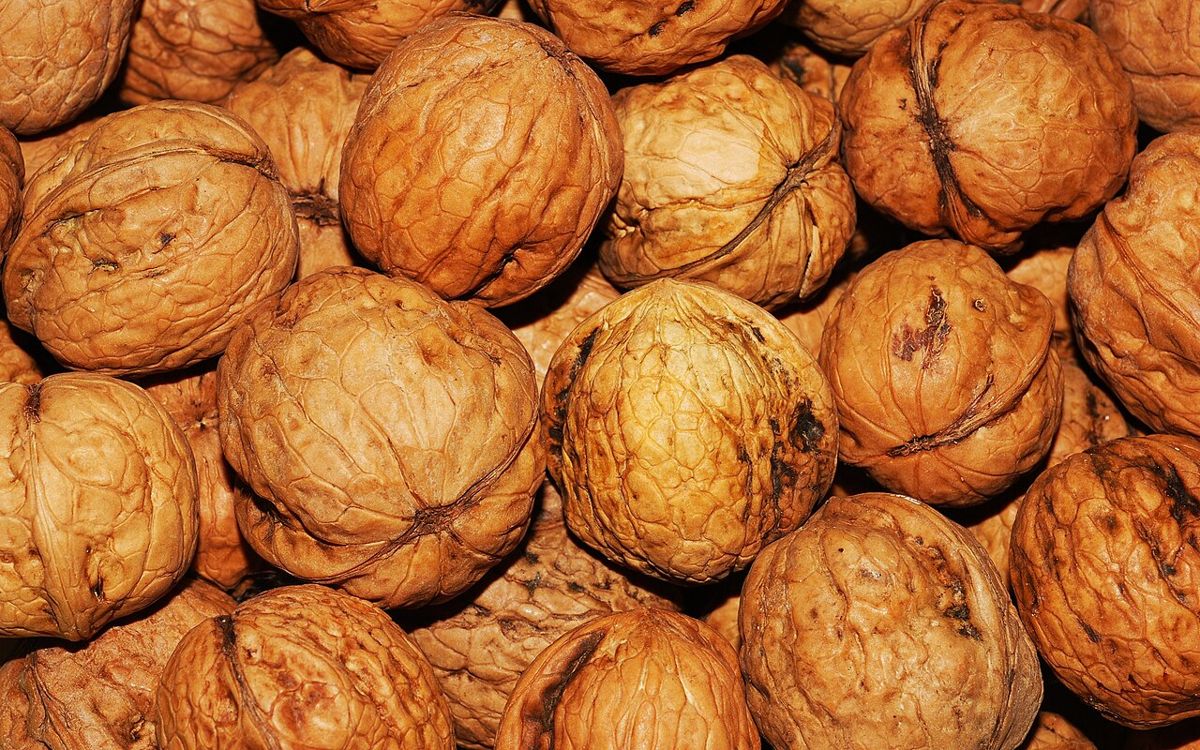
- Pile of walnuts (photo)Wikimedia Commons · Image, CC0
General information, not medical advice. This was a small, short trial in adults without major illness, on a supervised reduced-calorie diet. Walnuts are a common allergen and are high in calories. If you have diabetes, take medicines that affect blood sugar, or have a medical condition, talk to your doctor or a qualified dietitian before cutting carbohydrates or calories.
Analysis by NutroPractic from the sources listed. Written for general readers; it does not replace advice from your own doctor.
From our articles
Read, then eat a little better
Plain-language guides on nutrition and wellness, backed by research.
Global data
Diabetes, obesity, child malnutrition and hunger, 1980 to 2050: what the numbers show
How diabetes, obesity, child malnutrition and hunger have changed since 1980, with sourced figures and a basic projection to 2050. Click a condition to explore the chart and its facts.
5 Oct 2026
Indian kitchen
Rice, roti and blood sugar: building a balanced Indian plate with the ICMR-NIN 2024 guidelines
About one in nine Indian adults has diabetes and many more have prediabetes. You don't have to give up rice or roti. How the ICMR-NIN Dietary Guidelines for Indians (2024) suggest building a plate, plus simple habits that help keep blood sugar steady.
3 Oct 2026
Micronutrients
Vitamin D and B12: two common gaps, from northern winters to vegetarian kitchens
Vitamin D runs low in Canadian and European winters, and surprisingly often in sunny India too. Vitamin B12 is a risk for vegetarians, people over 50 and people on certain medicines. Who is at risk, what the official advice is in North America, Europe and India, and where to get both.
3 Oct 2026
Newsfeed for your website
Want this feed on your website?
Add it to any site with one copy-and-paste snippet. No sign-up, and it updates itself every hour.
Start with a virtual consultation
Tell Dr. Triveni what you want to change. You will leave with a clear next step, whether you are in Toronto, London, New York or Chennai.