Cholesterol · October 11, 2026
Does vitamin E lower cholesterol? Pooled across 22 trials, the vitamin E in most capsules did nothing for it. A rarer form called tocotrienol looked far better, and ten of its 16 comparisons come from just three trials
A new review of 1,001 people with high cholesterol or triglycerides gives vitamin E two small wins: triglycerides down 8 points, 'good' cholesterol up 1. The review rates the triglyceride result as high-certainty evidence. Its own check shows that result stops being statistically clear when a single trial of 30 women is left out.
Vitamin E has been tried against heart disease for half a century, on a simple theory: cholesterol does its damage once it has been oxidised, and vitamin E is the antioxidant that sits inside the cholesterol particle. Whether a capsule actually changes the numbers on a blood test is a narrower question, and the trials that asked it have been small and have disagreed.
A team from universities in Iran and Ukraine has now pooled them. Their review, published in Food Science & Nutrition on 7 October 2026, kept 22 randomised trials in adults who already had raised cholesterol or triglycerides: 1,001 people, with doses from 55 to 1,043 IU a day, taken for between four weeks and a year and a half. The trials date from 1978 to 2020. The search ran to the start of 2026, so nothing newer turned up in six years.
The pooled results are modest. Triglycerides fell by 8.14 mg/dL more on vitamin E than on the comparison, and HDL, the 'good' cholesterol, rose by 1.08 mg/dL. Both pass the usual statistical test. Total cholesterol and LDL, the number most people are treated for, did not: LDL came out 9.06 mg/dL lower, with a range that runs from an 18.6 point drop to a slight rise. The authors are frank about what this adds up to. The changes, they write, 'may not translate into clinically meaningful reductions in cardiovascular risk'.
The part that will be quoted is the split by type. Vitamin E is a family. Tocopherols are the form in almost every capsule on a pharmacy shelf; tocotrienols are a rarer branch, sold as a speciality supplement. In the tocopherol comparisons, total cholesterol and LDL each ended a few points higher than on placebo, and HDL did not move. In the tocotrienol comparisons, LDL was 20 mg/dL lower and HDL 2.4 higher. If that held up, it would be a real effect for a supplement.
We went through the table of trials to see what the tocotrienol figure rests on. There are 16 tocotrienol comparisons, but ten of them come from three trials. One trial in Pakistan tested four doses against the same 18 people in a control group. Two American trials each tested three products against a single placebo group of 13 and of 17. The same placebo volunteers are being compared again and again, and the methods section does not describe any step to divide those groups up. The disagreement between the tocotrienol results is also about as large as the scale allows, 96% on the I² measure, which means some trials found a big drop and others found nothing. Fourteen of the 16 comparisons lasted eight weeks or less.
The paper also reports that lower doses and shorter trials did better, which sounds like two more findings. By our count they are mostly the same one. Thirteen of the 20 lower-dose comparisons and 14 of the 23 short ones are the tocotrienol arms again. Where the paper looks at trials of 12 weeks or more, the LDL difference is gone: 2 points in the wrong direction. And a second analysis in the same paper, a curve fitted to dose, is described as showing bigger effects at higher doses, the opposite of the subgroup result.
Then there is the triglyceride finding, the one the review grades as high certainty with 'no serious limitation' on any of five counts. The paper's own table of what happens when each trial is removed shows that leaving out one study, of 30 women with type 2 diabetes in Iran, shrinks the effect to 5.4 mg/dL with a range that includes zero. For HDL, removing any one of ten different comparisons does the same. Results that depend on a single small trial are not what most readers would understand by high certainty.
Our reading: for the ordinary vitamin E capsule, this is a fairly clear no on cholesterol. For tocotrienols it is an open question, not an answer, resting on a few hundred people in short trials, and the authors themselves call that comparison exploratory. It needs one decent-sized trial that runs for months and compares the two forms directly. Nobody with a cholesterol problem should read this as a reason to swap a prescribed medicine for a supplement, and the review says so too.
Vitamin E supplements and blood lipids in adults with dyslipidaemia: systematic review and meta-analysis of 22 randomised trials (33 comparisons, 1,001 people)
-8.14 mg/dL
Pooled change in triglycerides, vitamin E against control, 31 comparisons. 95% confidence interval -15.05 to -1.23. With one trial of 30 women removed: -5.42 (-11.61 to 0.76)
+1.08 mg/dL
Pooled change in HDL cholesterol, 29 comparisons. 95% confidence interval 0.06 to 2.10. Removing any one of ten comparisons takes the lower end to zero or below
-9.06 mg/dL
Pooled change in LDL cholesterol, 27 comparisons. 95% confidence interval -18.60 to 0.47, which includes no change (P = 0.063). I² 95.7%
+3.21 vs -20.19
LDL change in mg/dL with tocopherols (12 comparisons, 95% CI -2.18 to 8.61) against tocotrienols (14 comparisons, 95% CI -34.23 to -6.15, I² 96.4%)
10 of 16
Tocotrienol comparisons that come from three trials, each testing three or four capsules against one shared control group of 13, 17 or 18 people (our count from the paper's table 1)
+2.27 mg/dL
LDL change in trials lasting 12 weeks or more, 10 comparisons. 95% CI -5.07 to 9.61. In trials shorter than 12 weeks: -15.6 (-28.56 to -2.83)
Figures are from the full open-access paper (Food Science & Nutrition, e72428), read on PubMed Central. It was received on 10 October 2025, accepted on 17 September 2026 and published on 7 October 2026. All differences are weighted mean differences from a random-effects model, in mg/dL as the paper reports them. In mmol/L (our conversion): triglycerides -0.09, HDL +0.03, LDL -0.23 overall and -0.52 with tocotrienols. Total cholesterol: -6.48 mg/dL overall (95% CI -14.15 to 1.17, I² 92.3%); tocopherols +3.90 (-1.61 to 9.42), tocotrienols -16.50 (-27.39 to -5.61). HDL: tocopherols -0.46 (-2.33 to 1.40), tocotrienols +2.39 (1.51 to 3.26). Doses of 400 IU a day or less: LDL -15.03 (-28.05 to -2.01); above 400 IU: +1.45 (-5.50 to 8.40). The counts of tocotrienol comparisons from multi-arm trials, of tocotrienol arms among the lower-dose and shorter comparisons (13 of 20 and 14 of 23, for total cholesterol) and of arms lasting eight weeks or less are our own reading of table 1, not statements made by the authors. The paper lists 532 people in vitamin E groups and 531 in control groups; people in crossover trials are in both, which is how the total is 1,001. The largest trial had 60 people. In four trials the comparison group took a statin or gemfibrozil instead of a placebo; the paper says such drugs were given equally to both groups, although table 1 lists one trial as vitamin E against atorvastatin. The paper's sensitivity section describes the pooled LDL effect as statistically significant and the HDL effect as non-significant, the reverse of its main results; we have used the main results. GRADE ratings: triglycerides high, HDL moderate, total cholesterol and LDL very low. Egger's test suggested publication bias for HDL (P = 0.013); the authors report that a trim-and-fill correction did not change the result. The paper does not mention a registered protocol. The authors report no funding and no conflicts of interest.
- Vitamin E is not one substance. The paper describes two branches, tocopherols and tocotrienols, each with alpha, beta, gamma and delta forms. They differ in the tail of the molecule: the tocotrienol tail has double bonds, which the authors say lets it move more freely in cell membranes.
- The proposed way tocotrienols might lower cholesterol has nothing to do with being an antioxidant. According to the paper, they damp down HMG-CoA reductase, the enzyme that sets the pace of the body's own cholesterol production. It is the same enzyme that statins block.
- In the two comparisons where people started with LDL below 130 mg/dL, LDL went up on vitamin E, by 6.87 mg/dL, and the result was statistically clear.
- The search found 5,155 records. Forty papers were read in full and 22 kept.
- The oldest trial in the review is from Sweden in 1978: 17 people with raised blood fats took alpha-tocopherol and a placebo in turn, in a crossover trial listed at eight weeks.
- Efficacy of Vitamin E Administration on Serum Lipid Profile in Adult Patients With Dyslipidemia: A GRADE-Assessed Systematic Review and Dose-Response Meta-Analysis of RCTsFood Science & Nutrition, 7 October 2026 · The review
- Full text on PubMed Central (PMC13643374)US National Library of Medicine · Read in full: text, tables 1 to 5
- PubMed record (PMID 42846136)US National Library of Medicine · Abstract and dates
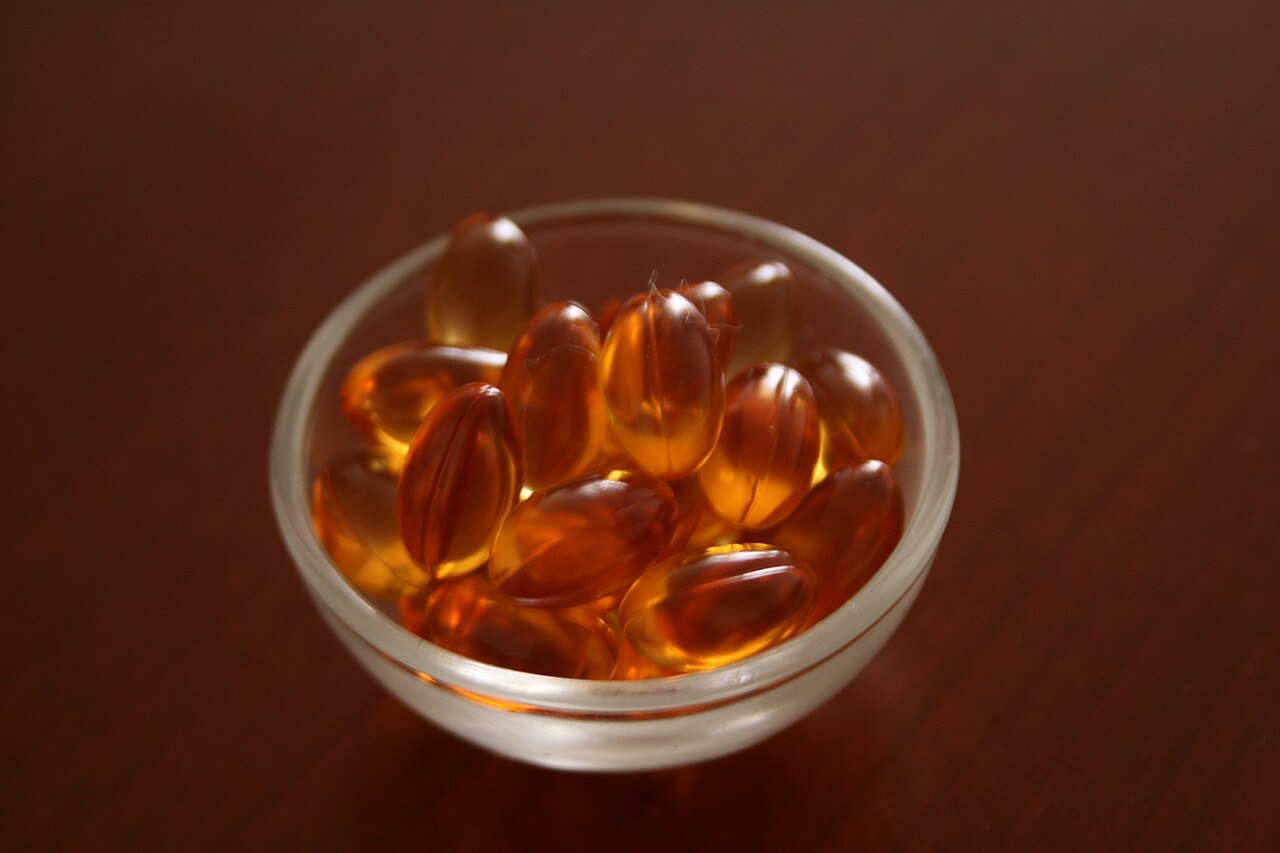
- Vitamina E (suplemento) 095 (photo by Tamorlan)Wikimedia Commons · Image, CC BY 3.0
General information, not medical advice. The trials measured blood lipids over weeks or months; none measured heart attacks or strokes. Vitamin E supplements are not a substitute for cholesterol-lowering medicine, and high doses can interfere with blood clotting and with some medicines, including blood thinners. Talk to your doctor before starting a supplement or changing a prescribed treatment.
Analysis by NutroPractic from the sources listed. Written for general readers; it does not replace advice from your own doctor.
From our articles
Read, then eat a little better
Plain-language guides on nutrition and wellness, backed by research.
Global data
Diabetes, obesity, child malnutrition and hunger, 1980 to 2050: what the numbers show
How diabetes, obesity, child malnutrition and hunger have changed since 1980, with sourced figures and a basic projection to 2050. Click a condition to explore the chart and its facts.
5 Oct 2026
Indian kitchen
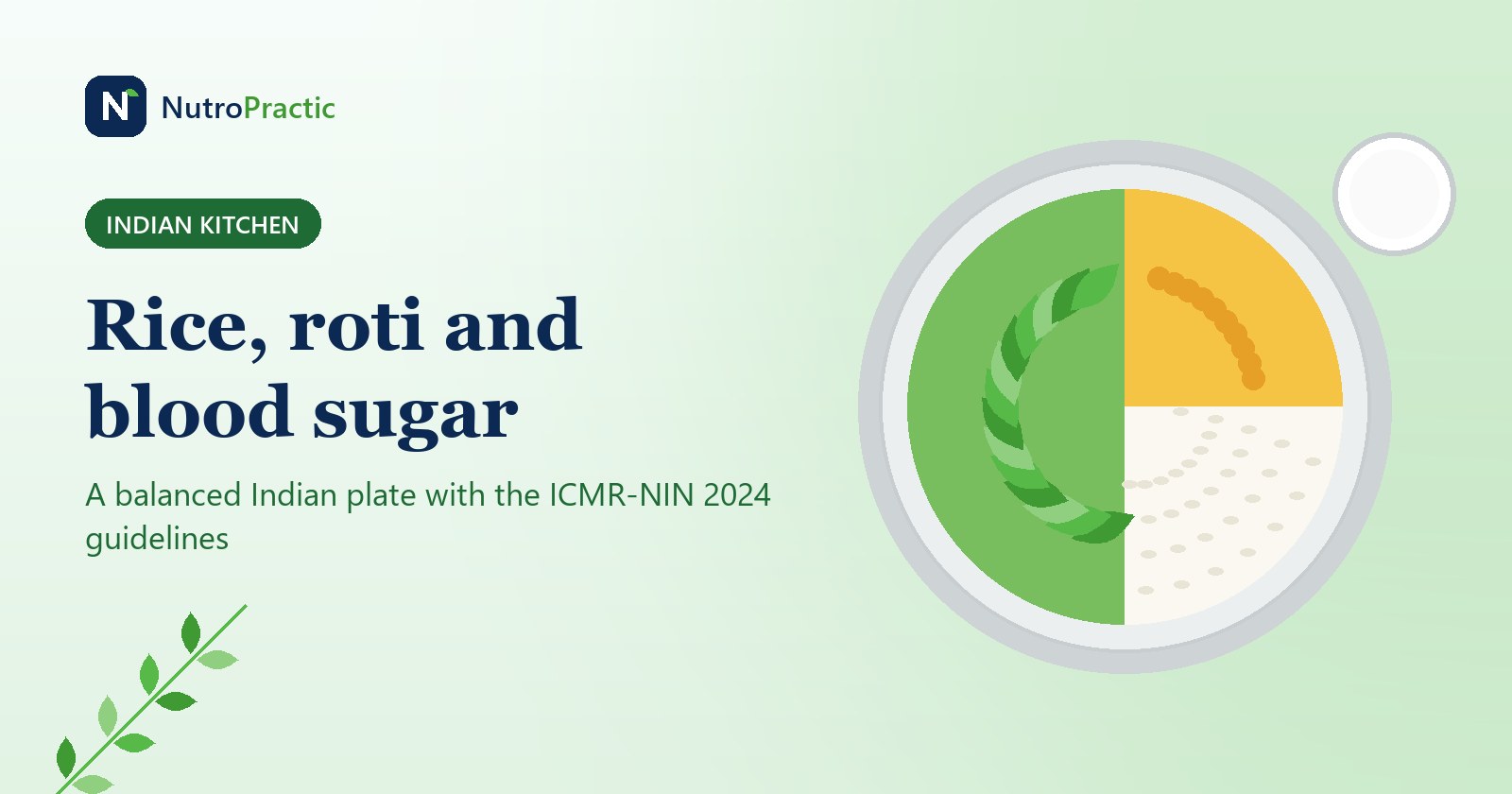
Rice, roti and blood sugar: building a balanced Indian plate with the ICMR-NIN 2024 guidelines
About one in nine Indian adults has diabetes and many more have prediabetes. You don't have to give up rice or roti. How the ICMR-NIN Dietary Guidelines for Indians (2024) suggest building a plate, plus simple habits that help keep blood sugar steady.
3 Oct 2026
Micronutrients
Vitamin D and B12: two common gaps, from northern winters to vegetarian kitchens
Vitamin D runs low in Canadian and European winters, and surprisingly often in sunny India too. Vitamin B12 is a risk for vegetarians, people over 50 and people on certain medicines. Who is at risk, what the official advice is in North America, Europe and India, and where to get both.
3 Oct 2026
Newsfeed for your website
Want this feed on your website?
Add it to any site with one copy-and-paste snippet. No sign-up, and it updates itself every hour.
Start with a virtual consultation
Tell Dr. Triveni what you want to change. You will leave with a clear next step, whether you are in Toronto, London, New York or Chennai.