Muscle and ageing · October 13, 2026
Less fat inside the thigh muscles, a stronger grip? A low-carb trial in people over 60, run in 2015 and funded by egg money, reports its strength results nine years on
Thirty-four older adults with obesity in Alabama ate either a very low-carb diet built around three eggs a day or a low-fat diet for eight weeks. A new paper says the fat marbled through their thigh muscles fell by a quarter on low-carb, and that people who lost more of it gained more grip strength. Look at the 2020 paper from the same trial and the story gets more complicated.
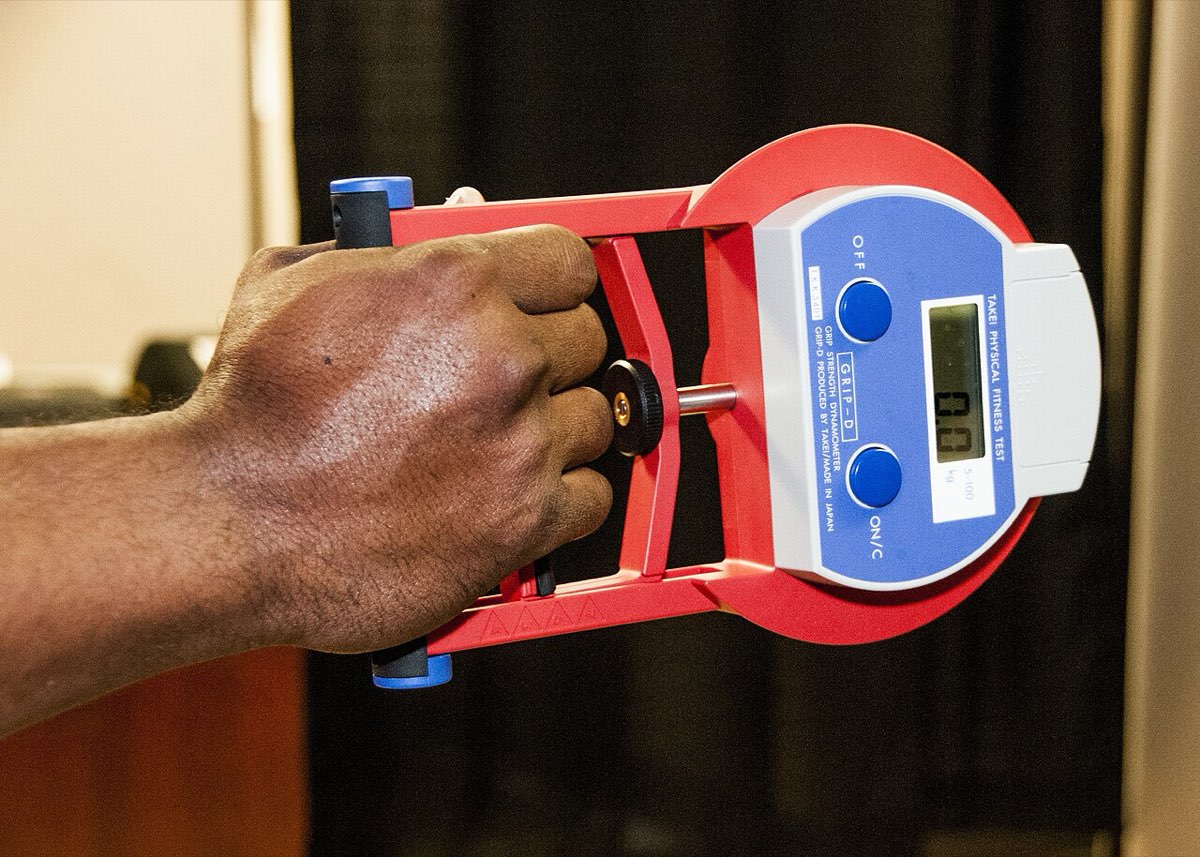
As we age, fat doesn't only collect under the skin and around the belly. It also creeps in between and inside the muscles, like marbling in a steak. Researchers call it intermuscular adipose tissue, and in older adults more of it goes with weaker, slower muscles and more trouble getting around. So a diet that could clear some of it out would be worth knowing about.
A paper published in Obesity on 6 October 2026 by a team at the University of Alabama at Birmingham says a very low-carbohydrate diet might be that diet. Adults aged 60 and over with obesity were randomised to eight weeks of either a very low-carb diet (under 10% of calories from carbohydrate) or a low-fat diet (55% from carbohydrate). MRI scans of the thigh showed the fat inside the muscle fell by 24.4% on low-carb and by 1.0% on low-fat. Across everyone in the trial, people who lost more of that fat gained more grip strength, more knee strength and a better reach score, even after allowing for changes in muscle size and body weight. The authors conclude that diets which shrink this fat, such as a very low-carb diet, may help older adults keep their strength and function.
The new paper is a secondary analysis, and the trial behind it is not new. It ran from January 2015 to July 2017. Its main results came out in 2020 in Nutrition & Metabolism, an open-access journal, so anyone can read the details. The 24.4% versus 1.0% figure is already there, six years earlier. What the 2026 paper adds is the link to strength and function.
The 2020 paper fills in what the new abstract leaves out. Forty people were randomised and 34 finished: 19 on low-carb and 15 on low-fat. The six who dropped out were all women aged 67 to 72. The low-carb group were asked to eat three whole eggs a day and were handed two dozen eggs a week; the low-fat group were asked to avoid whole eggs and were given breakfast bars. The trial was funded by the Egg Nutrition Center, and its ClinicalTrials.gov record, titled 'Does an Egg-Rich Diet Improve Metabolic Health and Function in Obese Older Adults', lists the American Egg Board as a collaborator.
The new abstract calls the diets 'weight-maintaining'. That's what they were meant to be: the dietitians drew up meal plans to keep weight steady and nobody was told to cut calories. But it isn't what happened. In the 2020 paper the low-carb group lost 6.3% of their body weight in eight weeks, about 6 kg on average, against 1.0% on low-fat, and 9.7% of their body fat against 2.0%. The authors wrote that the low-carb group 'spontaneously restricted intake'. So the low-carb group were on a weight-loss diet in practice, and part of the drop in muscle fat may simply be what weight loss does. In the 2020 analysis the gap in thigh muscle fat did hold up after allowing for fat lost (p = 0.02), which suggests it was more than weight loss alone, though in a trial this small that is one test, not a settled answer.
There is a quieter detail in the 2020 table. At the start, the low-carb group had more fat inside their thigh muscles than the low-fat group: 20.9 cubic centimetres on average against 15.1. After eight weeks the low-carb group were at 15.8 and the low-fat group at 15.7. The low-carb group lost a lot, but they also started with more to lose, and both groups ended up in almost the same place.
Then there are the strength figures. The abstract reports that change in thigh muscle fat 'explained' 95% of the variation in change in grip strength (r² = 0.95), 88% for knee strength and 75% for reach. In a few dozen people, over eight weeks, with a test as variable as a grip squeeze, 95% would be remarkable. Because the models were adjusted for muscle volume and body weight, these figures may describe how well the whole model fits rather than thigh fat alone; we couldn't check, because the full paper is behind a paywall. Notice too what the abstract doesn't say: whether the low-carb group actually ended up stronger, or walked further in six minutes, than the low-fat group. Links found across everyone in a trial are not the same as an effect of the diet.
None of this makes the finding wrong. Fat inside muscle is a sensible target in later life, and the MRI scans were analysed by staff who didn't know which diet people were on. But this is a small, unblinded, eight-week trial with a sponsor whose product was the centrepiece of one diet, reported in two papers nine years apart. Whether cutting carbohydrate keeps older people stronger needs a bigger, longer trial with strength and walking as its main measures, and diets matched for weight loss.
Randomised trial, Birmingham, Alabama, 2015 to 2017: adults aged 60 to 75 with obesity, 8 weeks of a very low-carbohydrate diet (three eggs a day) or a low-fat diet; strength results published October 2026
40 → 34
People randomised, and people who finished (19 low-carb, 15 low-fat)
−24.4% vs −1.0%
Change in fat inside the thigh muscles on MRI, low-carb versus low-fat (first reported in 2020)
−6.3% vs −1.0%
Change in body weight in 8 weeks, on diets meant to keep weight steady
20.9 → 15.8 cm³
Thigh muscle fat in the low-carb group, start to finish (low-fat group: 15.1 → 15.7)
r² = 0.95
Reported link between losing thigh muscle fat and gaining grip strength, across all participants
3 eggs a day
Asked of the low-carb group, with two dozen eggs provided each week; the funder was the Egg Nutrition Center
The 2026 figures are from the abstract in Obesity (doi 10.1002/oby.70316, published online 6 October 2026; received 23 March, accepted 25 August 2026). The full text is behind a paywall and we did not read it, so we don't know how many people had strength tests or whether the diets differed in strength or walking. Numbers randomised and completing, weight and fat changes, egg provision, thigh muscle fat volumes and the fat-adjusted p-value are from the 2020 open-access paper on the same trial (Nutrition & Metabolism, doi 10.1186/s12986-020-00481-9; its abstract gives the low-fat change in thigh muscle fat as −1.0% and its main text as +1.0%). The low-carb diet was under 10% carbohydrate, 25% protein and over 65% fat; the low-fat diet 55%, 25% and 20%. The ClinicalTrials.gov record NCT02760641 (first submitted 28 April 2016, after the trial began in January 2015) describes the egg arm as up to 25% carbohydrate with at least two eggs a day and lists 34 participants, muscle strength and the Short Physical Performance Battery among its outcomes. 'About 6 kg' is our arithmetic from the 2020 table (93.7 to 87.8 kg). The reading of the r² values, the baseline comparison and 'a weight-loss diet in practice' are ours.
- Fat inside muscle is easy to miss on the bathroom scale: it can grow with age even when body weight stays the same, and it shows up best on MRI or CT scans.
- In the PURE study of nearly 140,000 adults in 17 countries, every 5 kg lower grip strength went with a 16% higher risk of dying during about four years of follow-up.
- Very low-carb diets cause a quick early drop on the scale partly from water: the body stores about 3 to 4 grams of water with every gram of glycogen, and glycogen runs down when carbohydrate is cut.
- By the trial's own figures, three whole eggs come to about 216 calories and 19 grams of protein, with barely a gram of carbohydrate.
- The DXA scan in the 2020 paper showed the low-carb group losing about 1.5 kg of lean mass; the authors argue much of it was water, because MRI showed no loss of thigh muscle.
- The Effect of a Very Low-Carbohydrate Diet on Intermuscular Adipose Tissue and Muscle Function in Older Adults With ObesityObesity, 6 October 2026 · The new paper. Abstract read; full text is paywalled
- PubMed record 42838121US National Library of Medicine · Full abstract, dates and funders
- Effects of weight loss during a very low carbohydrate diet on specific adipose tissue depots and insulin sensitivity in older adults with obesity: a randomized clinical trialNutrition & Metabolism, 2020 (open access) · The main results of the same trial: numbers, diets, eggs, weight loss, thigh fat volumes and funding
- Egg Diet to Improve Metabolic Health and Function (NCT02760641)ClinicalTrials.gov · Trial registration: dates, collaborator, arms and listed outcomes
- Prognostic value of grip strength: findings from the Prospective Urban Rural Epidemiology (PURE) studyThe Lancet, 2015 · Grip strength and mortality
- AWC offers 'common sense' approach to improving healthWikimedia Commons · Image, public domain (US Army), Marcy Sanchez
General information, not medical advice. This was a small, short, unblinded trial, and it cannot show that a very low-carb diet makes older people stronger. Very low-carb diets can affect blood sugar, blood pressure and some medicines; if you are over 60, or have diabetes or kidney disease, talk to your doctor or a registered dietitian before making a big change to how you eat.
Analysis by NutroPractic from the sources listed. Written for general readers; it does not replace advice from your own doctor.
From our articles
Our guides on this subject
Plain-language guides on nutrition and wellness, backed by research.

Healthy ageing
Protein after 40: how much you really need, and why timing matters
The standard protein target was set to prevent deficiency, not to protect muscle as you age. What the research and expert groups suggest for adults over 40, how to spread protein across the day, and easy ways to hit 25 to 30 grams at breakfast.
3 Oct 2026

Global data
Diabetes, obesity, child malnutrition and hunger, 1980 to 2050: what the numbers show
How diabetes, obesity, child malnutrition and hunger have changed since 1980, with sourced figures and a basic projection to 2050. Click a condition to explore the chart and its facts.
5 Oct 2026

Indian kitchen
Rice, roti and blood sugar: building a balanced Indian plate with the ICMR-NIN 2024 guidelines
About one in nine Indian adults has diabetes and many more have prediabetes. You don't have to give up rice or roti. How the ICMR-NIN Dietary Guidelines for Indians (2024) suggest building a plate, plus simple habits that help keep blood sugar steady.
3 Oct 2026
Newsfeed for your website
Want this feed on your website?
Add it to any site with one copy-and-paste snippet. No sign-up, and it updates itself every hour.
Start with a virtual consultation
Tell Dr. Triveni what you want to change. You will leave with a clear next step, whether you are in Toronto, London, New York or Chennai.