Longevity supplements · October 11, 2026
Urolithin A, the pomegranate-derived 'mitochondria' supplement, was given to 50 adults with obesity for four weeks. Four tests of their blood vessels found nothing. The one signal that moved came from a brain scan, and memory scores stayed where they were
Urolithin A is sold as a capsule that renews the cell's power plants, and a team in Oklahoma wanted to know whether it does anything for the blood vessels of middle-aged people with obesity. In a careful placebo-controlled trial, 1,000 mg a day did not improve how well arteries widen, the thing the study was built to test. Blood flow in one part of the brain did respond more strongly during a memory task. Whether that is good news is harder to say than it sounds.
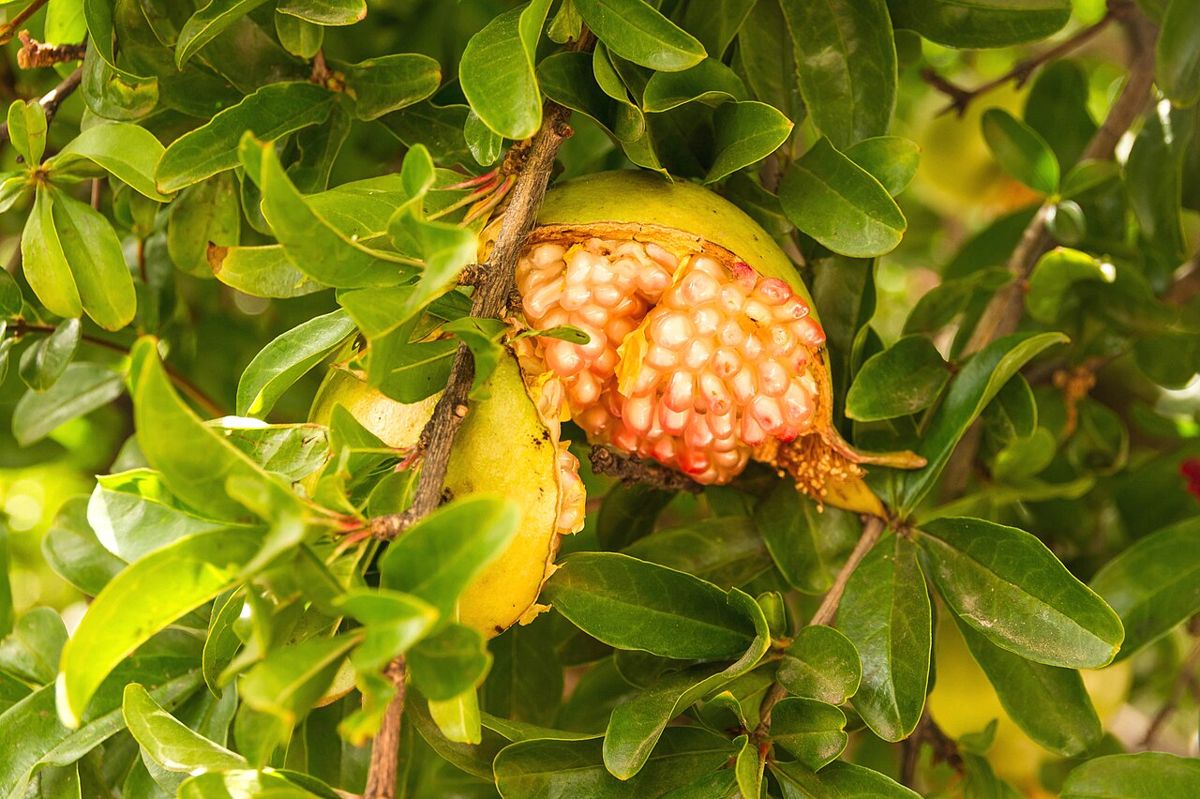
Urolithin A isn't in any food. Gut bacteria make it from ellagitannins, the tannins in pomegranates, walnuts and some berries, and only some people's bacteria do the job well. In animal and early human studies it switches on mitophagy, the cell's way of clearing out worn mitochondria, which is why it has become one of the better-known longevity supplements. Because so many people make little of it themselves, it is sold ready-made in capsules.
Researchers at the University of Oklahoma asked a specific question. Obesity in midlife stiffens and irritates the lining of blood vessels, partly, it is thought, through tired mitochondria. Would urolithin A help? Their trial was published on 9 October 2026 in JAMA Network Open. They enrolled 50 adults aged 40 to 64 with a BMI of 30 or more (the average was 38), three quarters of them women. Half took 1,000 mg of urolithin A a day, two 250 mg capsules before breakfast and two before dinner, and half took matching placebo capsules. Neither the participants nor the people measuring them knew who had which. It lasted four weeks.
The main test was flow-mediated dilation. A cuff squeezes the forearm for five minutes, and when it is released an ultrasound measures how much the artery in the upper arm widens as blood rushes back. A healthy vessel lining widens more. Over the four weeks the figure rose by 1.3 percentage points on urolithin A and 0.3 on placebo, a difference well within chance (p = 0.33). Three other tests of the small vessels in the hand and fingertips showed nothing either. Nor did a panel of blood markers of inflammation and vessel health.
It wasn't that people skipped their capsules. About 96% of doses were taken in both groups, and blood levels of urolithin A's main breakdown product rose by 285 ng/mL in the supplement group against 1 ng/mL on placebo. The compound got in. It didn't visibly change the arteries.
Then the brain. Participants did a letter-memory task wearing a cap that shines near-infrared light through the scalp to track blood oxygen in the outer layer of the brain. After four weeks, the supplement group showed a clearly larger rise in oxygenated blood in the left dorsolateral prefrontal cortex, a region that handles working memory, when the task got harder. The placebo group showed no such rise. This is the result the paper's conclusion points to.
It needs handling with care, for a few reasons. The people with the bigger blood-flow response did no better at the task: accuracy and reaction times were the same in both groups. The authors suggest the task was too easy to show a difference, and they have a point, since 94% of participants scored perfectly on the simpler version before taking anything. But it also means nobody can say the bigger response was useful. In brain imaging, more blood flow for the same performance can be read as a brain being better supplied, or as one working harder for the same result. This trial can't tell which. The brain measure was also one of several secondary outcomes, analysed only in people with complete scans, in a study where 7 of 50 did not come back for the final visit. The paper's abstract says the finding 'warrants further investigation', which is right. A line in its discussion says the supplement 'significantly improved cerebrovascular function', which goes further than the data.
Our reading: this is an honest null result, and those are worth having. It was funded by the American Heart Association and a foundation rather than a supplement company, the authors report no conflicts of interest, and the trial was registered before it began with the artery test as its main outcome. Fifty people for four weeks can't rule out a modest benefit: the range of plausible effects on the artery test ran from slightly worse to almost 5 points better, and the authors want a longer trial of 12 weeks or more. For now, though, there is no evidence that urolithin A improves blood vessel health in people with obesity, and the brain finding is a lead, not a benefit. The things known to help the vessel lining are less exciting: regular exercise, losing weight and not smoking.
Urolithin A 1,000 mg a day against placebo: 50 adults aged 40 to 64 with obesity, 4 weeks, one centre in Oklahoma City
+1.3 vs +0.3
Change in flow-mediated dilation (percentage points), urolithin A against placebo. The main outcome; the difference was not statistically significant (p = 0.33)
0 of 4
Blood vessel tests that showed an effect: one of the upper-arm artery and three of small vessels in the hand and fingers
1 region
Where the brain's blood-flow response to a harder memory task grew on the supplement: the left dorsolateral prefrontal cortex. Task accuracy and speed did not change
+285 ng/mL
Rise in blood urolithin A-glucuronide on the supplement, against about 1 ng/mL on placebo. People took it and absorbed it
43 of 50
Participants who finished (21 on urolithin A, 22 on placebo). About 96% of capsules were taken in both groups
6 vs 3
People reporting headache, the most common side effect, placebo against urolithin A. No sign of harm from the supplement
Figures are from the full open-access paper (JAMA Network Open, published 9 October 2026): the methods, the baseline table and the results sections. The artery result is the adjusted difference of 1.74 percentage points, 95% confidence interval −1.33 to 4.81. The three small-vessel tests had p values of 0.87, 0.83 and 0.30. Brain blood flow was measured with functional near-infrared spectroscopy (fNIRS), which reaches only about 2 cm into the head, and that analysis used complete cases only. Half the participants had high blood pressure and one in five was taking a GLP-1 or similar weight-loss medicine; the authors found this did not change the result. Funding: American Heart Association and the Reynolds Foundation. The '0 of 4' tile is our own count of the paper's reported vessel outcomes.
- Not everyone can make urolithin A. In a 2022 study of 100 healthy adults, only 12% had detectable levels in their blood to begin with, and about 40% turned a glass of pomegranate juice into meaningful amounts. That study was run by a company that sells the supplement.
- Flow-mediated dilation is used in research because it tracks heart risk. A pooled analysis of 14 studies and 5,547 people found about 13% fewer cardiovascular events for every 1 point higher on the test, though the authors warned that the studies were uneven in quality.
- An earlier Japanese trial of much smaller doses, 10 or 50 mg a day for 12 weeks, also found the artery effect depended on the person: those who improved started with poorer vessel function and a particular mix of gut bacteria.
- The dose here, 1,000 mg a day, is at the upper end of what is usually sold. The paper notes that doses up to 2,000 mg a day and courses of up to four months have been reported as safe.
- The brain scan used light, not magnets. Near-infrared light passes through skin and bone, and the amount absorbed shows how much oxygen-carrying blood is in the tissue just beneath.
- Urolithin A and Endothelial and Cerebrovascular Function in Middle-Aged Adults With Obesity: A Randomized Clinical TrialJAMA Network Open, 9 October 2026 · The trial (open access); read in full
- Full text on PubMed Central (PMC13653284)US National Library of Medicine · Free full text of the same paper
- Trial registration NCT05921266ClinicalTrials.gov · The registration cited in the paper
- Direct supplementation with Urolithin A overcomes limitations of dietary exposure and gut microbiome variability in healthy adults to achieve consistent levels across the populationEuropean Journal of Clinical Nutrition, 2022 · How few people make urolithin A from pomegranate juice; sponsored by a supplement maker
- Prediction of future cardiovascular outcomes by flow-mediated vasodilatation of brachial artery: a meta-analysisInternational Journal of Cardiovascular Imaging, 2010 · The link between the artery test and later heart events
- Effect of urolithin A on the improvement of vascular endothelial function depends on the gut microbiotaFrontiers in Nutrition, 2023 · The earlier low-dose trial; funded by the ingredient's manufacturer
- Punica granatum fruit Grenade (photo)Wikimedia Commons · Image, CC0
General information, not medical advice. This was one small, four-week trial at a single centre. Supplements can interact with medicines and are not a substitute for treatment of high blood pressure, diabetes or obesity. Talk to your doctor before starting one, and don't stop or change prescribed medicines on the strength of this study.
Analysis by NutroPractic from the sources listed. Written for general readers; it does not replace advice from your own doctor.
From our articles
Read, then eat a little better
Plain-language guides on nutrition and wellness, backed by research.
Global data
Diabetes, obesity, child malnutrition and hunger, 1980 to 2050: what the numbers show
How diabetes, obesity, child malnutrition and hunger have changed since 1980, with sourced figures and a basic projection to 2050. Click a condition to explore the chart and its facts.
5 Oct 2026
Indian kitchen
Rice, roti and blood sugar: building a balanced Indian plate with the ICMR-NIN 2024 guidelines
About one in nine Indian adults has diabetes and many more have prediabetes. You don't have to give up rice or roti. How the ICMR-NIN Dietary Guidelines for Indians (2024) suggest building a plate, plus simple habits that help keep blood sugar steady.
3 Oct 2026
Micronutrients
Vitamin D and B12: two common gaps, from northern winters to vegetarian kitchens
Vitamin D runs low in Canadian and European winters, and surprisingly often in sunny India too. Vitamin B12 is a risk for vegetarians, people over 50 and people on certain medicines. Who is at risk, what the official advice is in North America, Europe and India, and where to get both.
3 Oct 2026
Newsfeed for your website
Want this feed on your website?
Add it to any site with one copy-and-paste snippet. No sign-up, and it updates itself every hour.
Start with a virtual consultation
Tell Dr. Triveni what you want to change. You will leave with a clear next step, whether you are in Toronto, London, New York or Chennai.