Stroke · October 25, 2026
208,415 UK adults, 11 years: those whose food fit a 'gut sulfur bacteria' diet score had 13% more ischaemic strokes. In that score, though, beer and desserts count in your favour and diet drinks against you
Researchers in China scored UK Biobank food diaries for a pattern heavy in processed meat, spirits and low-calorie drinks and light on beans and vegetables, a mix linked in earlier work to gut bacteria that make hydrogen sulfide. The top quarter had a modestly higher stroke risk. Look at how the score is built, and at who scored worst, before turning it into a shopping list.

Some gut bacteria live on sulfur and give off hydrogen sulfide, the rotten-egg gas. In 2021, researchers who had both food questionnaires and stool samples from the same people built a diet score that tracks how much those bacteria thrive: the sulfur microbial diet score. Since then it has been linked to bowel cancer and other illness. A study published in Frontiers in Nutrition on 22 October asks about ischaemic stroke, the kind caused by a blocked blood vessel in the brain.
The team, from Ningbo and Wuhu in China, used UK Biobank, the cohort of more than 500,000 people aged 40 to 69 who joined across England, Scotland and Wales in 2006 to 2010. They kept 208,415 who had filled in at least one online 24-hour food diary and had never had a stroke, then followed hospital and death records for an average of 11.45 years. In that time 3,273 had an ischaemic stroke, about 1.6% of the group. Nobody's gut bacteria were measured; the score comes from food alone.
After allowing for age, sex, ethnicity, weight, smoking, drinking frequency, exercise, income, education, diabetes, heart disease, blood pressure and calories, people in the top quarter of the score had a 13% higher hazard of ischaemic stroke than those in the bottom quarter (hazard ratio 1.13). Each step of one standard deviation up the score went with 4% more risk, in a roughly straight line. Adjusted only for age, sex and ethnicity the gap was 21%, so much of the raw difference came from who these people were.
The recipe matters. Eight food groups go in, with fixed weights from the 2021 paper: processed meat, low-calorie drinks and spirits push the score up; legumes, other vegetables, beer and cider, fruit juice, and sweets and desserts pull it down. So in this score a pint of cider and a slice of cake look 'protective' and a diet cola does not. That reflects what went with sulfur-loving bacteria in the original stool data, not advice anyone would give. The only food swap the authors tested that pointed somewhere, vegetables instead of low-calorie drinks, gave a hazard ratio of 0.90 that did not reach statistical significance.
The authors are open about the soft spots. Among people with two or more food diaries, the better-measured group, the link dropped to 8% and was no longer statistically significant. The top-scoring quarter was also younger, more often male, heavier, more likely to smoke and less active, with more diabetes and high blood pressure, which adjustments can only partly remove. Among the 4% of non-White participants the direction flipped (hazard ratio 0.48), a post-hoc finding in a small group that the authors say needs testing. Their own summary: a modest association that needs repeating in other cohorts. The paper reports Ningbo city funding and no conflicts of interest.
Sulfur microbial diet score and ischaemic stroke in UK Biobank (Frontiers in Nutrition, 22 October 2026)
208,415
UK Biobank adults with at least one 24-hour food diary and no previous stroke
11.45 years
Average follow-up through hospital and death records
3,273
Ischaemic strokes recorded, about 1.6% of the group
1.13
Hazard ratio, top vs bottom quarter of the score, fully adjusted (1.21 adjusted only for age, sex and ethnicity)
1.08, not significant
Hazard ratio, top vs bottom quarter, among people with two or more food diaries
8
Food groups in the score: 3 push it up (processed meat, low-calorie drinks, spirits), 5 pull it down (legumes, other vegetables, beer and cider, fruit juice, sweets and desserts)
Source: Wang K, Guo Z, Han L, Wang B, 'Sulfur microbial diet and ischemic stroke risk', Frontiers in Nutrition, 22 October 2026 (Tables 1 to 3 and Results). Observational: it shows an association, not that any food causes stroke. Gut bacteria were not measured. Hazard ratios compare quarters of the score; the paper does not give stroke counts per quarter, so we have not worked out absolute risks.
- The weights behind the score are lopsided: processed meat counts +0.64 and legumes -0.64, while beer and cider count -0.54, more than twice the weight of the -0.23 for sweets and desserts.
- People in the top quarter of the score reported eating less, not more: about 8,218 kJ (roughly 1,960 kcal) a day against 9,689 kJ (roughly 2,320 kcal) in the bottom quarter.
- UK Biobank's online food diary, the Oxford WebQ, asks what you ate and drank over the previous 24 hours; the study averaged every valid diary a person filled in.
- The NHS lists high blood pressure, diabetes, an irregular fast heartbeat (atrial fibrillation) and high cholesterol among the conditions that raise the risk of a stroke.
- Sulfur microbial diet and ischemic stroke riskFrontiers in Nutrition · The study, open access, with results by quarter, subgroup, sensitivity and food swap analyses
- Association Between the Sulfur Microbial Diet and Risk of Colorectal CancerJAMA Network Open · The 2021 study that built the sulfur microbial diet score from food and stool data
- What causes a strokeNHS · The conditions that raise the risk of a stroke
- Hot dog on a plate - Evan SwigartWikimedia Commons · The photo, CC BY 2.0
General information, not medical advice. This is an observational study that found a modest association, not proof that any food causes or prevents stroke. A diet score is no reason to drink more beer or eat more desserts. If you have high blood pressure, diabetes or other stroke risk factors, ask your doctor what matters most for you.
Analysis by NutroPractic from the sources listed. Written for general readers; it does not replace advice from your own doctor.
From our articles
Our guides on this subject
Plain-language guides on nutrition and wellness, backed by research.

Cardiovascular wellness
Psyllium husk: how much soluble fibre lowers LDL cholesterol and stabilizes post-meal glucose in clinical trials
Viscous soluble fibre forms a thick gel matrix in the small intestine that binds bile acids and blunts post-meal glucose spikes. Across dozens of randomized controlled trials, 7 to 10.2 grams of psyllium daily lowers LDL cholesterol by 6% to 12% without stripping HDL, while reducing postprandial glucose surges by 15% to 25% in metabolic syndrome and type 2 diabetes. Discover the bile acid sequestration mechanism, trial meta-analyses, exact timing before meals, water ratios, and titration protocols to avoid gas and cramping.
13 Nov 2026
Heart health
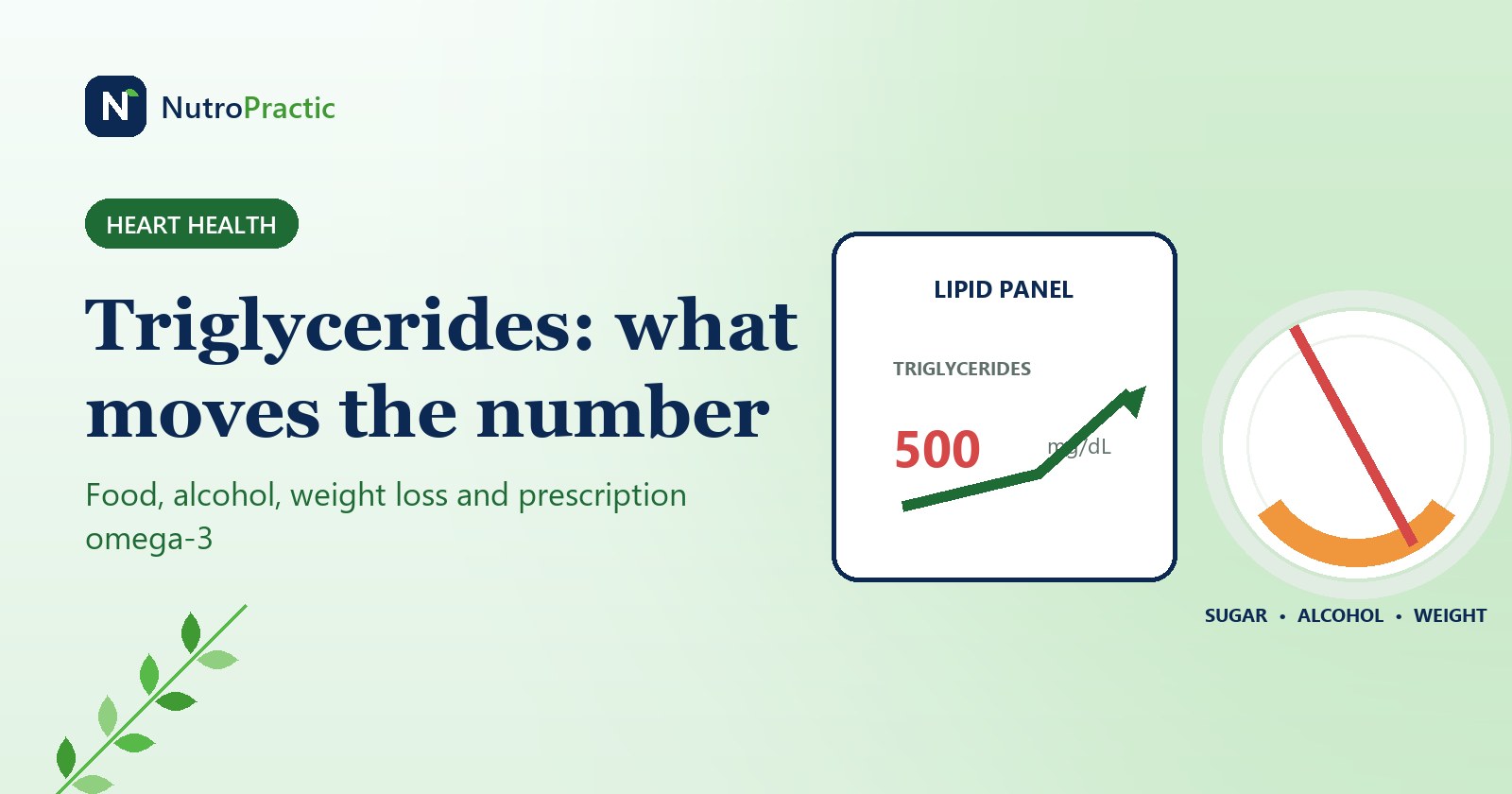
Triglycerides: what food, alcohol, weight loss and omega-3 actually change
A 5-10% weight loss often lowers triglycerides by about 20-30%, as can 4 g/day of prescription omega-3. Here is what 150, 500 and 1,000 mg/dL mean, which changes have numbers behind them, and when a result needs prompt care.
9 Nov 2026
Women's health
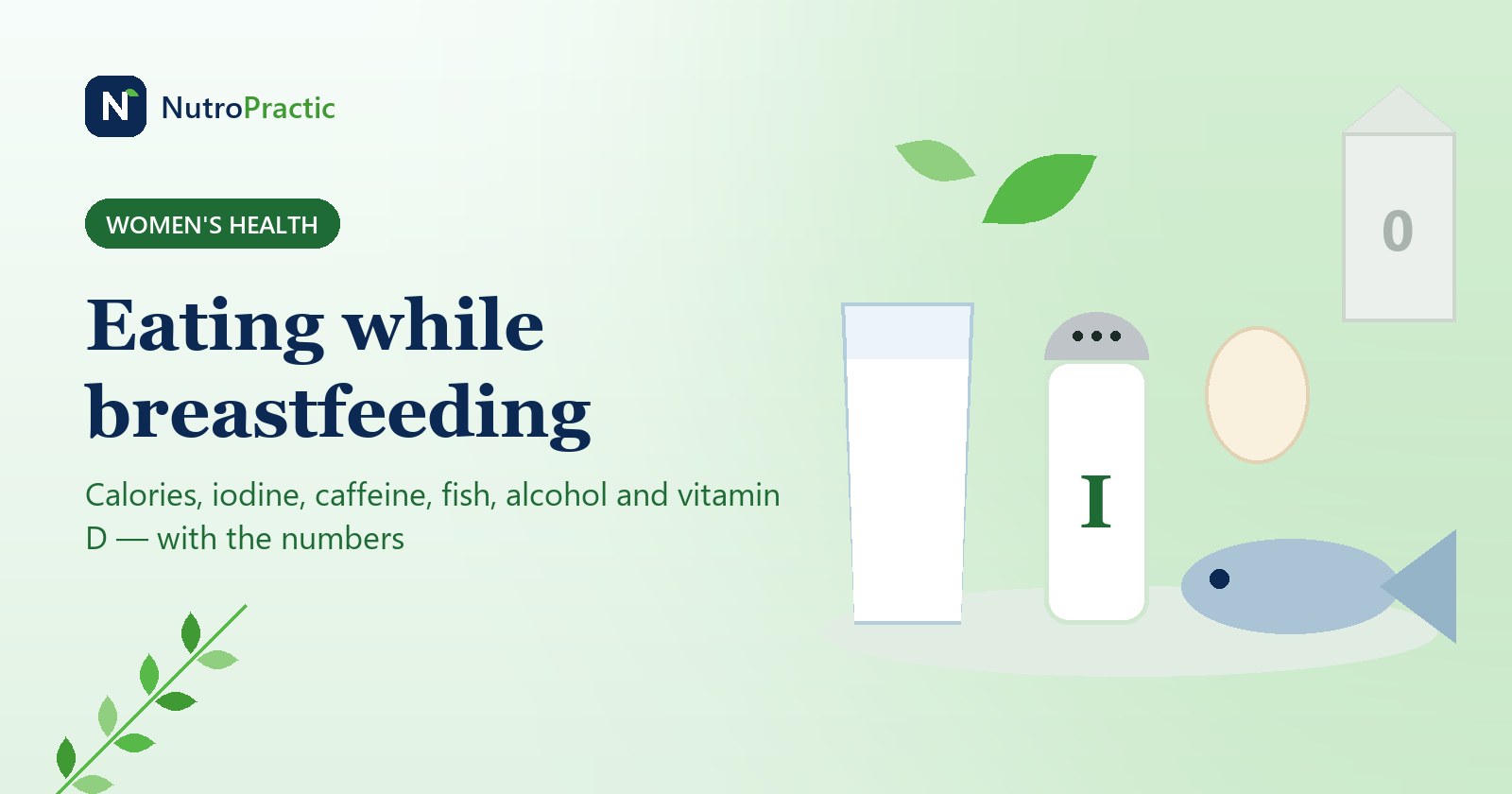
Eating while breastfeeding: extra calories, iodine, caffeine, fish and alcohol, with the actual numbers
Breastfeeding usually adds about 330–400 kcal a day, but the smaller numbers can matter more: 290 mcg iodine, 400 IU vitamin D for baby, 8–12 oz fish a week, and a caffeine total you can actually add up.
6 Nov 2026
Newsfeed for your website
Want this feed on your website?
Add it to any site with one copy-and-paste snippet. No sign-up, and it updates itself every hour.
Start with a virtual consultation
Tell Dr. Triveni what you want to change. You will leave with a clear next step, whether you are in Toronto, London, New York or Chennai.