Sweeteners · October 15, 2026
Swap every gram of added sugar in a Dutch diet for stevia and a sugar alcohol, and the climate footprint doesn't move. Water use goes up 11%
Sweeteners need far less farmland than sugar, so cutting sugar this way sounds like an easy win for the planet. A modelling study of what 143 high-calorie Dutch eaters actually ate found the gains in soft drinks were cancelled out by the bulking agent needed in cakes and sweets.
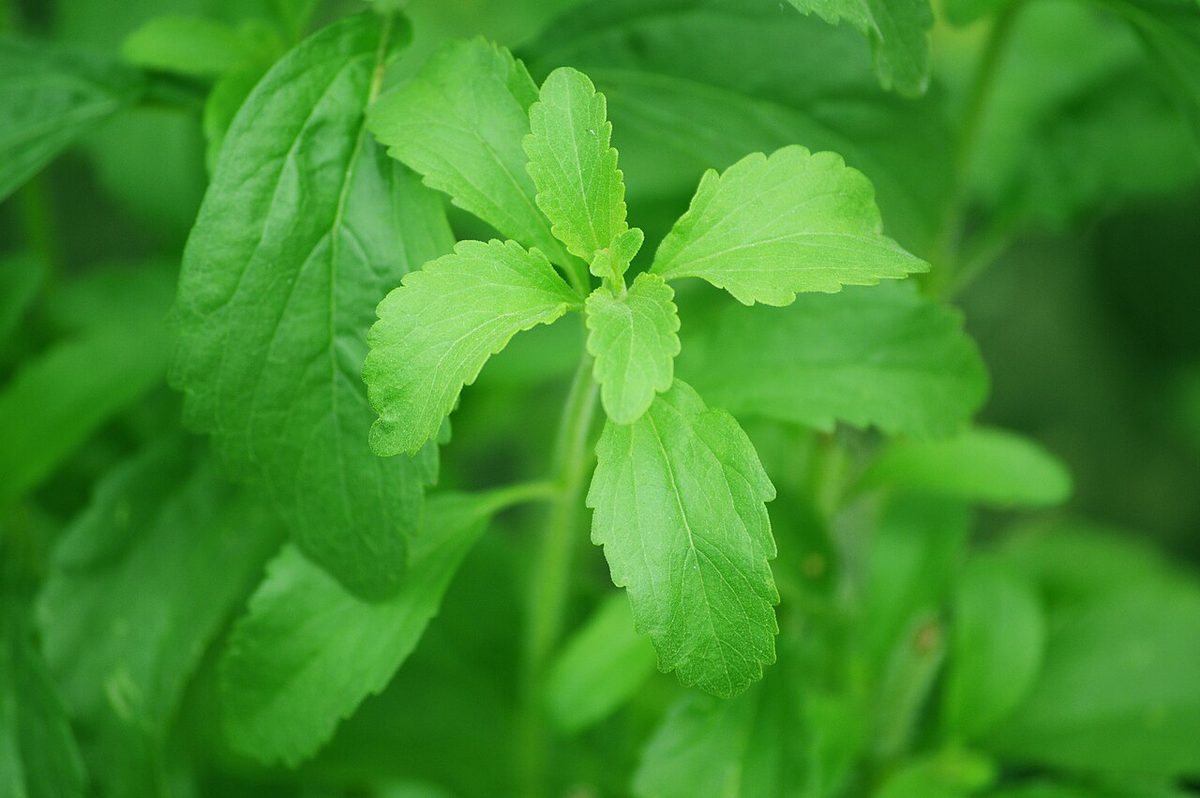
Most studies of the environmental cost of sweeteners look at the sweetener on its own, and on that basis they usually win easily: a sweetener hundreds of times sweeter than sugar is needed in tiny amounts, so it takes very little land, water or energy to make. A study published on 7 October 2026 in the European Journal of Nutrition asked a harder question: what happens to the footprint of a whole diet when every bit of added sugar in it is replaced?
The team, led from the University of Surrey as part of the EU-funded SWEET project, started from the Dutch National Food Consumption Survey (2019-2021). They wanted people likely to eat a lot of sugar, and settled on the 143 adults aged 18 to 50 (72 men, 71 women) who reported eating more than 2,200 kcal a day; their average was 2,866 kcal. The survey does not record added sugar, so the researchers worked it out from recipes, for example 27.5 g of sugar per 100 g of butter cake. They estimated 54 g of added sugar a day, about 8% of calories.
Then they took it all out. Sugar in drinks was replaced with a stevia extract and water, sugar in milk products with stevia and milk, table sugar with a pinch of stevia alone, and sugar in cakes, biscuits and sweets with stevia plus sorbitol, a sugar alcohol that gives back the bulk and texture sugar provides. Glucose syrups and corn syrups were swapped for a maltitol syrup. Each version of the diet was then run through life-cycle data covering farming, processing, transport, packaging, cooking and waste.
The climate result was a dead heat: 4.18 kg of CO2-equivalent a day for both diets. Land use was unchanged, and three pollution measures fell by 1 to 3%. But water use rose 11%, from about 119 to 133 litres a day. The overall picture hides two opposite effects. Stevia plus water in soft drinks cut emissions by about 16 g of CO2-equivalent a day, while sorbitol, which takes more processing than beet sugar, pushed cakes and sweet biscuits up by 6.6 g and sugar and confectionery up by 5.1 g.
The swap did change the nutrition numbers. Calories fell 5%, to 2,728 a day, and total sugars from 125 to 71 g a day. Everything else stayed the same, including the diet's real problems: it was well over the limits for salt and saturated fat and short on fibre. When the researchers used software to nudge each diet towards meeting nutrient targets, with as few changes as possible, both diets' emissions fell 13 to 14%, mostly through more pulses and nuts. Adding a 2030 climate target (2.04 kg a day) cut meat further, and water use then fell 11 to 15%. Both diets needed almost exactly the same amount of change to get there.
The authors conclude that the choice between sugar and sweeteners matters little for the environment, so people and policymakers can decide on health grounds. They also point out side effects of a full swap: about 26 g of sorbitol and 5 g of maltitol syrup a day, enough to bother people sensitive to these FODMAP carbohydrates, and stevia intake of about 18% of the acceptable daily limit for a 75 kg adult.
This is a theoretical, extreme case. Nobody removes all added sugar, real products are reformulated in many ways besides stevia and sorbitol, and the baseline assumed no one already drank diet drinks. Added sugar was estimated, probably on the low side, and the sugar was all from beet; cane sugar, about 80% of world supply, usually has a bigger footprint, which could favour sweeteners. Health effects of the swap were not modelled. The SWEET project was funded by the EU's Horizon 2020 programme, and some authors have received honoraria or project funding from food companies, the International Sweeteners Association or the American Beverage Association.
SWEET project modelling study: average diet of 143 Dutch adults aged 18-50 eating more than 2,200 kcal a day (national food survey 2019-2021), with all added sugar replaced by stevia (RA60) and bulking agents, assessed with life-cycle data
54 g
Estimated added sugar a day in the starting diet, about 8% of calories
4.18 / 4.18
Daily greenhouse gas footprint in kg CO2-equivalent, sugar diet vs sweetener diet (0% change)
+11%
Daily water use with sweeteners, about 119 to 133 litres
2,866 → 2,728
Calories a day before and after the swap (-5%)
125 g → 71 g
Total sugars a day, including natural sugars in fruit and milk (-43%)
-13 to -14%
Fall in emissions for either diet when adjusted to meet nutrient targets, mainly through more pulses and nuts
Figures are from Suckling and colleagues, 'Environmental impact ramifications of replacing added sugar with non-nutritive sweeteners in a high-calorie Dutch diet: the SWEET project', European Journal of Nutrition 65, 276 (2026), doi 10.1007/s00394-026-04127-z, published 7 October 2026 (open access, CC BY 4.0). Water use is reported as 1.19 × 10⁻¹ m³ a day for the sugar diet, rising 11% with sweeteners. The stevia extract was RA60 (at least 60% rebaudioside A), assumed to be 250 times as sweet as sugar; sorbitol was taken as 0.6 times as sweet. All added sugar was assumed to be beet sugar. Adjusted diets kept the sweetener diet's calorie level; with nutrient targets only, water use rose 3-9%, and with the 2030 climate target added it fell 11% (sugar diet) and 15% (sweetener diet). This is a model of one national diet, not a trial, and it does not include health effects.
- About 4 g of the stevia extract used in the study replaces the sweetness of 1 kg of sugar, which is why it cannot fill the space sugar takes up in a cake on its own.
- The stevia extract in the study was traced from plants grown near Lamia in Greece to a purification plant near Riom in France.
- Across the whole diet, the swap needed about 138.5 mg of the stevia extract a day, roughly 54 mg in steviol equivalents, the unit the safety limit is set in.
- The original plan was to study Dutch adults with obesity, but they reported eating only about 2,000 kcal a day on average, likely under-reporting, so the team switched to high-calorie eaters.
- Dutch butter cake (boterkoek) came out with more added sugar by recipe than its total measured sugar, so the researchers capped it at 25.4 g per 100 g.
- Environmental impact ramifications of replacing added sugar with non-nutritive sweeteners in a high-calorie Dutch diet: the SWEET projectEuropean Journal of Nutrition, published 7 October 2026 (open access, CC BY 4.0) · The study: diet data, sugar replacements, environmental results, optimisation and limitations
- Full text on PubMed CentralPMC (PMC13645856) · Open-access full text with tables and figures
- SWEET: sweeteners and sweetness enhancers, project 774293CORDIS, European Commission · The EU Horizon 2020 project behind the study
- Stevia plantWikimedia Commons · Image, CC0, by Flyingbikie (Robert Lynch)
General information, not medical advice. This study modelled the environmental footprint of a diet, not its effects on health. If you are deciding whether to use sweeteners, or if sugar alcohols upset your stomach, talk to your doctor or a registered dietitian.
Analysis by NutroPractic from the sources listed. Written for general readers; it does not replace advice from your own doctor.
From our articles
Our guides on this subject
Plain-language guides on nutrition and wellness, backed by research.
Heart health
Triglycerides: what food, alcohol, weight loss and omega-3 actually change
A 5-10% weight loss often lowers triglycerides by about 20-30%, as can 4 g/day of prescription omega-3. Here is what 150, 500 and 1,000 mg/dL mean, which changes have numbers behind them, and when a result needs prompt care.
9 Nov 2026
Women's health
Eating while breastfeeding: extra calories, iodine, caffeine, fish and alcohol, with the actual numbers
Breastfeeding usually adds about 330–400 kcal a day, but the smaller numbers can matter more: 290 mcg iodine, 400 IU vitamin D for baby, 8–12 oz fish a week, and a caffeine total you can actually add up.
6 Nov 2026
Everyday eating
Food label claims decoded: 'no added sugar', 'multigrain', 'natural' and 'high protein'
A no-added-sugar biscuit with only 13% fewer calories. A 7-grain loaf with refined flour listed first. A 'high protein' bar that clears the legal line at 21%. What each claim legally requires in the EU/UK, US and India, with worked reads of real packs.
2 Nov 2026
Newsfeed for your website
Want this feed on your website?
Add it to any site with one copy-and-paste snippet. No sign-up, and it updates itself every hour.
Start with a virtual consultation
Tell Dr. Triveni what you want to change. You will leave with a clear next step, whether you are in Toronto, London, New York or Chennai.