Minerals · October 11, 2026
Researchers measured selenium in 720 pregnant women in Nepal, then asked about their children's behaviour four years later. Out of 20 comparisons, one came up positive, and the authors did not oversell it
Selenium is the mineral behind a hundred 'brain health' supplement labels, and a few earlier studies had linked a mother's level in pregnancy to her child's attention and mood. A team from Norway and Nepal tested the idea in a place where more than a third of pregnant women run low. They found almost nothing, said so plainly, and spent a good part of the paper showing why the questionnaire they used deserves some suspicion too.
Selenium is one of those nutrients the body needs in tiny amounts and can't do without. It is built into a family of proteins that protect cells from oxidative damage, and it is involved in how the brain's chemical messengers work. That biology has made it a natural suspect in child development. A US study linked higher selenium in pregnancy to fewer behaviour problems in middle childhood. A Polish one found a link between selenium in cord blood and emotional problems. A Danish study tied a selenium-dependent enzyme to fewer ADHD symptoms in boys only, and another American one found more diagnosed ADHD with higher selenium, in girls only. The picture, in other words, was already untidy.
The new study, published in PLOS One on 9 October 2026, adds a piece from a very different setting. Researchers at the University of Bergen, hospitals in Norway and the Child Health Research Project in Kathmandu used a cohort from Bhaktapur, a densely populated district next to Nepal's capital. The women had originally been recruited, between 2017 and 2020, for a trial of vitamin B12 in pregnancy. All were 20 to 40 years old, healthy, and no more than 15 weeks pregnant when a blood sample was taken. The plasma was frozen, shipped to Tromsø in northern Norway on dry ice, and measured for selenium. Four years later, trained field workers sat down with each child's caregiver and went through the Strengths and Difficulties Questionnaire, 25 statements about a child's emotions, conduct, restlessness, friendships and kindness, each answered 'not true', 'somewhat true' or 'certainly true'. In all, 720 mother and child pairs had both measurements, 95% of the live births in the original trial.
Selenium was on the low side. The average was 74.7 micrograms per litre, and 35.8% of the women fell under 71.1, the cut-off the team borrowed from a study of pregnant Norwegians. For comparison, the US National Institutes of Health says 80 or more is usually considered enough in healthy people. If low selenium in pregnancy leaves a mark on children's behaviour, this is the kind of population where it ought to show.
It mostly didn't. Treating selenium as a simple number, there was no link with any of the five scales, before or after allowing for the mother's age, the family's living standard and the child's sex. Comparing women below the cut-off with those above it: nothing. Only when the women were split into thirds did one result cross the usual line. Children whose mothers were in the lowest third scored 0.33 points higher for hyperactivity and inattention than children whose mothers were in the middle third (95% confidence interval 0.02 to 0.64, p = 0.035), on a scale that here ran from 0 to 8.
Before reading much into that, look at what sits around it. By our count the paper's two main tables hold 20 adjusted comparisons, and one in 20 is what chance alone hands you at that threshold. Children of mothers in the highest third also scored a little higher than the middle third (0.15 points, not significant), which is not how a nutrient shortage usually behaves. And in the below-or-above comparison, the children of the women with normal selenium scored slightly higher for hyperactivity than those of the low group, the opposite direction, though again well within chance. The authors do not hide any of this. They call it 'limited evidence', note that 'no clear exposure-response pattern was observed', and write that 'this isolated finding requires confirmation'. In a field where a single significant number often becomes the title, that restraint is worth noticing.
The paper's second job was to test the questionnaire itself, which had an authorised Nepali translation whose behaviour in Nepal had never been checked. It needed some surgery. The standard five-scale structure would not fit until three of the 25 items were removed, including the one about attention span, which the authors think may have suffered in translation or may simply be hard for parents to judge in a four-year-old. Even then, the hyperactivity scale's internal consistency was 0.49 where 0.7 is the usual pass mark, and the peer problems scale managed 0.05, close to noise. So the one positive result sits on a scale that was not measuring very steadily. The same weakness cuts the other way as well: a blunt instrument can miss a real effect, and a single plasma sample reflects recent intake more than long-term stores.
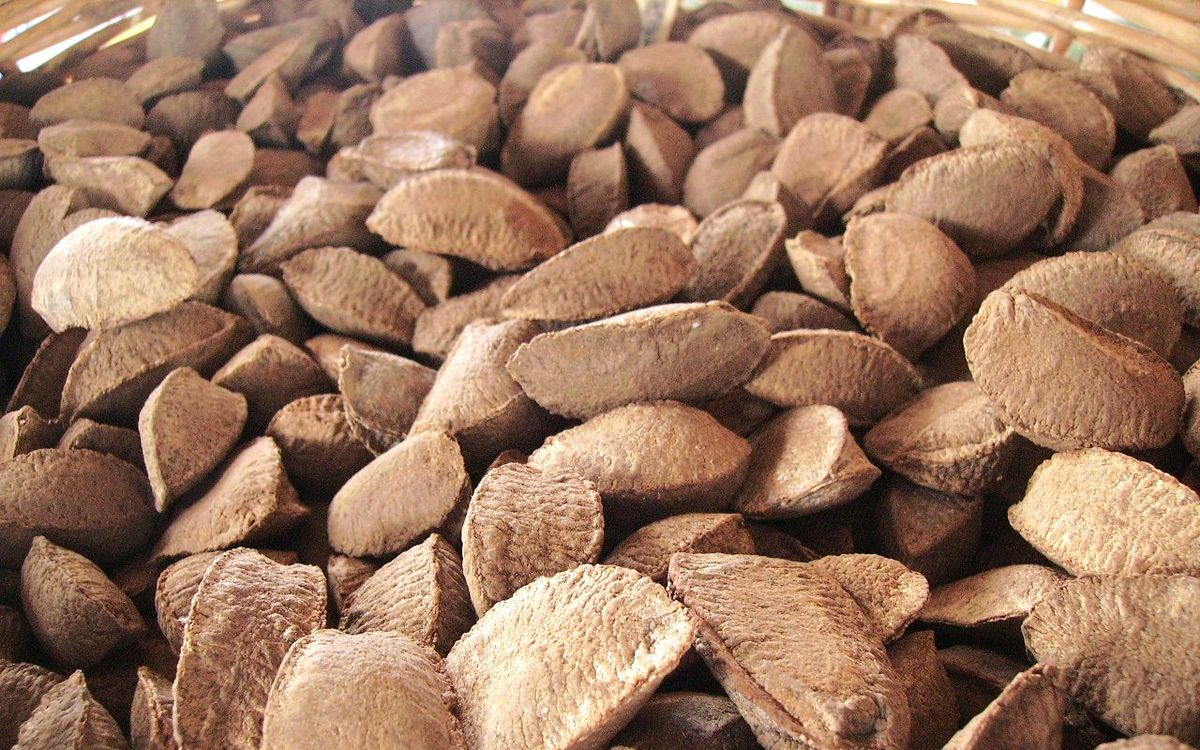
Our reading: this is a careful study with an honest near-null, and it should cool the idea that selenium in pregnancy shapes a child's behaviour in any way large enough to see easily. It does not prove there is no effect, and it was never a test of supplements; nobody was given selenium. For anyone pregnant, the practical point is unchanged. The US recommended intake in pregnancy is 60 micrograms a day, and selenium is one of the nutrients where more is not safer: the upper limit is 400 micrograms a day, and an ounce of Brazil nuts can pass it. The analysis plan was registered before the analysis was run, the work was funded by the Research Council of Norway, and the authors declare no competing interests.
Selenium in early pregnancy and children's behaviour at age four, Bhaktapur, Nepal
720
Mother and child pairs with a selenium measurement in early pregnancy and a behaviour questionnaire at age four, 95% of the 760 live births in the original trial
74.7 µg/L
Average plasma selenium in the mothers (standard deviation 10.2). 35.8% were below 71.1, the cut-off taken from a Norwegian pregnancy study
1 in 20
Adjusted comparisons in the two main tables that reached statistical significance (our count): lowest against middle third of selenium, hyperactivity and inattention scale
+0.33 points
Higher hyperactivity and inattention score in the lowest third against the middle third, on a 0 to 8 scale (95% confidence interval 0.02 to 0.64, p = 0.035)
+0.15 points
The same score in the highest third against the middle third: also higher, and not significant (p = 0.357)
0.49 and 0.05
Internal consistency (omega) of the hyperactivity and peer problems scales in this sample. A value above 0.7 is usually considered acceptable
Figures are from the full open-access paper (PLOS One, published 9 October 2026): abstract, methods, results, tables 1 to 5, discussion, funding and competing-interest statements. The supplementary table of interaction terms (selenium by child's sex) was not read; the paper's text says the interactions were not significant. Selenium was measured once, in plasma, at enrolment (within 15 weeks of pregnancy), by mass spectrometry. Thirds of selenium had means of 63.9, 74.4 and 86.1 µg/L. Models were adjusted for maternal age, the WAMI index (water and sanitation, assets, maternal education, income) and the child's sex; adjusted models had 716 pairs. Behaviour was reported by a caregiver on the parent version of the Strengths and Difficulties Questionnaire in Nepali; scales were scored after removing three items (attention span, obedience, being bullied), and the hyperactivity scores in this sample ranged from 0 to 8. The count of 20 adjusted comparisons (five scales by continuous selenium, low against normal, lowest against middle third and highest against middle third) and the remark that one in 20 is what chance would give are ours, not the authors'. The 80 µg/L figure is the US NIH Office of Dietary Supplements' 8 mcg/dL, converted; the intake figures (60 micrograms a day in pregnancy, upper limit 400, an average of 544 micrograms in an ounce of Brazil nuts) are from the same fact sheet. The earlier US, Polish and Danish studies are as described in the paper's introduction; we did not read them.
- An ounce of Brazil nuts, six to eight nuts, averages about 544 micrograms of selenium according to US food tables, roughly nine times the daily amount recommended in pregnancy and more than the daily upper limit of 400. The figure varies widely between analyses, because it depends on the soil the tree grew in.
- The first signs of too much selenium are oddly specific: breath that smells of garlic and a metallic taste in the mouth. With high intakes over a long time, hair falls out and nails turn brittle.
- How much selenium a plant food carries depends on the ground it came from, so the same grain can be a good source in one region and a poor one in another. Meat varies much less, because animals keep the selenium in their tissues within a predictable range.
- The children in this study were followed because their mothers had joined a trial of vitamin B12 in pregnancy: 800 women given 50 micrograms a day or a placebo until six months after the birth. The blood samples frozen for that trial are what made the selenium question possible years later.
- The team left smoking out of the analysis for an unusual reason. Of the mothers, two said they smoked regularly and one said she used to.
- The association between prenatal maternal selenium concentration and mental health in early childhood, a mother-child cohort studyPLOS One, 9 October 2026 · The study (open access, CC BY); main text and tables read in full. Supplementary table not read
- Full text on PubMed Central (PMC13652251)PubMed Central · The full text used for the figures
- PubMed record and abstract (PMID 42853805)PubMed · Abstract and publication details
- Selenium: Fact Sheet for Health ProfessionalsUS National Institutes of Health, Office of Dietary Supplements · Recommended intakes, upper limit, food sources, blood level usually considered sufficient, signs of excess
General information, not medical advice. This is an observational study and cannot show that selenium in pregnancy causes or prevents behaviour problems in children. Too much selenium is harmful. If you are pregnant or planning a pregnancy, talk to your doctor or midwife before taking any supplement beyond your prenatal vitamin.
Analysis by NutroPractic from the sources listed. Written for general readers; it does not replace advice from your own doctor.
From our articles
Read, then eat a little better
Plain-language guides on nutrition and wellness, backed by research.
Global data
Diabetes, obesity, child malnutrition and hunger, 1980 to 2050: what the numbers show
How diabetes, obesity, child malnutrition and hunger have changed since 1980, with sourced figures and a basic projection to 2050. Click a condition to explore the chart and its facts.
5 Oct 2026
Indian kitchen
Rice, roti and blood sugar: building a balanced Indian plate with the ICMR-NIN 2024 guidelines
About one in nine Indian adults has diabetes and many more have prediabetes. You don't have to give up rice or roti. How the ICMR-NIN Dietary Guidelines for Indians (2024) suggest building a plate, plus simple habits that help keep blood sugar steady.
3 Oct 2026
Micronutrients
Vitamin D and B12: two common gaps, from northern winters to vegetarian kitchens
Vitamin D runs low in Canadian and European winters, and surprisingly often in sunny India too. Vitamin B12 is a risk for vegetarians, people over 50 and people on certain medicines. Who is at risk, what the official advice is in North America, Europe and India, and where to get both.
3 Oct 2026
Newsfeed for your website
Want this feed on your website?
Add it to any site with one copy-and-paste snippet. No sign-up, and it updates itself every hour.
Start with a virtual consultation
Tell Dr. Triveni what you want to change. You will leave with a clear next step, whether you are in Toronto, London, New York or Chennai.