Food is medicine · October 11, 2026
A free weekly bag of beans, whole grains and fresh produce from a Boston hospital's food pantry: the more bags people collected over almost three years, the more weight they lost. Blood sugar didn't budge
"Food is medicine" programmes hand out healthy groceries through clinics, and most have run for weeks or months. A pantry in a Massachusetts health centre kept going for more than five years. Among 68 adults who used it, every 100 weekly bags went with about 2.6 kg less weight and a lower diastolic blood pressure. There was no control group, and the figures shift a lot depending on how the analysis is adjusted. Here is what a study like this can and can't tell you.
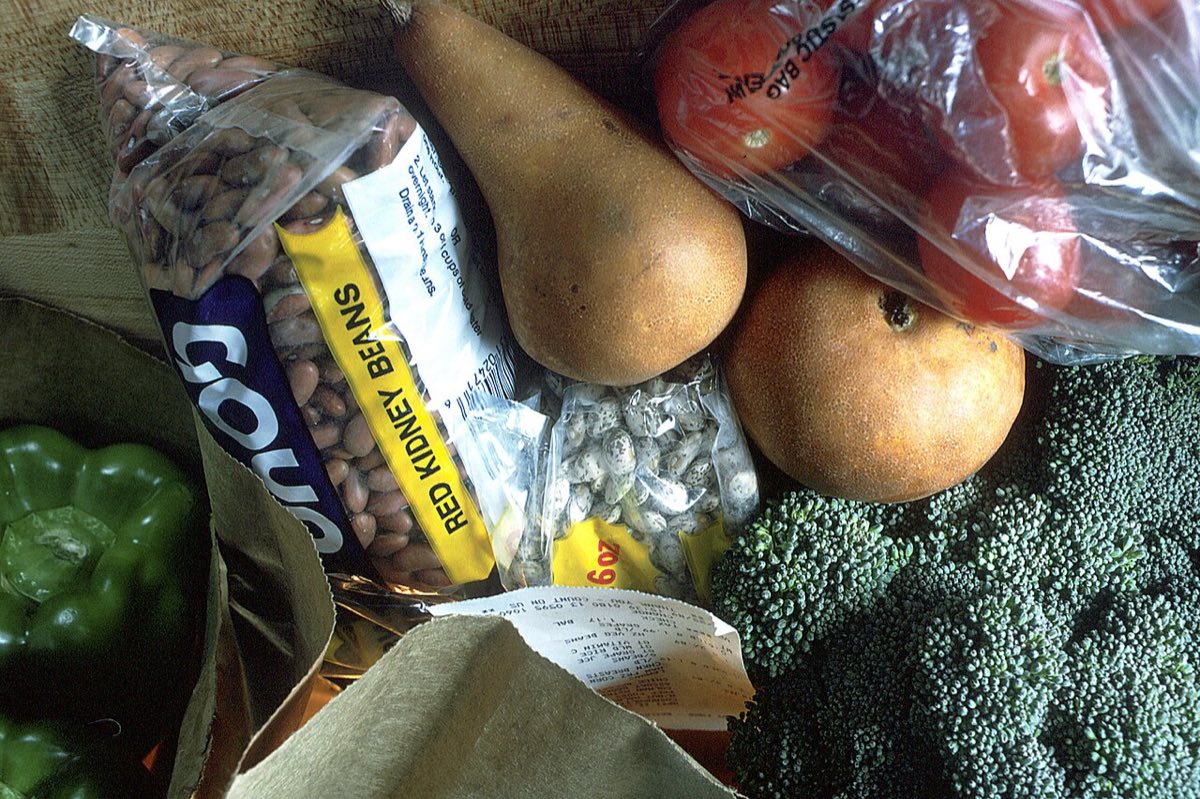
Doctors in the United States are increasingly told to treat hunger as a health problem. "Food is medicine" programmes give patients who can't afford enough food free produce, groceries or cooked meals through the health system, in the hope of better blood pressure, blood sugar and weight. The idea is popular; the results so far are not. In 2025 the American Heart Association reviewed the 14 randomised trials of such programmes in the US and found that they usually improved what people ate and how secure they felt about food, but that their effect on clinical measures was inconsistent and often not statistically significant. One reason may be dose: most programmes last weeks or months, and many hand out whatever food is available rather than the healthiest.
A short report published on 1 October 2026 in Preventing Chronic Disease, a journal of the US Centers for Disease Control and Prevention, looks at a programme that is unusual on both counts. The Massachusetts General Hospital Revere Food Pantry sits inside a community health centre near Boston and gives patients a plant-based grocery package every week: fresh fruit and vegetables, canned beans or nut butter, and whole grains, planned by a dietitian at first around the US dietary guidelines to cover three meals a day for each family member for a week. Most of the people it serves have low incomes and public health insurance, and most do not speak English as their first language. The researchers, from Mass General, Harvard Medical School, Boston Children's Hospital and the Greater Boston Food Bank, went back through the health records of everyone who had used it between December 2019 and April 2025.
Of 380 people who received packages, 68 adults met the study's conditions: at least 26 packages, and at least one measurement of blood pressure, blood sugar (HbA1c) or weight both in the year before their first package and later on. They were mostly women (47 of 68), with an average age of 57. At the start, four in five were overweight or obese, the average systolic blood pressure was 130 mm Hg, and the average HbA1c was 6.9%, in the diabetes range. On average they collected about 98 packages over 2.7 years, roughly one every week and a half. Because people came for different lengths of time, the analysis asked a dose question: did those who collected more packages see bigger changes between their before and after measurements?
For weight, the answer was yes, and it held whichever way the numbers were adjusted. Each 100 packages went with about 2.6 kg more weight lost and a BMI about 1 point lower than before. For diastolic blood pressure (the lower number) each 100 packages went with a drop of 1.5 mm Hg in the simpler models and 3.2 mm Hg in the fully adjusted one. The upper, systolic number did not change across the group, though among the 31 people who started at 130 or above, the fully adjusted model found a 5.8 mm Hg drop per 100 packages. HbA1c did not change, in the whole group or in the 16 people who started at 7% or above.
Those last blood pressure figures need a closer look, because they depend heavily on one choice. In the model adjusted for age, sex, starting value and time, the systolic change in people with high starting pressure was close to zero (−0.2 mm Hg, nowhere near significant). It became 5.8 mm Hg only when the authors added an adjustment for the stages of the COVID-19 pandemic, and the diastolic figure doubled in the same step. Adjusting for the pandemic is a reasonable idea, since clinic visits and daily life changed a great deal in those years, but when one adjustment moves a result from nothing to something, it is a sign the finding is fragile. The weight result, which barely moved between models, is the sturdier one.
The bigger limit is the one the authors name first: there was no comparison group. Everyone in the study chose to keep coming back, and the people who come back most often may differ from those who drop out in ways that also affect their health, from more stable housing to better contact with their doctors. The authors point out that the pantry may also help people stick to their medicines. Measurements came from routine clinic visits rather than research visits. And a randomised trial of a similar idea shows why a control group matters: in 2024, a programme in the mid-Atlantic US giving groceries for 10 meals a week plus dietitian and nurse support to people with diabetes and food insecurity found that HbA1c fell sharply in both the people who got the programme and those on the waiting list, leaving no real difference between them.
Our reading: this is an encouraging signal from a well-run local programme, not proof that plant-based groceries lower blood pressure. The steady link with weight over nearly three years is worth testing properly, and the authors themselves call for a randomised trial. The message for anyone else is the same as the dietary guidelines already give: a weekly shop built around beans, whole grains, fruit and vegetables is a sound base. If you are struggling to afford food, ask your clinic or doctor whether a food pantry or produce programme operates nearby. The work was funded by a Massachusetts General Hospital award, the Vitamix Foundation, the Ardmore Foundation and the US National Institutes of Health, and the authors declare no conflicts of interest.
Weekly plant-based grocery packages from a health centre food pantry, 68 adults with food insecurity, Revere, Massachusetts, 2019 to 2025
68
Adults analysed (47 women, 21 men, average age 57), out of 380 people who received packages. Inclusion needed at least 26 packages and measurements before and after
98
Average packages collected per person, over an average of 2.7 years: about one every 1.4 weeks
−2.6 kg
Weight change per 100 packages, comparing the follow-up years with the year before (95% CI −3.7 to −1.5); BMI −1.0 per 100 packages. Much the same in every model
−3.2 mm Hg
Diastolic blood pressure change per 100 packages in the fully adjusted model (95% CI −4.9 to −1.5); −1.5 in the simpler models
−5.8 mm Hg
Systolic blood pressure change per 100 packages in the 31 people who started at 130 or above, fully adjusted model only (95% CI −10.1 to −1.6); −0.2, not significant, before the COVID-19 adjustment. No change in the whole group
No change
HbA1c (long-term blood sugar): −0.03 points per 100 packages (95% CI −0.44 to 0.38), and no change in the 16 people who started at 7% or above
Figures are from the full public-domain report (Preventing Chronic Disease 2026;23:E47, published 1 October 2026): abstract, methods, participant flow, table 1 (baseline characteristics) and table 2 (mixed models). The study is a retrospective look at health records with no control group, so it shows associations, not cause and effect. Model 1 was unadjusted; model 2 adjusted for age, sex, starting value and time to each measurement; model 3 added the stage of the COVID-19 pandemic. The figures above are from model 3 unless stated. 'Per 100 packages' is the authors' measure: the extra change between the year before and the follow-up period for each 100 packages a person collected. The comparison with the 2024 mid-Atlantic trial is ours; it tested a different programme in people with diabetes.
- The same pantry was studied in children first. In 35 children aged 2 to 18 whose families collected plant-based packages in 2021 and early 2022, BMI changed by −0.04 for each package received, at a time when many children's weight rose during the pandemic.
- In the 2024 mid-Atlantic trial, half the patients started the grocery programme at once and half six months later. Both groups' HbA1c fell a lot in those six months, which is why the authors warned that programmes aimed at people with high readings need a control group: high readings tend to come down on their own.
- That mid-Atlantic programme didn't move blood sugar, but it did change care. People given the programme had more dietitian visits (2.7 against 0.6 on average) and were more likely to have a prescription for metformin or a GLP-1 drug.
- Of the 198 people who had collected at least 26 packages from the Revere pantry, 87 were under 18. Packages were sized for the whole family, three meals a day for a week.
- The American Heart Association's 2025 review found 14 randomised trials of food is medicine programmes with health outcomes in the US, and more than a third were early, small-scale studies.
- Plant-Based Medically Tailored Groceries From a Food Pantry and Adult Cardiometabolic OutcomesPreventing Chronic Disease (US Centers for Disease Control and Prevention), 1 October 2026 · The study (public domain); read in full
- Article pagePreventing Chronic Disease · The full text used for the figures
- A Systematic Review of "Food Is Medicine" Randomized Controlled Trials for Noncommunicable Disease in the United States: A Scientific Statement From the American Heart Association (PMID 40528749)Circulation, 2025 · 14 US trials; clinical effects inconsistent. Abstract read
- Effect of an Intensive Food-as-Medicine Program on Health and Health Care Use: A Randomized Clinical Trial (PMID 38147326)JAMA Internal Medicine, 2024 · The mid-Atlantic trial, 465 adults with type 2 diabetes. Abstract read
- Plant-Based Family Food Packages and Weight Change in Children During the COVID-19 Pandemic (PMID 37347779)Preventing Chronic Disease, 2023 · The earlier study of children at the same pantry. Abstract read
General information, not medical advice. This study looked back at health records with no comparison group, so it can't show that the groceries caused the changes. If you have high blood pressure, diabetes or are trying to lose weight, talk to your doctor or a dietitian before changing your diet or medicines.
Analysis by NutroPractic from the sources listed. Written for general readers; it does not replace advice from your own doctor.
From our articles
Our guides on this subject
Plain-language guides on nutrition and wellness, backed by research.
Everyday eating
The fibre gap: why most adults fall short, and an easy 30-gram day
Most adults in the US, Canada and Europe eat far less fibre than recommended, even though higher intakes are linked to lower rates of heart disease, type 2 diabetes and bowel cancer. How much you need, where it hides, and a sample day that gets you to 30 grams.
3 Oct 2026
Global data
Diabetes, obesity, child malnutrition and hunger, 1980 to 2050: what the numbers show
How diabetes, obesity, child malnutrition and hunger have changed since 1980, with sourced figures and a basic projection to 2050. Click a condition to explore the chart and its facts.
5 Oct 2026
Indian kitchen
Rice, roti and blood sugar: building a balanced Indian plate with the ICMR-NIN 2024 guidelines
About one in nine Indian adults has diabetes and many more have prediabetes. You don't have to give up rice or roti. How the ICMR-NIN Dietary Guidelines for Indians (2024) suggest building a plate, plus simple habits that help keep blood sugar steady.
3 Oct 2026
Newsfeed for your website
Want this feed on your website?
Add it to any site with one copy-and-paste snippet. No sign-up, and it updates itself every hour.
Start with a virtual consultation
Tell Dr. Triveni what you want to change. You will leave with a clear next step, whether you are in Toronto, London, New York or Chennai.