Epilepsy · October 12, 2026
A study says people eating the most 'plant-type' protein had 63% lower odds of epilepsy. They also ate about 1,300 more calories a day than the people they were compared with, and the paper's summary reports differences its own tables do not show
In a town in north-east Iran, researchers sorted 4,063 adults by the amino acids in their food and counted who had epilepsy. One pattern came out looking protective, and the paper suggests it could shape diets for prevention. Read the tables and a plainer picture appears: the top group simply ate far more of everything, the diet was recorded long after the diagnosis, and nobody asked about medicines. Here is what was measured and what it can and cannot tell you.
Protein is built from about twenty amino acids, and some of them double as raw material for the brain's chemical messengers. That is the reason researchers have wondered whether the mix of amino acids in a diet has anything to do with seizures. A paper published online in Experimental Physiology on 2 October 2026 says it is the first to look at this across a whole population, and its headline result is a big one: 63% lower odds of having epilepsy among people who followed a 'plant amino acid pattern' most closely.
The data come from Sabzevar, a city in north-east Iran, where one neighbourhood is part of a national health study called the PERSIAN cohort. Between 2017 and 2020, adults aged 35 to 70 were weighed, examined and interviewed about how often they had eaten each of 115 foods over the previous year. Of the 4,063 people analysed, 112 already had epilepsy diagnosed by a specialist. The researchers converted each person's food list into grams of 18 amino acids and let a statistical method sort those into two bundles that tend to rise and fall together. One bundle, led by lysine, they called the animal pattern. The other, led by proline and glutamic acid, they called the plant pattern.
Everyone was then ranked into four equal groups on each pattern. Compared with the bottom quarter on the plant pattern, the top quarter had odds of epilepsy of 0.37, which is where the 63% comes from, after adjusting for age, sex, education, body mass index, diabetes, high blood pressure, marital status, employment and cancer. The animal pattern pointed the same way, at 0.62, but that result could have been chance.
Now look at who was in those quarters. People at the top of the plant pattern reported eating about 3,250 calories a day and 555 g of carbohydrate; people at the bottom reported about 1,940 calories and 304 g. Protein went from 61 g to 103 g. Nearly three in four of the top quarter were men, against fewer than one in four at the bottom, and almost two thirds had a job, against under a third. Every one of the 18 amino acids rose from the bottom quarter to the top on both patterns. So the 'plant pattern' is not a kind of protein that some people chose over another. It is, to a large degree, a measure of how much someone eats, and the model behind the 63% did not adjust for calories.
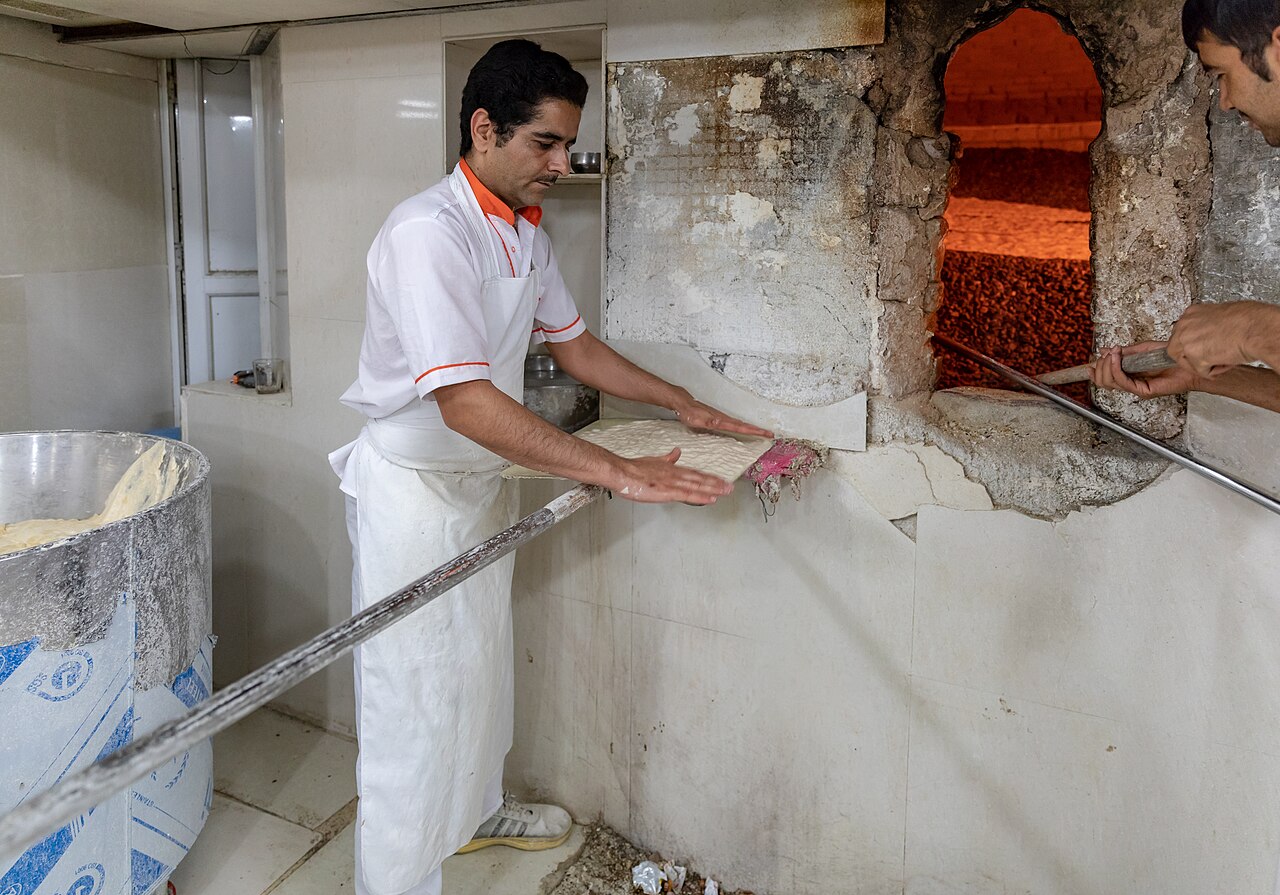
The names deserve a second look too. The paper does not show which foods supplied each pattern. The two amino acids that lead the plant bundle, proline and glutamic acid, are the two that wheat protein is famously rich in, and bread is the staple of the Iranian table. That is our reading, not the authors', but a pattern that climbs with carbohydrate and is led by wheat's signature amino acids looks more like 'eats a lot of bread' than like beans and lentils.
Then there is the order of events. Everyone with epilepsy had it before the food interview, and the questionnaire covered only the previous year. The study cannot tell whether eating less came first or the illness did. In this sample, people with epilepsy were more likely to have had a stroke (6 of 112, against about 1 in 100 of the others), to have diabetes or a history of cancer, and they were a little less active. People who are unwell often eat less. Stroke, which is itself a known cause of epilepsy, was not in the model. Neither were anti-seizure medicines, seizure frequency, the type of epilepsy or how long people had had it, because the cohort did not record them. The authors list these gaps themselves.
The summary at the top of the paper does not match the tables beneath it. It says participants with epilepsy were more likely to be male, less educated, married and unemployed, and ate less of every amino acid, and the discussion calls that last gap significant. In the tables, none of these differences passes the paper's own test for chance: the amino acid comparisons run from P = 0.11 to P = 0.35, and total protein was 76 g a day against 79 g. The only dietary difference that did pass was vitamin D intake. The steps are uneven as well: the second quarter on the plant pattern had odds of 0.59, the third went back up to 0.81, and only the fourth dropped to 0.37. The authors disclose that they used an AI chatbot to edit the text of the manuscript.
None of this means diet is irrelevant to epilepsy. Medically supervised ketogenic diets are an established treatment for some people whose seizures do not respond to medicines, and that is a different thing from a food questionnaire in a general population. What this study shows is narrower: in one Iranian town, the 112 adults with epilepsy were found more often among the people who reported eating least. The authors say clearly that a study like this cannot show cause, and then go on to suggest that amino acid advice could become part of epilepsy prevention. On these numbers that is a long way ahead of the evidence. Nobody should change how they eat, or how they take their medicines, because of it.
4,063 adults aged 35 to 70 in Sabzevar, Iran, 112 of them with diagnosed epilepsy; diet from a 115-item food questionnaire covering the previous year
0.37
Odds of epilepsy in the top quarter of the 'plant amino acid pattern' against the bottom quarter (95% CI 0.20 to 0.67): the 63% in the headline
1,936 → 3,250 kcal
Reported daily calories in the bottom and top quarters of that pattern; calories were not adjusted for in the model
23% → 73%
Share of men in the bottom and top quarters of the plant pattern
0.59 / 0.81 / 0.37
Odds in the second, third and top quarters against the bottom: not a steady step down
0 of 18
Amino acids whose intake differed between people with and without epilepsy by the paper's own test, though the summary says all were lower
5.4% vs 1.2%
Past stroke in people with and without epilepsy; stroke was not among the adjustments
Figures are from the open-access paper in Experimental Physiology (doi 10.1113/EP093525, published online ahead of print on 2 October 2026, CC BY), read in full on PubMed Central: methods, Table 1 (pattern loadings), Table 2 (participant characteristics), Table 3 (nutrient and amino acid intakes), Table 4 (odds ratios), discussion and limitations. Cross-sectional analysis of baseline data from the Sabzevar centre of the PERSIAN cohort, collected January 2017 to May 2020; 4,218 enrolled, 155 excluded. Patterns came from principal component analysis of amino acid intakes. Fully adjusted model (Model 3): age, sex, education, BMI, diabetes, hypertension, marital status, job and any cancer. Animal pattern, top against bottom quarter: OR 0.62 (95% CI 0.35 to 1.08, P = 0.094); its trend P-value is 0.572 unadjusted, 0.612 adjusted for age and sex and 0.002 in the full model, although the odds ratios barely change between the three. Plant pattern across quarters: energy 1,936, 2,244, 2,563 and 3,250 kcal; carbohydrate 304 to 555 g; protein 61 to 103 g; in work 29% to 65%. With and without epilepsy: protein 76.3 against 78.7 g (P = 0.339), energy 2,443 against 2,499 kcal (P = 0.453), diabetes 23.2% against 13.8%, any cancer 4.5% against 0.9%; the 18 amino acid comparisons have P-values from 0.111 to 0.350. Table 3 gives the vitamin D comparison as P = 0.018 and the text as P < 0.001. The paper does not report which foods contributed to each pattern or how many of the 112 cases fell in each quarter. The link between the plant pattern and wheat is our reading, based on the pattern's loadings and the long-established finding that wheat gluten proteins are high in glutamine and proline; food tables usually count glutamine with glutamic acid. The share of the sample with epilepsy, 112 of 4,063 or about 28 per 1,000, is our calculation. Funded by Sabzevar University of Medical Sciences; the authors declare no conflicts of interest. Background figures on epilepsy are from the World Health Organization fact sheet of 7 February 2024.
- Around 50 million people worldwide have epilepsy, according to the World Health Organization, and nearly 80% of them live in low- and middle-income countries.
- The WHO estimates that up to 70% of people with epilepsy could live seizure-free if properly diagnosed and treated.
- In about half of cases worldwide the cause of a person's epilepsy is unknown. Among the known causes the WHO lists is a stroke that cuts off oxygen to part of the brain.
- The WHO puts active epilepsy at 4 to 10 people in every 1,000 at any one time. In this study's sample the figure was about 28 per 1,000, which may reflect who was counted: anyone ever diagnosed, not only people with recent seizures.
- Sangak, the bread in the photo, is a whole wheat flatbread baked directly on a bed of hot pebbles. 'Sang' is the Persian word for stone.
- Dietary amino acid patterns and epilepsy among the PERSIAN cohort population: A cross-sectional studyExperimental Physiology, online 2 October 2026 · The study. Open access, read in full
- Full text on PubMed Central (PMC13632661)US National Library of Medicine · Version read for this item, including Tables 1 to 4
- EpilepsyWorld Health Organization fact sheet, 7 February 2024 · How common epilepsy is, its causes and how many people could be seizure-free with treatment
- Chemistry of gluten proteinsFood Microbiology, 2007 · Wheat gluten proteins are high in glutamine and proline; abstract read
- Sangak bread in Tehran, national bread of IranWikimedia Commons · Image, CC BY 2.0, photo by Ninara
General information, not medical advice. This study cannot show that any way of eating prevents or causes epilepsy. If you have epilepsy, do not stop or change your medicines or start a special diet because of it; talk to your doctor or epilepsy team first.
Analysis by NutroPractic from the sources listed. Written for general readers; it does not replace advice from your own doctor.
From our articles
Our guides on this subject
Plain-language guides on nutrition and wellness, backed by research.
Healthy ageing
Protein after 40: how much you really need, and why timing matters
The standard protein target was set to prevent deficiency, not to protect muscle as you age. What the research and expert groups suggest for adults over 40, how to spread protein across the day, and easy ways to hit 25 to 30 grams at breakfast.
3 Oct 2026

Global data
Diabetes, obesity, child malnutrition and hunger, 1980 to 2050: what the numbers show
How diabetes, obesity, child malnutrition and hunger have changed since 1980, with sourced figures and a basic projection to 2050. Click a condition to explore the chart and its facts.
5 Oct 2026

Indian kitchen
Rice, roti and blood sugar: building a balanced Indian plate with the ICMR-NIN 2024 guidelines
About one in nine Indian adults has diabetes and many more have prediabetes. You don't have to give up rice or roti. How the ICMR-NIN Dietary Guidelines for Indians (2024) suggest building a plate, plus simple habits that help keep blood sugar steady.
3 Oct 2026
Newsfeed for your website
Want this feed on your website?
Add it to any site with one copy-and-paste snippet. No sign-up, and it updates itself every hour.
Start with a virtual consultation
Tell Dr. Triveni what you want to change. You will leave with a clear next step, whether you are in Toronto, London, New York or Chennai.