Diet and cancer · October 12, 2026
A study says eating oranges and carrots three times a week may help prevent mouth cancer, thanks to their curcumin. Curcumin is the yellow in turmeric, and the survey the study used recorded four mouth cancers where the paper counts 59
Six dentists in northern China went through an old American health survey and found that people who never ate oranges or carrots were far more likely to report a mouth cancer. They put it down to curcumin and worked out a protective dose. We read the whole paper, then opened the survey's public codebook, and very little of it held together.
Some studies are worth reading for what they find. This one is worth reading for what it shows about how a finding gets made. It appeared on 29 September 2026 in Oral Health & Preventive Dentistry, a peer-reviewed dental journal, and its conclusion is the kind that travels well: eat oranges or carrots at least three times a week and you may lower your risk of mouth cancer.
The authors, six dentists at hospitals in Shijiazhuang and Baoding in China's Hebei province, did not recruit anyone. They used NHANES, the long-running US government health survey, and took the 2003 to 2004 round. Their sample was 2,762 people, of whom 59 were counted as having had cancer of the mouth, tongue or lip. Everyone had also been asked how often they ate oranges and carrots.
On the face of it the gap was wide. Nearly half of the cancer group, 28 of 59, said they never ate oranges, against 12% of everyone else. For carrots it was 39% against 9%. Turned around: about 8 in 100 people who never ate oranges were in the cancer group, and about 1 in 100 of those who ate them three or more times a week. The paper's models put the odds of mouth cancer in frequent carrot eaters at less than a tenth of the odds in people who never ate them.
Then comes the explanation, and the first problem. The paper calls oranges and carrots 'curcumin-containing foods' throughout, and says curcumin is 'widely present in foods such as turmeric, oranges, and carrots'. Curcumin is the yellow pigment of turmeric, a root in the ginger family. Carrots get their colour from carotenoids such as beta-carotene, which is a different family of compounds altogether. The paper itself says the survey has no data on how much curcumin anyone ate.
It works out a dose anyway. A serving of carrots or oranges, it says, has 'trace amounts' of curcuminoids, about 1 to 5 mg, and it gives no reference for that. Three servings a week would then come to 3 to 15 mg. The paper's figure is 150 to 300 mg a week, or 20 to 40 mg a day, which is what you get if you use the number it quotes one line earlier for a serving of curry, 50 to 100 mg. That 20 to 40 mg a day then goes into the abstract as advice for clinical practice.
The second problem is the 59. NHANES publishes a codebook for every questionnaire, with the number of people who gave each answer. The paper names the question it used, the age at which mouth, tongue or lip cancer was first diagnosed. In the 2003 to 2004 codebook, four people in the whole survey answered it. The companion question, on what kind of cancer a person had, also shows four mentions of mouth, tongue or lip. We could not find anything in the paper that explains how four became 59. It does say that missing values were filled in using software, without saying which values or how. We have not put this to the authors.
The 59 look odd in other ways. They would make up 2.1% of the sample, when the US National Cancer Institute puts the lifetime risk of a wider group of cancers, mouth and throat together, at about 1.2%. Their typical age when surveyed was 46 and almost two thirds were women. In US cancer registries the typical age at diagnosis is 65, and men are diagnosed about twice as often as women.
Set that aside and take the table as printed. The cancer group was much poorer, with a household income only just above the poverty line while the rest sat at well over twice it. They were also far more likely to smoke: 47.5% were current smokers against 19.8%. Smoking is one of the main causes of mouth cancer, and people with less money tend to eat less fresh fruit and vegetables. The paper says its odds ratios were adjusted for 'potential confounding factors' but does not list them. And for oranges there is no dose pattern: people who ate them rarely had the lowest odds, not people who ate them often.
There is also the order of events, which is our point and not one the paper raises. Everyone was asked about their diet at the time of the survey, which for the cancer group was after the diagnosis. Surgery or radiotherapy to the mouth can make an acidic fruit or a hard raw vegetable difficult to eat, sometimes for a long time. Cancer could have changed the diet as easily as the other way round. The authors do say, at the very end, that a one-off survey like this cannot show cause.
Last, the prediction model. The abstract says it scored above 0.96 for precision and recall and so has 'strong predictive ability'. The paper's own chart of the test shows 829 people, 18 of them with cancer. The model found three of the 18. It also flagged nine people who did not have cancer. Labelling all 829 as healthy would have got 811 right, six more than the model managed. When one group is 2% of the total, a weighted score near 97% says almost nothing.
So what should you take from it? Not a curcumin dose, and not a reason to buy turmeric capsules; the US National Institutes of Health's own summary says there is not enough evidence to conclude that turmeric or curcumin helps any health condition. Oranges and carrots are good food for plenty of well-supported reasons, and nothing here changes that. What has solid evidence behind it for mouth cancer is not smoking or chewing tobacco, keeping alcohol low, and getting any mouth ulcer or patch that has not healed in about three weeks looked at by a dentist or doctor. The other lesson is about reading: a confident abstract in a peer-reviewed journal can still rest on a compound that isn't in the food and a count the source data doesn't show.
Orange and carrot intake against self-reported mouth, tongue or lip cancer in 2,762 people from the US NHANES survey of 2003 to 2004, as reported in the paper, with our checks against the public codebook
59 vs 4
People with mouth, tongue or lip cancer in the paper, against the number who answered the question the paper cites in the CDC's public codebook for that survey round
47.5% vs 12.4%
Share who never ate oranges: the paper's cancer group (28 of 59) against everyone else (335 of 2,703)
0.083
Odds ratio for mouth cancer in people eating carrots three or more times a week against never (95% CI 0.019 to 0.364). Two people with cancer were in that group
3 to 15 mg
Weekly curcumin from three servings at the paper's own 1 to 5 mg a serving. The paper states 150 to 300 mg a week
47.5% vs 19.8%
Current smokers in the cancer group against everyone else. The adjustments behind the odds ratios are not listed
3 of 18
Cancer cases the prediction model caught in its test set of 829 people. It wrongly flagged 9 others; calling everyone healthy would have been right more often
Figures are from the open-access paper in Oral Health & Preventive Dentistry (doi 10.3290/j.ohpd.c_2832, volume 24, pages 877 to 885, published 29 September 2026, CC BY 4.0), read in full on PubMed Central: abstract, methods, results, Tables 1 to 3, figure captions, discussion and conclusion. The figures themselves were read from their captions only. Sample: 2,762 people, 59 counted as oral cancer and 2,703 not; median age 46 (interquartile range 37 to 61) in the cancer group and 51 (35 to 68) in the rest; 64.4% and 53.7% women. Income to poverty ratio, median: 1.22 against 2.42. Orange intake, cancer group against the rest: never 47.5% vs 12.4%, rarely 28.8% vs 50.9%, occasionally 18.6% vs 27.5%, frequently 5.1% vs 9.2%. Carrots: never 39.0% vs 9.2%, rarely 35.6% vs 36.8%, occasionally 22.0% vs 41.2%, frequently 3.4% vs 12.8%. The paper defines rarely as 1 to 2 times a month, occasionally as 1 to 2 times a week and frequently as 3 or more times a week. Shares of each intake group who were in the cancer group are our arithmetic from Table 1: oranges never 28 of 363 (7.7%), frequently 3 of 252 (1.2%); carrots never 23 of 271 (8.5%), frequently 2 of 347 (0.6%). Odds ratios against never (Table 3): oranges rarely 0.188, occasionally 0.277, frequently 0.243 (0.071 to 0.830); carrots rarely 0.307, occasionally 0.183, frequently 0.083. The paper says missing values were supplemented by interpolation in R and gives no further detail. Codebook check: the CDC's 2003 to 2004 Medical Conditions file (MCQ_C) lists 4 responses to MCQ240Q, age when mouth, tongue or lip cancer was diagnosed, out of 9,645 records, and 4 mentions of mouth, tongue or lip cancer across the three 'what kind of cancer' fields (3, 1 and 0); 478 adults reported any cancer. We read the codebook, not the raw data file, and have not contacted the authors. Prediction model: a random forest; confusion matrix of 802 true negatives, 9 false positives, 15 false negatives and 3 true positives (829 people); weighted precision 0.9658, recall 0.9710, F1 0.9682; area under the ROC curve 0.89. Accuracy (805 of 829) and the all-healthy comparison (811 of 829) are our arithmetic. The paper's tables also carry small inconsistencies: the correlation for the income ratio is -0.080 in the text and -0.111 in Table 2, and the orange correlation is printed as -0.92. US registry figures are from the National Cancer Institute's SEER programme for oral cavity and pharynx cancer: median age at diagnosis 65; new cases per 100,000 a year 17.5 in men and 6.6 in women (2019 to 2023); lifetime risk about 1.2% (2021 to 2023). The version we read carries no funding or conflict of interest statement.
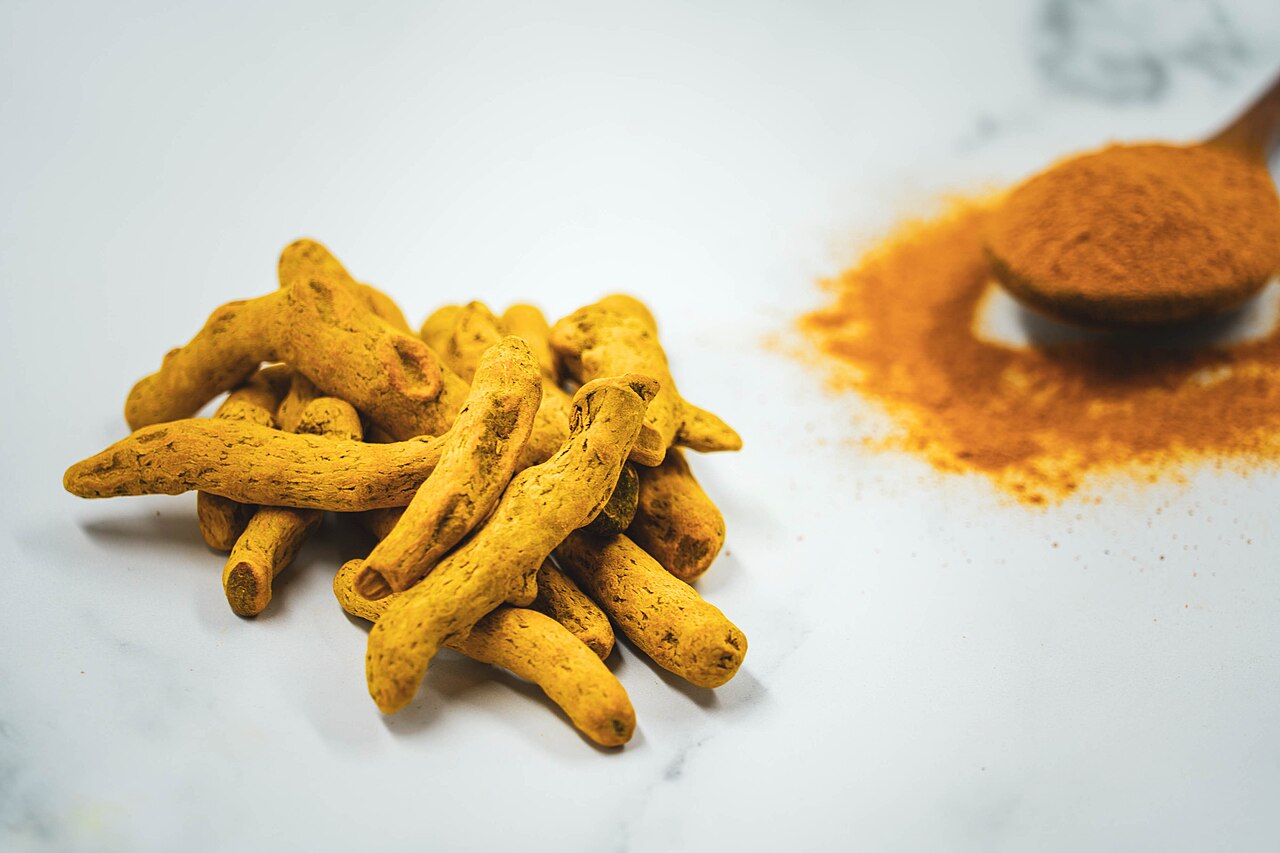
- Turmeric is a plant in the ginger family, grown commercially in India and Southeast Asia. Curcumin is the compound that gives the spice its yellow colour.
- Carotenoids, the pigments behind the colour of carrots, are a family of more than 500 known compounds. The best known, beta-carotene, is one the body can turn into vitamin A.
- The US National Center for Complementary and Integrative Health warns that some turmeric and curcumin supplements made to be absorbed more easily have been linked with liver damage.
- About 60,480 new cases of mouth and throat cancer were expected in the United States in 2026, according to the National Cancer Institute. Men are diagnosed about twice as often as women.
- NHANES publishes a public codebook for each of its questionnaires, with the number of people who gave every possible answer. Anyone can open it and check a count in a paper against the source.
- Analysis of Dietary Patterns Containing Curcumin and Oral CancerOral Health & Preventive Dentistry, 29 September 2026 · The study. Open access, read in full
- Full text on PubMed Central (PMC13621950)US National Library of Medicine · Version read for this item
- PubMed record (PMID 42808709)US National Library of Medicine · Abstract and authors
- NHANES 2003-2004 Medical Conditions (MCQ_C) data documentation and codebookUS Centers for Disease Control and Prevention, National Center for Health Statistics · Response counts for the cancer questions the paper cites
- Turmeric: Usefulness and SafetyUS National Center for Complementary and Integrative Health · What turmeric and curcumin are, the state of the evidence, and safety
- Cancer Stat Facts: Oral Cavity and Pharynx CancerUS National Cancer Institute, SEER programme · Age, sex and lifetime risk figures, and risk factors
- Mouth cancer: symptomsNHS (UK National Health Service) · When to get a mouth ulcer, lump or patch checked
- Vitamin AMedlinePlus Medical Encyclopedia, US National Library of Medicine · Carotenoids and beta-carotene in carrots and other orange vegetables
- Turmeric Root and Turmeric PowderWikimedia Commons · Image, CC BY 2.0, photo by formulatehealth
General information, not medical advice. This study shows an association in a one-off survey, not cause and effect, and the concerns raised here are our reading of the published paper and the public codebook. See a dentist or doctor about any mouth ulcer, lump or red or white patch that has not healed in about three weeks, and talk to a doctor before taking turmeric or curcumin supplements.
Analysis by NutroPractic from the sources listed. Written for general readers; it does not replace advice from your own doctor.
From our articles
Read, then eat a little better
Plain-language guides on nutrition and wellness, backed by research.

Global data
Diabetes, obesity, child malnutrition and hunger, 1980 to 2050: what the numbers show
How diabetes, obesity, child malnutrition and hunger have changed since 1980, with sourced figures and a basic projection to 2050. Click a condition to explore the chart and its facts.
5 Oct 2026

Indian kitchen
Rice, roti and blood sugar: building a balanced Indian plate with the ICMR-NIN 2024 guidelines
About one in nine Indian adults has diabetes and many more have prediabetes. You don't have to give up rice or roti. How the ICMR-NIN Dietary Guidelines for Indians (2024) suggest building a plate, plus simple habits that help keep blood sugar steady.
3 Oct 2026

Micronutrients
Vitamin D and B12: two common gaps, from northern winters to vegetarian kitchens
Vitamin D runs low in Canadian and European winters, and surprisingly often in sunny India too. Vitamin B12 is a risk for vegetarians, people over 50 and people on certain medicines. Who is at risk, what the official advice is in North America, Europe and India, and where to get both.
3 Oct 2026
Newsfeed for your website
Want this feed on your website?
Add it to any site with one copy-and-paste snippet. No sign-up, and it updates itself every hour.
Start with a virtual consultation
Tell Dr. Triveni what you want to change. You will leave with a clear next step, whether you are in Toronto, London, New York or Chennai.