Bone health · October 12, 2026
Children who broke a bone in a minor fall had lower vitamin D than children who fell and didn't. The doctors who found it say the blood test still isn't worth ordering after an ordinary fracture
Two hospitals in the Italian Alps took blood from 100 children who had come in after a tumble: 50 with a fracture on the X-ray and 50 without. Low vitamin D was more than twice as common in the fracture group. Then the same paper shows how poorly that number sorts one child from another, and we found a few figures in its tables that deserve a second look.
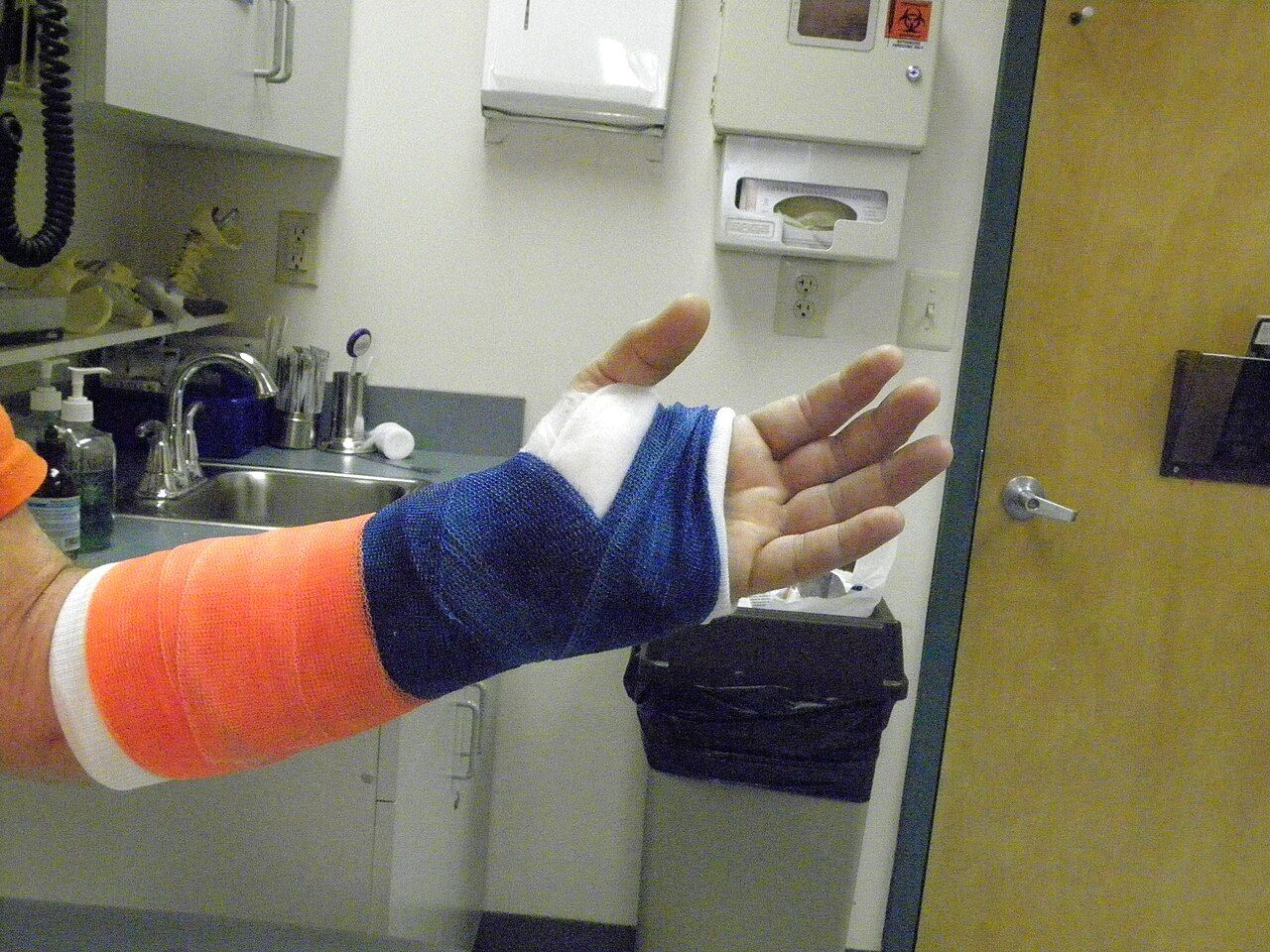
A child falls off a chair or lands badly on a trampoline, and an hour later a parent is looking at an X-ray of a cracked wrist. The question that follows is almost always the same: are the bones weak, and should we be giving vitamin D? A small study from South Tyrol, the mountain province in Italy's far north, tried to answer it with a blood sample, and the answer it gives is more careful than the usual one.
Between July 2024 and November 2025, orthopaedic doctors at the hospitals of Merano and Bressanone invited children aged 3 to 15 who arrived after what is called low-energy trauma, meaning ordinary falls and knocks and not road accidents or falls from a height. The children whose X-rays showed a fracture became the cases. The children whose X-rays were clear became the comparison group. Within a week, each gave blood for vitamin D (measured as 25-hydroxyvitamin D), parathyroid hormone, calcium, phosphate and alkaline phosphatase, and parents filled in a questionnaire about calcium in the diet. The paper appeared in the European Journal of Pediatrics on 9 October 2026.
The final group was 100 children, 50 with a fracture and 50 without, average age about ten. Three in four fractures were in the arm, most often the wrist or forearm. The vitamin D gap was clear enough: a median of 53.9 nmol/L in the fracture group against 70.4 in the others. Taking the usual line for 'enough' as 50 nmol/L (20 ng/mL), 40% of the children with fractures were below it against 16% of those without. After allowing for age, sex and body size, being under that line went with about three times the odds of being in the fracture group.
That is the part that will be quoted. The rest of the paper pulls the other way, and the authors say so themselves. Real deficiency, below 30 nmol/L, was rare: by our arithmetic from the paper's percentages, two children in the fracture group and one in the other. Parathyroid hormone, calcium and phosphate were normal and the same in both groups, which is not what you would see if soft, under-mineralised bone were behind the breaks. Alkaline phosphatase was a little higher in the children with fractures, but it rises when a bone starts to heal, and the blood was drawn after the injury.
The team also asked how well a vitamin D result could tell the two groups apart. Not very well. The score they report, 0.653, sits on a scale where 0.5 is a coin toss and 1 is perfect. The best cut-off the data could find was 67.6 nmol/L, well above the line normally used for sufficiency, and even there it missed a quarter of the children with fractures and wrongly flagged four in ten of the children without. A test like that cannot say much about any one child.
Their more interesting claim is about weight. The link between low vitamin D and fracture was stronger in heavier children and close to absent in leaner ones. It fits what is already known: body fat soaks up vitamin D, and a heavier child lands harder. But here we would be cautious for a reason the paper does not raise. Heights and weights were not measured at the hospital. They came from the parents, reporting the child's last routine check-up. And the table of results shows that the fracture group's body-size scores spread twice as wide as the other group's and run down to minus 9.4, a figure far outside anything expected for a healthy child and more likely to be an old or mistaken measurement. In a study of 100 children, a handful of odd values can shape a finding of exactly this kind. That is our reading of the table, not the authors'.
The same goes for calcium. The paper says low vitamin D mattered more in children who ate less calcium, because the gap in fractures was statistically significant in the low-calcium half and not in the high-calcium half. Worked back from the percentages, each of those comparisons rests on 14 children with low vitamin D: 11 of the 14 had a fracture in one half and 9 of the 14 in the other. The two gaps are about the same size, and the paper does not test whether they differ. One passing a significance line and the other just missing it is not evidence that calcium changes anything.
There are plainer limits too, most of which the authors list. Thirty-nine children recruited for the comparison group never gave blood or returned the questionnaire and were dropped, so the comparison group is made of the families who followed through, and no one can check how they differed. Boys were 68% of the fracture group and 46% of the other. Nobody recorded puberty, sport, time outdoors or family income, all of which move both vitamin D and the chance of a fall. And because the study picked 50 children with fractures and 50 without, it cannot tell anyone the actual risk of a fracture at a given vitamin D level.
So what should a parent take from it? The authors' own conclusion is the useful one: in an otherwise healthy child, a broken bone after a fall is mostly about the fall, the child's age and how the body met the ground, and routine vitamin D testing after an uncomplicated fracture has limited value. That does not make vitamin D and calcium unimportant. Growing bones need both, and a child who is short of them should have that put right for its own sake. If your child keeps breaking bones, breaks one with very little force, or has a restricted diet or a long-term illness, that is a reason to ask a doctor for a proper look. One cast after one fall usually is not.
100 children aged 3 to 15 seen after low-energy trauma at two hospitals in South Tyrol, Italy: 50 with a fracture on X-ray, 50 without
53.9 vs 70.4
Median vitamin D (25-hydroxyvitamin D, nmol/L) in children with a fracture against children without (p = 0.009)
40% vs 16%
Children below 50 nmol/L (20 ng/mL): fracture group against comparison group. Our sum of the paper's deficiency and insufficiency percentages
3.27
Odds ratio for being in the fracture group with vitamin D below 50 nmol/L, adjusted for age, sex and BMI z-score (95% CI 1.19 to 8.94)
0.653
Area under the curve for vitamin D as a test for fracture (95% CI 0.542 to 0.763); 0.5 is chance. Best cut-off 67.6 nmol/L: sensitivity 74%, specificity 60%
14 + 14
Children with low vitamin D in the low-calcium and high-calcium halves, worked back from the paper's percentages: 11 and 9 of them had a fracture
39
Comparison children who consented but gave no blood or questionnaire and were left out; 153 were invited and 100 analysed
Figures are from the open-access paper in the European Journal of Pediatrics (doi 10.1007/s00431-026-07509-x, volume 185, article 820, published online 9 October 2026, CC BY 4.0), read in full on PubMed Central: methods, results, Tables 1 and 2, figure captions, discussion and limitations. The figures themselves (plots) were not examined. Design: prospective case-control study, recruited consecutively July 2024 to November 2025 at the orthopaedic departments of the hospitals of Merano and Bressanone; registered as NCT07143552. Otherwise healthy children only; high-energy trauma, known bone, kidney, liver, endocrine, neuromuscular or inflammatory disease, cancer and bone-active medicines were excluded. Occasional winter vitamin D supplements were allowed. Blood was taken within 7 days of presentation. Vitamin D categories: deficiency under 30 nmol/L, insufficiency 30 to under 50, sufficiency 50 and over; the paper reports insufficiency in 36% of cases and 14% of controls and sufficiency in 60% and 84%, so deficiency was 4% and 2% (two children and one child, our arithmetic). Mean vitamin D 61.5 (SD 24.0) against 70.7 (SD 21.1) nmol/L. Parathyroid hormone (p = 0.314), calcium (p = 0.172) and phosphate (p = 0.162) did not differ; alkaline phosphatase median 259 against 229 U/L (p = 0.038). Fractures: 37 upper limb, 13 lower limb; 18 wrist or forearm, 13 humerus or supracondylar, 9 tibia, 2 femur, 8 other. Cases 68% boys, controls 46% boys (p = 0.026); in the model girls had lower odds of fracture (OR 0.33, 0.14 to 0.80). BMI z-score: cases mean 0.27 (SD 1.93, range -9.40 to 3.18), controls mean -0.23 (SD 1.00, range -3.48 to 1.77); height and weight came from the child's most recent routine examination as reported by parents. Interaction of vitamin D (continuous) with BMI z-score: beta 0.024, p = 0.010. Season of sampling did not change the result (interaction p = 0.397). Calcium intake came from a parent-completed food frequency questionnaire and was split at the sample median: in the low half (49 children) fractures in 78.6% with low vitamin D against 45.7% with sufficient (p = 0.037); in the high half (51 children) 64.3% against 37.8% (p = 0.090); overall 71.4% against 41.7% (p = 0.008). The counts behind those percentages (11 of 14 and 16 of 35; 9 of 14 and 14 of 37; 20 of 28 and 30 of 72) are our reconstruction and are not printed in the paper. Because cases and controls were recruited one to one, these percentages are shares of the sample, not fracture risks. The comment on the extreme BMI z-score and the comparison of the two calcium halves are our reading. The authors report open access funding from Paracelsus Medical University, declare no competing interests, and state that they used ChatGPT to improve the language of the article.
- Broken bones are a normal part of growing up for many children: the paper cites British records suggesting about half of boys and up to 40% of girls have at least one fracture before adulthood.
- Vitamin D results come in two units. To turn nmol/L into ng/mL, divide by 2.5, so the 50 nmol/L line used in this study is 20 ng/mL.
- Which bone breaks changes with age. Fractures just above the elbow are more common in younger children, and wrist and forearm fractures take over as children get older.
- The calcium targets the study used were 700 mg a day for ages 1 to 3, 1,000 mg for ages 4 to 8 and 1,300 mg for ages 9 to 18.
- Children with more body fat tend to have lower vitamin D in the blood, partly because the vitamin is stored in fat tissue and spread through a larger body.
- Vitamin D status and adiposity in children with low-energy fractures: a prospective case-control studyEuropean Journal of Pediatrics, 9 October 2026 · The study. Open access, read in full
- Full text on PubMed Central (PMC13649805)US National Library of Medicine · Version read for this item
- PubMed record (PMID 42850326)US National Library of Medicine · Abstract and authors
- Trial registration NCT07143552ClinicalTrials.gov · Registration number given in the paper; the registry entry was not read for this item
- Epidemiology of childhood fractures in Britain: a study using the General Practice Research DatabaseJournal of Bone and Mineral Research, 2004 · Cited by the paper for how common childhood fractures are; not read for this item
- Getting A Cast On His ArmWikimedia Commons · Image, CC BY 2.0, photo by slgckgc
General information, not medical advice. This study shows an association, not cause and effect, and it was small. Do not start, stop or change a vitamin D or calcium supplement for a child on the strength of it; talk to your child's doctor, who can judge whether testing or supplements make sense for your child.
Analysis by NutroPractic from the sources listed. Written for general readers; it does not replace advice from your own doctor.
From our articles
Our guides on this subject
Plain-language guides on nutrition and wellness, backed by research.

Micronutrients
Vitamin D and B12: two common gaps, from northern winters to vegetarian kitchens
Vitamin D runs low in Canadian and European winters, and surprisingly often in sunny India too. Vitamin B12 is a risk for vegetarians, people over 50 and people on certain medicines. Who is at risk, what the official advice is in North America, Europe and India, and where to get both.
3 Oct 2026

Global data
Diabetes, obesity, child malnutrition and hunger, 1980 to 2050: what the numbers show
How diabetes, obesity, child malnutrition and hunger have changed since 1980, with sourced figures and a basic projection to 2050. Click a condition to explore the chart and its facts.
5 Oct 2026

Indian kitchen
Rice, roti and blood sugar: building a balanced Indian plate with the ICMR-NIN 2024 guidelines
About one in nine Indian adults has diabetes and many more have prediabetes. You don't have to give up rice or roti. How the ICMR-NIN Dietary Guidelines for Indians (2024) suggest building a plate, plus simple habits that help keep blood sugar steady.
3 Oct 2026
Newsfeed for your website
Want this feed on your website?
Add it to any site with one copy-and-paste snippet. No sign-up, and it updates itself every hour.
Start with a virtual consultation
Tell Dr. Triveni what you want to change. You will leave with a clear next step, whether you are in Toronto, London, New York or Chennai.