Women in sport · October 13, 2026
One in three women volleyball players showed signs of running short on fuel. Most of them had no warning signs around eating at all
When an athlete isn't eating enough for the training she does, the usual assumption is that something is wrong with how she thinks about food. A survey of 213 volleyball players in Turkey, from youth squads to the first league, tested that assumption with two standard screening questionnaires. Seventy-one players were flagged for under-fuelling. Forty-nine of them came up clear on the eating questionnaire.
Sports medicine has a plain name for an athlete who is not eating enough for the work she does: low energy availability. After training has taken its share, too little energy is left over to run everything else, and if that goes on for long enough the body starts to cut back. Periods can become irregular or stop, the gut can play up, injuries can come more often and performance can slide. The severe, long-running form is called relative energy deficiency in sport, or REDs.
Most of the research on this has been done in sports where being light or lean is part of the job: distance running, gymnastics, dance, sports with weight classes. Team sports have had less attention, and volleyball very little. A study published in PLOS One on 8 October 2026 went looking there.
Three sports scientists at two Turkish universities sent an anonymous online survey to female volleyball players through their coaches in May and June 2025. In all, 213 players answered: 60 from the women's first league, 110 from the second league and 43 from under-17 and under-19 squads. Their average age was about 20, and they trained for about 13 hours a week.
The survey carried two questionnaires that are widely used with athletes. The first, known as LEAF-Q, has 25 questions about stomach and bowel trouble, injuries and periods, the kinds of problems that tend to follow under-fuelling. It never asks what a player eats. A score of 8 or more counts as at risk. The second, EAT-26, has 26 questions about attitudes to food, dieting and weight, and a score of 20 or more is taken as a sign of disordered eating. Neither is a diagnosis. Each one is a flag that says this person is worth a closer look.
On the first questionnaire, 71 of the 213 players, one in three, scored in the at-risk range. That share was almost the same in the first league (32%), the second league (33%) and the youth squads (37%). On the second, 37 players, about one in six, were flagged for disordered eating. Here the levels looked different: 8% in the first league, 24% in the second and 14% among the youth players. The authors treat that gap between the two leagues as tentative, because they did not adjust for age, body size or training load.
The more interesting result is how the two flags overlapped. Players flagged for disordered eating were more likely to be flagged for under-fuelling as well: 22 of the 37, or 59%, against 28% of everyone else. So the two do travel together. But read it from the other side. Of the 71 players flagged for under-fuelling, 49 had an ordinary score on the eating questionnaire. That is more than two in three.
The study cannot say why, because it did not measure what anyone ate or how much energy they burned. The authors point to the standard explanation: an athlete can fall short without restricting anything on purpose, simply because her meals have not kept up with her training. Two other readings fit the data just as well. People can under-report on eating questionnaires, even anonymous ones. And the under-fuelling questionnaire picks up symptoms, such as a bloated stomach or a string of injuries, that can have other causes entirely.
One detail points the same way. Higher scores on the eating questionnaire went with more reported gut trouble and more injuries, but not with period problems. The authors warn against reading much into that, since they had little information on hormonal contraception, which changes bleeding patterns.
The limits are large, and the paper is open about them. The players were whoever responded after a coach passed on the link, so these are not national rates and the authors say they should not be read as such. Everything was self-reported at one point in time. Nobody was examined, no food diaries were kept, and no blood or bone tests were done. The questionnaires have had little testing in players under 18, who made up part of the sample.
What is left is a modest, practical point for anyone who coaches, parents or is a young sportswoman. An athlete with a healthy relationship with food can still be eating too little for her training load. Asking only about dieting and body image would have missed most of the players this survey flagged. The questions about periods, recurring injuries and stomach trouble found them. A flag on either questionnaire is a reason to see a sports doctor or dietitian, and nothing more than that.
213 female volleyball players in Turkey (first league, second league, under-17 and under-19) who filled in two screening questionnaires online in May and June 2025
71 of 213
Flagged as at risk of low energy availability (33%)
37 of 213
Flagged as at risk of disordered eating (17%)
22
Players flagged on both questionnaires (10% of the sample)
49 of 71
Players flagged for under-fuelling whose eating questionnaire score was in the ordinary range (69%, our calculation)
59% vs 28%
Share flagged for under-fuelling among players with and without a disordered eating flag
8% / 24% / 14%
Disordered eating flag in the first league, second league and youth squads; under-fuelling was 32%, 33% and 37%
Figures are from the open-access paper in PLOS One (doi 10.1371/journal.pone.0360395, published 8 October 2026, CC BY), read in full on PubMed Central: methods, Tables 1 to 4, discussion and limitations. Cross-sectional online survey, 17 May to 29 June 2025, convenience sample recruited through coaches; response rate unknown; no missing data. Low energy availability risk: Turkish version of the Low Energy Availability in Females Questionnaire (LEAF-Q), total score 8 or more. Disordered eating risk: Turkish version of the Eating Attitudes Test-26 (EAT-26), total score 20 or more. Both are screening tools and neither confirms a condition. At risk on LEAF-Q: 71 (33.3%, 95% CI 27.3 to 39.9); by level 19 of 60 (31.7%), 36 of 110 (32.7%) and 16 of 43 (37.2%), P = 0.825. At risk on EAT-26: 37 (17.4%, 95% CI 12.9 to 23.0); by level 5 (8.3%), 26 (23.6%) and 6 (14.0%), P = 0.034; the second league was higher than the first after Holm adjustment (P = 0.040), a comparison the authors call exploratory. Both flags: 22 (10.3%). Among players with a disordered eating flag, 22 of 37 (59.5%) also had the low energy flag, against 49 of 176 (27.8%) of those without; unadjusted odds ratio 3.80 (95% CI 1.82 to 7.92). The 69% figure is our calculation from Table 3 (49 of 71). EAT-26 score correlated with LEAF-Q total (Spearman r = 0.279), gut score (0.265) and injury score (0.199), but not menstrual score (0.103, P = 0.133). Mean age 19.6 years, body mass index 20.9, training 13.0 hours a week. Analyses were not adjusted for age, body mass index, training volume or team. We rounded percentages to whole numbers in the text. The authors report no specific funding and no competing interests. Figures from other studies in the side facts are as cited in this paper's discussion; we did not read those studies.
- The under-fuelling questionnaire never asks about food. Its 25 questions cover stomach and bowel symptoms, injuries and periods, because those are where a long energy shortfall tends to show.
- First-league players in the survey trained about 16 hours a week and the youth players about 10, yet the share flagged for under-fuelling was about a third in both groups.
- The paper cites an earlier study that used the same questionnaire and cut-off on 833 female athletes and active women across many sports: 40% were flagged.
- When researchers work out energy availability directly, they subtract the energy burned in exercise from the energy eaten and divide by the athlete's fat-free body mass. The studies cited in this paper treat anything under 30 kilocalories per kilo of fat-free mass a day as low.
- In a study of college beach volleyball players cited by the authors, about 31% were under that line before the season, and between 25% and 62.5% at different points during it.
- The authors published their anonymised dataset and codebook alongside the paper, so other researchers can rerun the numbers.
- Screening-based low energy availability risk, disordered eating risk, and their co-occurrence among female volleyball players: a cross-sectional studyPLOS One, 8 October 2026 · The study. Open access, read in full
- Full text on PubMed Central (PMC13649128)US National Library of Medicine · Version read for this item, including Tables 1 to 4
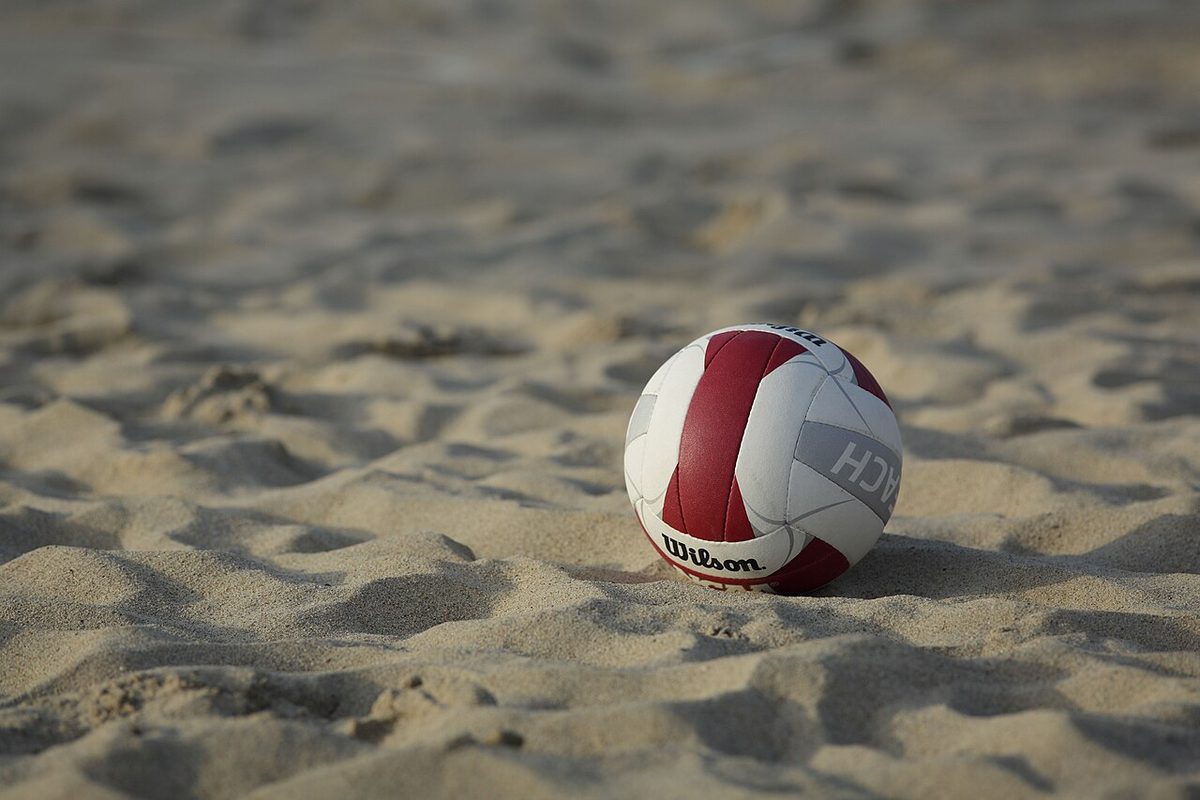
- Ball used at a NCAA beach volleyball match at Stanford in 2016Wikimedia Commons · Image, CC BY 2.0, John Loo
General information, not medical advice. This was a questionnaire survey; it did not diagnose anyone. If you or an athlete you look after has missed periods, repeated injuries, constant tiredness or worries about eating, see a doctor or a registered dietitian with experience in sport. If thoughts about food or weight are taking over, ask for help early; eating disorders are treatable.
Analysis by NutroPractic from the sources listed. Written for general readers; it does not replace advice from your own doctor.
From our articles
Read, then eat a little better
Plain-language guides on nutrition and wellness, backed by research.

Global data
Diabetes, obesity, child malnutrition and hunger, 1980 to 2050: what the numbers show
How diabetes, obesity, child malnutrition and hunger have changed since 1980, with sourced figures and a basic projection to 2050. Click a condition to explore the chart and its facts.
5 Oct 2026

Indian kitchen
Rice, roti and blood sugar: building a balanced Indian plate with the ICMR-NIN 2024 guidelines
About one in nine Indian adults has diabetes and many more have prediabetes. You don't have to give up rice or roti. How the ICMR-NIN Dietary Guidelines for Indians (2024) suggest building a plate, plus simple habits that help keep blood sugar steady.
3 Oct 2026

Micronutrients
Vitamin D and B12: two common gaps, from northern winters to vegetarian kitchens
Vitamin D runs low in Canadian and European winters, and surprisingly often in sunny India too. Vitamin B12 is a risk for vegetarians, people over 50 and people on certain medicines. Who is at risk, what the official advice is in North America, Europe and India, and where to get both.
3 Oct 2026
Newsfeed for your website
Want this feed on your website?
Add it to any site with one copy-and-paste snippet. No sign-up, and it updates itself every hour.
Start with a virtual consultation
Tell Dr. Triveni what you want to change. You will leave with a clear next step, whether you are in Toronto, London, New York or Chennai.