Women's health · October 11, 2026
Keto beat a Mediterranean-style diet for PCOS in a 12-week trial: periods came back for 29 of 30 women. Then look at the weight loss, 16 kg on a diet built to lose about a third of that
Sixty women with polycystic ovary syndrome in China were given either a ketogenic diet or a Mediterranean-style diet, both set at the same calories. After 12 weeks the keto group had lost 16 kg against 6 kg, their insulin resistance had fallen twice as far and almost all had regular cycles again. It is the first trial to put these two diets head to head in PCOS. It is also a small, unblinded study with results so large, and so tidy, that they need a second look before anyone changes how they eat.
Polycystic ovary syndrome, PCOS, is one of the most common hormone conditions in women of childbearing age. Periods come rarely or not at all, and for most women the body also responds poorly to insulin, which pushes up weight and the risk of type 2 diabetes. Losing weight and eating differently are the first things doctors suggest, but which way of eating has never been settled. The Mediterranean diet is the one most often recommended for metabolic health. The ketogenic diet, which cuts carbohydrate so low that the body switches to burning fat and makes ketones, has a loyal following among women with PCOS and a handful of small studies behind it. Nobody had tested one against the other in a randomised trial.
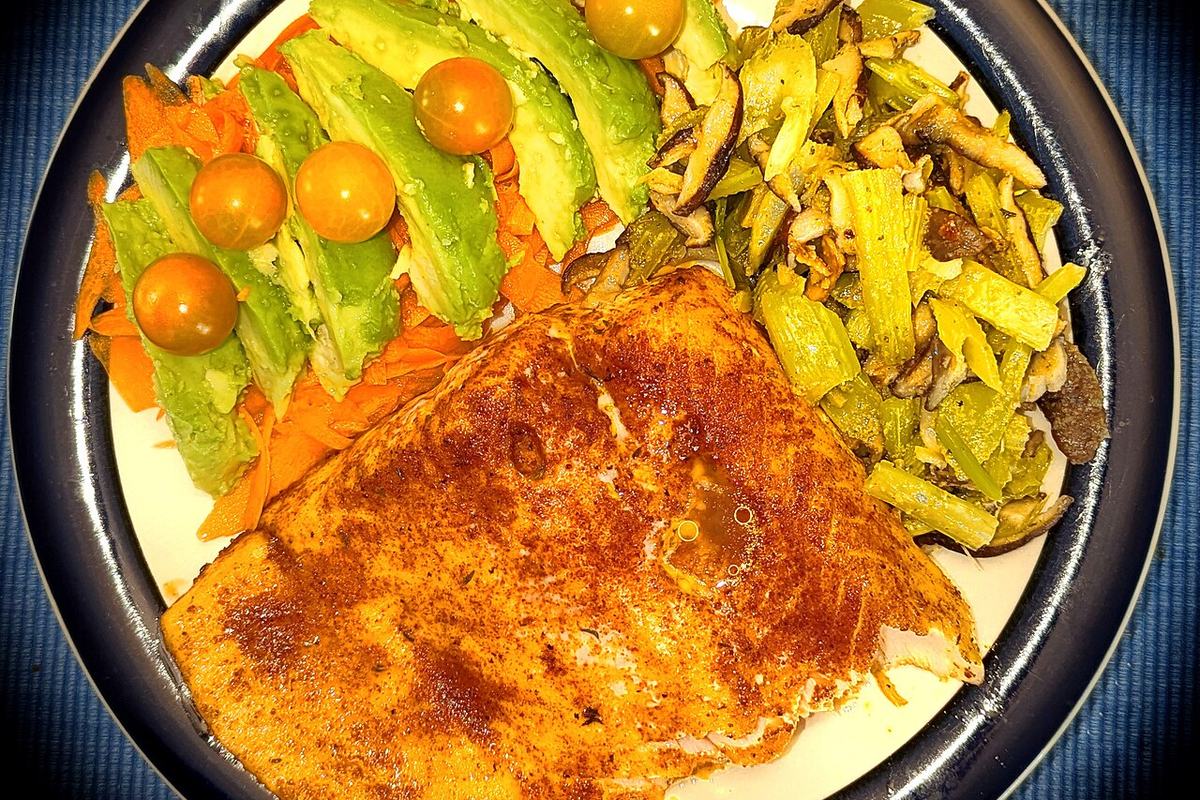
A team at Yangzhou Maternal and Child Health Care Hospital in China did that, and their paper was published on 7 October 2026 in Frontiers in Nutrition. They enrolled 60 women aged 18 to 40 with PCOS and a BMI of 24 or more (the average was about 34) who were not taking metformin, the pill or other hormone treatments. Thirty were assigned at random to a ketogenic diet: about 72% of calories from fat, 18% from protein and under 50 g of carbohydrate a day, built around avocado, nuts, olive oil and oily fish. Thirty got a Mediterranean-style diet adapted to local food, with half its calories from carbohydrate, plenty of vegetables, fruit, whole grains and legumes, and no wine. Both were set at 1,200 to 1,500 kcal a day, meant to be about 500 kcal less than each woman burned, with the same schedule of dietitian visits.
The results all point one way. The keto group lost 16.0 kg on average in 12 weeks, the Mediterranean group 6.0 kg. Waists shrank by 17 cm against 6 cm. HOMA-IR, a score of insulin resistance worked out from fasting blood sugar and insulin, fell from 8.7 to 2.5 on keto and from 8.9 to 5.8 on the Mediterranean diet. And periods: 3 of 30 women in the keto group had regular cycles at the start and 29 of 30 at the end. In the Mediterranean group it went from 12 of 30 to 20 of 30. Among women who had no periods at all when they joined, 12 of 13 on keto started bleeding again, against 5 of 15. Three women on keto had constipation and two had headaches, all gone within two weeks. Liver and kidney tests stayed normal.
Now the second look. Start with the weight. A deficit of 500 kcal a day for 12 weeks adds up to 42,000 kcal, which by the usual rule of thumb is about 5.5 kg of body fat. That is almost exactly what the Mediterranean group lost. The keto group lost nearly three times as much, 17.7% of their starting weight, a figure closer to what the newest weight-loss injections manage in a year than to what diets do in three months. Low-carb diets do shed a few extra kilos of water early on, but not ten. The paper's own table has the two groups eating almost the same, 1,397 against 1,362 kcal a day. Both things can't be true. If the women on keto lost 16 kg, they were eating far less than that table says, and the authors accept that actual intake may have differed between the groups.
Which brings up the second problem: the two diets were not followed equally. On the trial's 0-to-5 compliance score the keto group averaged 4.7 and the Mediterranean group 2.8. So this is less a test of keto against Mediterranean eating than of a diet people stuck to against one they half followed. The groups were also uneven before anything started. Random assignment happened to put 12 women with regular periods in the Mediterranean group and only 3 in the keto group, so one group had far more room to improve. The authors re-ran the numbers without those 15 women and keto still came out ahead, 26 of 27 against 8 of 18, but in a study this small a lopsided start is a reason for care.
A few more things. Everyone knew which diet they were on, and regular periods were recorded from the women's own diaries; only the lab staff were kept unaware. Twelve weeks is room for about three cycles, which is thin ground for calling them regular again, and nobody was followed after the diet ended. Testosterone, the hormone behind many PCOS symptoms, did not change in either group, so the trial can't say why the periods returned. Not one of 60 women dropped out or broke the protocol in three months on 1,400 kcal a day, which is rare in any diet trial. And the trial ran from June 2024 to December 2025, while the registration number given in the paper begins with 26, which in that registry's numbering points to a 2026 entry, after the work was done. We could not open the registry record to confirm the date. Trials are meant to be registered before they begin, so that the outcomes can't be chosen afterwards.
Our reading: the paper adds a little to what was already fairly well known, that women with PCOS who lose a good deal of weight often get their cycles back, and that a very-low-carb diet is one way some people manage to eat less. It does not show that ketosis itself restores periods, and the authors say as much: they call the trial preliminary and exploratory and ask for larger studies in several hospitals. The numbers are too big and too clean to take at face value from one small unblinded study. If you have PCOS and are thinking about keto, it is a strict diet that needs supervision, most people find it hard to keep up beyond a few months, and it should stop before trying to conceive unless your doctor says otherwise. A diet you can still be following next year, with enough protein, vegetables and fibre, is the better bet.
Ketogenic diet against a Mediterranean-style diet at the same planned calories: 60 women with PCOS, 12 weeks, one hospital in Yangzhou, China
−16.0 vs −6.0 kg
Average weight lost in 12 weeks, keto against Mediterranean-style. Starting weights were about 91 kg and 87 kg
29 of 30
Women on keto with regular cycles (21 to 35 days) at week 12, up from 3 of 30. Mediterranean-style group: 20 of 30, up from 12 of 30
8.7 → 2.5
HOMA-IR insulin resistance score on keto. Mediterranean-style group: 8.9 → 5.8
≈5.5 kg
Fat loss you would expect from the planned 500 kcal daily deficit over 12 weeks (our sum, at about 7,700 kcal per kg). The keto group lost almost three times that
4.7 vs 2.8
Compliance score out of 5, keto against Mediterranean-style. The two diets were not followed equally
0 of 60
Women who dropped out or broke the protocol in 12 weeks. No serious side effects; 3 cases of constipation and 2 of headache on keto
Figures are from the full open-access paper (Frontiers in Nutrition, 7 October 2026, CC BY): the methods, tables 1 and 2 and results sections 3.1 to 3.4. Counts of women (29 of 30, 20 of 30) are worked out from the paper's percentages. The expected fat loss and the 17.7% of starting weight are our own arithmetic, using a rough rule that a kilogram of body fat holds about 7,700 kcal; real weight loss also includes water and some muscle. The between-group differences in HOMA-IR and menstrual regularity stayed statistically significant after the authors adjusted for the uneven starting values. Funding came from two Chinese public research programmes; the authors report no conflicts of interest.
- PCOS got a new name in May 2026. After a long international consultation published in The Lancet, it is being renamed polyendocrine metabolic ovarian syndrome, PMOS, because the condition is about hormones and metabolism far more than cysts. The switch is being phased in over about three years.
- The paper puts the share of women of reproductive age with PCOS at 8 to 13%, and says 50 to 70% of them have insulin resistance.
- The ketogenic diet was developed in the 1920s as a treatment for epilepsy, long before it became a weight-loss diet.
- The women on keto tested their urine for ketones every day and had a blood ketone test every week. Blood ketones averaged 2.4 mmol/L; anything from 0.5 counts as nutritional ketosis.
- The trial used a BMI of 24 as its cut-off for overweight, the threshold used in China, lower than the 25 used in Europe and North America.
- Efficacy of ketogenic diet on glycemic-lipid metabolism and menstrual regularity in women with polycystic ovary syndrome: a randomized controlled trialFrontiers in Nutrition, 7 October 2026 · The trial (open access, CC BY); read in full
- PCOS officially renamed to Polyendocrine Metabolic Ovarian Syndrome (PMOS)Endometriosis UK · The May 2026 name change and its three-year transition
General information, not medical advice. This was one small, short, unblinded trial at a single hospital, and its results have not been repeated. A ketogenic diet is restrictive and is not suitable for everyone, including during pregnancy or breastfeeding, with some medicines, or with a history of eating disorders. If you have PCOS, talk to your doctor or a dietitian before making a big change to how you eat, and don't stop prescribed treatment on the strength of this study.
Analysis by NutroPractic from the sources listed. Written for general readers; it does not replace advice from your own doctor.
From our articles
Our guides on this subject
Plain-language guides on nutrition and wellness, backed by research.
Global data
Diabetes, obesity, child malnutrition and hunger, 1980 to 2050: what the numbers show
How diabetes, obesity, child malnutrition and hunger have changed since 1980, with sourced figures and a basic projection to 2050. Click a condition to explore the chart and its facts.
5 Oct 2026
Indian kitchen
Rice, roti and blood sugar: building a balanced Indian plate with the ICMR-NIN 2024 guidelines
About one in nine Indian adults has diabetes and many more have prediabetes. You don't have to give up rice or roti. How the ICMR-NIN Dietary Guidelines for Indians (2024) suggest building a plate, plus simple habits that help keep blood sugar steady.
3 Oct 2026

Micronutrients
Vitamin D and B12: two common gaps, from northern winters to vegetarian kitchens
Vitamin D runs low in Canadian and European winters, and surprisingly often in sunny India too. Vitamin B12 is a risk for vegetarians, people over 50 and people on certain medicines. Who is at risk, what the official advice is in North America, Europe and India, and where to get both.
3 Oct 2026
Newsfeed for your website
Want this feed on your website?
Add it to any site with one copy-and-paste snippet. No sign-up, and it updates itself every hour.
Start with a virtual consultation
Tell Dr. Triveni what you want to change. You will leave with a clear next step, whether you are in Toronto, London, New York or Chennai.