Blood tests · October 11, 2026
Low on iron? Your diabetes test may read high. Across 30 studies, people with iron deficiency anaemia had an HbA1c 0.66 points above everyone else's, and treating the anaemia brought it down by half a point
HbA1c is the number most doctors use to diagnose diabetes and to decide whether treatment is working. It is meant to track blood sugar. Two researchers in Brazil pulled together 61 studies showing that it also tracks something else: how much iron you have. The gap is big enough to move a healthy person into the prediabetes range, and the people most likely to be caught by it are women. The evidence is messier than that sounds, though, and the review says so.
HbA1c measures how much of the haemoglobin in your red blood cells has sugar stuck to it. Sugar attaches slowly and stays for the life of the cell, so the result works as a running average of blood sugar over roughly the past three months. No fasting, one blood draw, one number. Under the American Diabetes Association's criteria, 5.7 to 6.4% counts as prediabetes and 6.5% or more as diabetes.
The test has a quiet assumption built in: that your red cells live a normal length of time. When the body is short of iron it makes new red cells more slowly, and the ones already in circulation hang around longer. Older cells have had more time to pick up sugar. So the reading goes up, even though the blood sugar has not. Iron deficiency may also change the haemoglobin itself in ways that make sugar attach faster.
Emanuele Souza and Caroline Domingueti of the Federal University of São João del-Rei in Brazil searched four databases up to May 2026 for studies that put numbers on this. They found 61, and their review appears in the October 2026 issue of Biochemia Medica, the journal of the Croatian Society of Medical Biochemistry and Laboratory Medicine, online since the first days of the month.
Of 43 studies that compared people with and without iron deficiency anaemia, 33 found a higher HbA1c in the anaemic group. Pooling the 30 with usable numbers, the difference was 0.66 percentage points. That is a lot on this scale: the whole prediabetes band is less than one point wide. The treatment studies point the same way from the other side. In 14 of 19, HbA1c fell after people took iron, and the pooled drop across 14 studies was 0.50 points.
Some of the individual studies make the stakes plain. In a US study of 12,151 Hispanic and Latino adults, women with iron deficiency anaemia were more than twice as likely to be classed as prediabetic by HbA1c, and more than three times as likely to be classed as diabetic. Men were not. In a small Indian study, 80% of 50 adults with iron deficiency anaemia had an HbA1c in the prediabetes range, against none of 50 without it. After three months of iron, the figure was 30%.
For people who already have diabetes the risk runs in a different direction. An HbA1c that stays above target usually leads to more medication. If part of that number is iron and not sugar, the authors warn, a stronger dose could push blood sugar too low.
Now the caveats, and there are several. The pooled studies disagreed with each other about as much as studies can, and four of the 43 found lower readings in anaemia, not higher. Only one of the 42 cross-sectional studies was rated high quality, and 14 of the 19 treatment studies carried a serious risk of bias. Only two of those 19 were clinical trials. The effect disappeared when the authors looked only at studies that used the most common laboratory method, high-performance liquid chromatography, or only at those that defined anaemia and iron deficiency by World Health Organization criteria. Iron deficiency without anaemia raised HbA1c in just two of six studies. The review was also not registered in advance.
Our reading: the direction of the effect is well supported and has a clear mechanism, and the American Diabetes Association already says diabetes should be diagnosed from blood glucose, not HbA1c, in conditions that change how long red cells last, iron deficiency anaemia among them. The size of the effect is much less certain than a single figure of 0.66 suggests. What this means in practice is simple. If you have a borderline HbA1c and you also have heavy periods, are pregnant, eat little iron, or already know your iron is low, it is reasonable to ask whether a blood count and ferritin have been checked, and whether a glucose test would settle the question. It is not a reason to ignore a high result or to start taking iron on your own.
Iron deficiency and the HbA1c test: systematic review of 61 studies, with pooled results from up to 30
+0.66
Percentage points of HbA1c: average gap between people with iron deficiency anaemia and people without it, pooled from 30 studies (95% confidence interval 0.31 to 1.00). Equal to 7.21 mmol/mol
33 of 43
Studies that found a higher HbA1c in people with iron deficiency anaemia. Six found no difference and four found a lower reading
−0.50
Percentage points: pooled fall in HbA1c after iron treatment across 14 studies (95% confidence interval −0.92 to −0.09)
2.35×
Odds of being classed as prediabetic by HbA1c for women with iron deficiency anaemia in a US study of 12,151 Hispanic and Latino adults (3.60× for diabetes). No such rise in men
80% → 30%
Share of 50 adults with iron deficiency anaemia whose HbA1c was in the prediabetes range, before and after three months of iron, in one Indian study
1 of 42
Cross-sectional studies rated high quality. Of the 19 treatment studies, 14 had a serious risk of bias
Figures are from the full open-access paper (Biochemia Medica, volume 36, issue 3, dated 15 October 2026 and listed in PubMed from 3 October), its text and tables. Of the 61 studies, 42 were cross-sectional, 17 were non-randomised treatment studies and two were clinical trials; 27 came from India. All three pooled analyses showed very high disagreement between studies (I² of 89% to 100%). The pooled result for iron deficiency without anaemia came from four studies and was borderline (0.66 points, confidence interval 0.01 to 1.32, P = 0.05); the paper reports the same point estimate as for anaemia. The US figures are from the Hispanic Community Health Study/Study of Latinos (2022) and the Indian figures from a 2020 study that gave ferric ammonium citrate, both as summarised in the review's tables; we did not read those papers separately. The prediabetes and diabetes cut-offs are the American Diabetes Association's. The authors declare no conflicts of interest.
- By one estimate cited in the review, 22.8% of the world's population was anaemic in 2019, about 1.74 billion people, and iron deficiency was the most common cause.
- Other blood conditions push HbA1c the opposite way. The review notes that haemolytic anaemia, blood loss and inherited haemoglobin disorders such as thalassaemia can make the reading falsely low.
- In a study of 116 Indian adults aged 21, a glucose tolerance test found prediabetes in 7.8% and HbA1c found it in 23.3%. Twenty-four people with normal glucose results were flagged by HbA1c, and those flagged tended to have lower iron stores.
- The lab method may matter. In the review, the anaemia effect was clear in studies using antibody-based (immunoturbidimetric) tests and not in those using liquid chromatography. Only eight of the 61 studies said their method was certified by the international standardisation programme for HbA1c.
- When HbA1c can't be trusted, the review lists the alternatives doctors can use: self-monitoring of blood glucose, continuous glucose monitoring, and two other blood markers, fructosamine and glycated albumin.
- Interference of iron deficiency in glycated hemoglobin testing and its clinical implications: a systematic review and meta-analysisBiochemia Medica, October 2026 · The review (open access); read in full
- PubMed record (PMID 42828220)US National Library of Medicine · Abstract and indexing dates
- 2. Diagnosis and Classification of Diabetes: Standards of Care in Diabetes, 2026Diabetes Care (American Diabetes Association), 2026 · HbA1c cut-offs, and glucose-based diagnosis when red cell turnover is altered
- Sex-Specific Associations of Iron-Anemia Status With Hemoglobin A1C Levels Among Hispanics/Latinos Without Self-Reported Diabetes MellitusEndocrine Practice, 2022 · The US study of 12,151 adults, as summarised in the review
- Global, regional, and national prevalence of anemia and its causes in 204 countries and territories, 1990-2019Current Developments in Nutrition, 2020 · The global anaemia estimate cited in the review
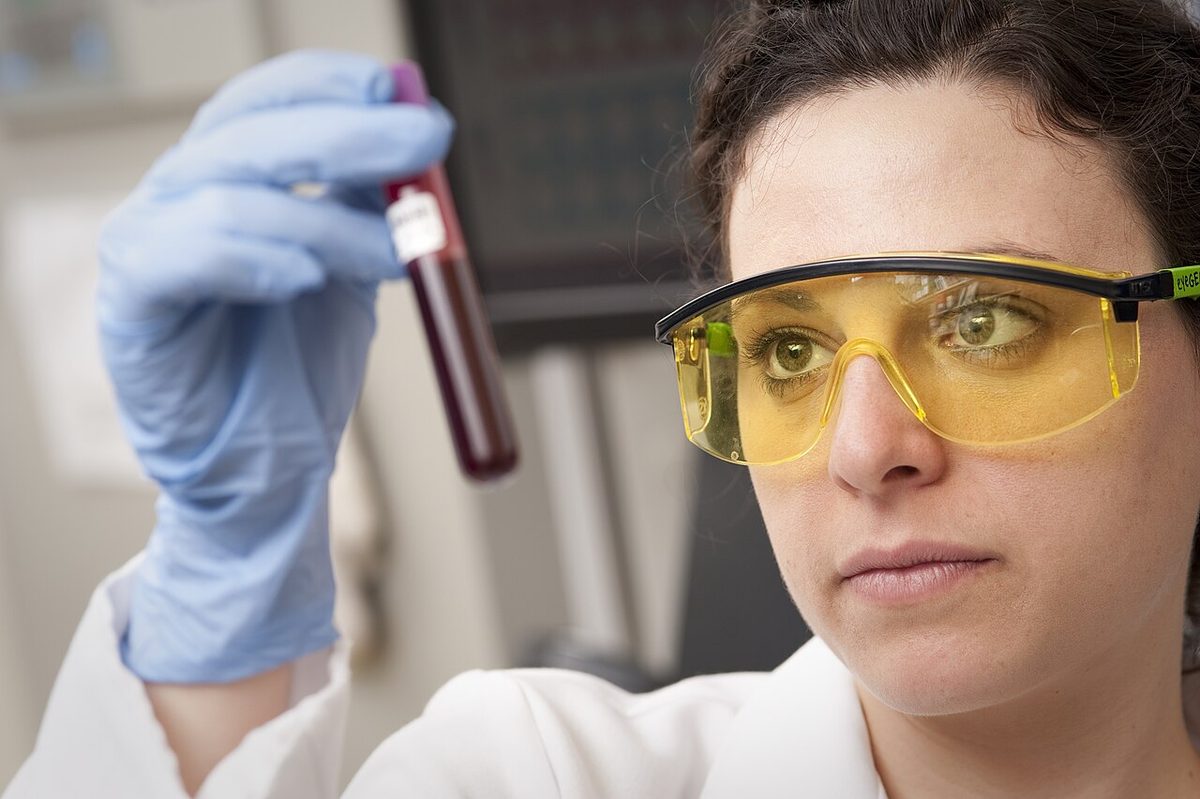
- Checking Blood Sample (photo)Wikimedia Commons · Image, CC BY 2.0
General information, not medical advice. HbA1c remains a reliable test for most people, and a high result should always be followed up. Don't start iron supplements or change diabetes medicines on the strength of this article: too much iron is harmful, and only blood tests can show whether you are deficient. Talk to your doctor about your own results.
Analysis by NutroPractic from the sources listed. Written for general readers; it does not replace advice from your own doctor.
From our articles
Our guides on this subject
Plain-language guides on nutrition and wellness, backed by research.
Global data
Diabetes, obesity, child malnutrition and hunger, 1980 to 2050: what the numbers show
How diabetes, obesity, child malnutrition and hunger have changed since 1980, with sourced figures and a basic projection to 2050. Click a condition to explore the chart and its facts.
5 Oct 2026
Indian kitchen
Rice, roti and blood sugar: building a balanced Indian plate with the ICMR-NIN 2024 guidelines
About one in nine Indian adults has diabetes and many more have prediabetes. You don't have to give up rice or roti. How the ICMR-NIN Dietary Guidelines for Indians (2024) suggest building a plate, plus simple habits that help keep blood sugar steady.
3 Oct 2026
Micronutrients
Vitamin D and B12: two common gaps, from northern winters to vegetarian kitchens
Vitamin D runs low in Canadian and European winters, and surprisingly often in sunny India too. Vitamin B12 is a risk for vegetarians, people over 50 and people on certain medicines. Who is at risk, what the official advice is in North America, Europe and India, and where to get both.
3 Oct 2026
Newsfeed for your website
Want this feed on your website?
Add it to any site with one copy-and-paste snippet. No sign-up, and it updates itself every hour.
Start with a virtual consultation
Tell Dr. Triveni what you want to change. You will leave with a clear next step, whether you are in Toronto, London, New York or Chennai.