Sugary drinks · October 12, 2026
A six-week programme in Massachusetts after-school clubs set out to get children off sugary drinks. A year later their BMI had edged down against the comparison clubs. Their drinks hadn't: the gap was 20 mL a day
437 children aged 8 to 13, eleven Boys & Girls Clubs, twelve sessions of taste tests, sugar demonstrations and storytelling. The trial's main result came out in favour of the programme, just. The thing the programme was built to change did not differ between the clubs, and the two sets of children were not the same weight to begin with.
Programmes that try to change everything a child eats and does have a patchy record, partly because they are hard to run and harder to keep running. So a team led from Boston University picked one habit: sugary drinks. Their programme, called H2GO!, was written with the Boys & Girls Clubs of America and delivered by the clubs' own staff after school, to children aged 8 to 13. The results were published in JAMA Network Open on 9 October 2026.
Ten clubs across Massachusetts were matched in pairs by region and size, and one of each pair was picked at random to run the programme. An eleventh joined later, when one comparison club stopped enrolling because it ran short of staff. That left five clubs with 235 children on the programme and six with 202 children on the clubs' usual activities, which included health sessions on things like online safety but nothing on diet. About two in three of the children had free or reduced-price school lunches, 43% were Hispanic or Latino and 16% were Black.
H2GO! was twelve sessions over about six weeks: taste tests, measuring out the sugar in a drink, children writing and telling their own stories about what they drink, activities to take home, and a community event the children ran themselves. Staff got a 90-minute video training. Sessions were meant to last an hour and averaged 45 minutes, and children turned up to half of them.
The main result was BMI z score, measured by study staff with a proper scale and height rod. A z score says how far a child's BMI sits from the average for their age and sex: 0 is average, 1 is roughly the 84th percentile. After 12 months it had gone down by 0.11 in the programme clubs and up by 0.08 in the comparison clubs. Neither of those changes was clear of chance by itself. The difference between them, 0.19, was, with a p value of 0.04 and a confidence interval that runs from 0.38 to 0.01, so it stops just short of zero. In an exploratory count, 28.9% of programme children had moved into a lower weight category by 12 months against 17.8% in the comparison clubs.
Now the drinks, which is where the programme was aimed. Children in the programme clubs said they were drinking 3.66 fluid ounces (about 108 mL) a day less of sugary drinks a year later. Children in the comparison clubs, who had no programme, said they were drinking 3.00 fluid ounces (about 89 mL) less. The difference is 0.67 of a fluid ounce, about 20 mL, four teaspoons of liquid, and nowhere near statistical significance (p = 0.77). Water went up more in the programme clubs, by about 144 mL a day more than in the comparison clubs, but that could also be chance (p = 0.11). The third planned explanation, that children would feel more in charge of their choices, did not hold either: a questionnaire score for that did not change with the programme and did not predict weight.
So the weight result has no visible cause, and there are reasons to look hard at it. The two sets of clubs did not start level. In the programme clubs 43.0% of children had obesity at the start; in the comparison clubs it was 29.7%, and the average z score was 1.0 against 0.8. With only eleven clubs, randomising clubs cannot even that out. Groups that start further from the average tend to drift back towards it. The paper's line chart shows this: the programme clubs come down from roughly 1.07 to 0.96, the comparison clubs go up from roughly 0.80 to 0.89, and after a year the programme children are still the heavier group. When the authors ran a standard analysis that adjusts for each child's starting z score, the result pointed the same way but was no longer statistically significant. The unadjusted result missed too (p = 0.07). It is the model adjusted for household income, parents' education and one question about sports drinks that gets to 0.04.
Dropout was also uneven. On the paper's flow chart, 89 of 235 programme children (38%) were not there at 12 months, against 46 of 202 (23%) in the comparison clubs. The authors report that children who stayed and children who left looked similar at the start, and that results held when they left out the 2020 intake, recruited during the first Covid year, and when they allowed for brothers and sisters. They also say plainly that the drinks findings call for 'cautious interpretation' of how the weight change came about, and suggest children may have cut sugar in food or slept better, neither of which this paper shows.
Our reading: this is a fair test of a cheap, realistic programme in clubs that serve families who are usually hard to reach, and almost every family asked said yes. Its headline result is in the right direction and sits on the edge of chance, in groups that started unequal, with no change in the habit that was meant to drive it. That is a reason for a bigger trial with more clubs, not proof that twelve sessions about soda slim children down. None of it changes the ordinary advice. Water and plain milk are the best everyday drinks for children, and the less sugar in the glass the better, for teeth as much as for weight.
H2GO! cluster randomised trial: 437 children aged 8 to 13 at 11 Boys & Girls Clubs in Massachusetts, programme against usual club activities, change over 12 months
−0.19
Difference in BMI z score change between programme and comparison clubs at 12 months (95% CI −0.38 to −0.01, p = 0.04), adjusted for household income, parents' education and one beverage question
−0.11 vs +0.08
Change in BMI z score within the programme clubs and within the comparison clubs. Neither was statistically significant alone (p = 0.10 and 0.19)
20 mL
Difference between the clubs in the change in sugary drinks a day (0.67 fl oz; 95% CI −5.10 to 3.76 fl oz; p = 0.77). Programme clubs −3.66 fl oz, comparison clubs −3.00 fl oz, all self-reported
43.0% vs 29.7%
Children with obesity at the start: programme clubs against comparison clubs. Average z score 1.0 against 0.8
50%
Share of the twelve sessions that children attended. Sessions averaged 45 minutes
38% vs 23%
Children not followed up at 12 months: 89 of 235 in programme clubs, 46 of 202 in comparison clubs (our percentages, from the flow chart)
Figures are from the open-access paper in JAMA Network Open (2026;9(10):e2638188, published 9 October 2026), read in full on PubMed Central: main text, three tables and the descriptions of the two figures. The supplements, including the protocol, were not read. Five clubs were randomised to each arm; a sixth comparison club was added mid-study. 395 children (200 programme, 195 comparison) were in the main analysis; overall retention at 12 months was 69.1%. Unadjusted difference in z score change at 12 months: −0.14 (95% CI −0.29 to 0.01, p = 0.07). Differences at 2 and 6 months were not significant. Excluding children enrolled in 2020: −0.24 (−0.43 to −0.05). Allowing for siblings: −0.20 (−0.38 to −0.01). The paper says an analysis of covariance adjusting for baseline z score, with multiple imputation, gave a 'directionally similar but nonsignificant' effect and does not print the number. The approximate group means of 1.07 to 0.96 and 0.80 to 0.89 are read from the description of Figure 2, not from a table. Water: +6.62 fl oz a day in programme clubs (p = 0.003), +1.76 in comparison clubs; difference 4.86 fl oz (−1.07 to 10.79, p = 0.11). At the start children reported an average of 12.0 fl oz of sugary drinks a day (median 5.4) and 23.9 fl oz of water. Drinks were reported by the children on a 15-item questionnaire. Weight-category shifts were exploratory: among children with overweight at the start, 5.6% in programme clubs and 21.1% in comparison clubs moved into the obesity category. The sample-size calculation assumed a standard deviation of 0.15 for the change in z score. The matched pairs were not modelled in the analysis, which the authors list as a limitation. Fidelity of delivery was 77%. The paper gives '344 parents (90%)' as exposed to at least one activity at programme sites, where it lists 205 parents; we could not reconcile those two figures. Millilitre figures are our conversions at 29.57 mL to the US fluid ounce. The 'drift back towards the average' reading is ours, not the paper's. Funding: US National Institute of Diabetes and Digestive and Kidney Diseases (grant R01DK120713), which had no role in the study. Declared interests: one author has been paid as a data-monitoring biostatistician by Janssen and Sanofi, outside this work.
- The children's average was 12 fluid ounces of sugary drinks a day, the size of a standard US soda can. The median was 5.4. A small number of heavy drinkers pull the average up, and half the children were having less than half a can.
- The Boys & Girls Clubs of America, according to the paper, serve over 4 million young people at 5,500 sites, which is why a programme their own staff can run after a 90-minute training is worth testing.
- Just over half of the parents (51.5%) said they had bought sugary drinks for the family in the past week, and one in ten said such drinks were always in the house.
- An earlier pilot of the same programme, in two clubs with a single session leader, found differences in weight, sugary drinks and water after six months. With many leaders across more clubs, the drinks differences did not show up again.
- More than 99% of eligible families who were asked agreed to take part. Recruitment was not the hard part of this trial; getting children to the sessions was.
- A Community-Based Behavioral Intervention and Body Mass Index in School-Aged Children: A Cluster Randomized Clinical TrialJAMA Network Open, 9 October 2026 · The study
- Full text on PubMed Central (PMC13653277)US National Library of Medicine · Read in full: main text, tables and figure descriptions; supplements not read
- PubMed record (PMID 42853568)US National Library of Medicine · Abstract and declarations
- Trial registration NCT04265794ClinicalTrials.gov · Registration cited in the paper; not read for this item
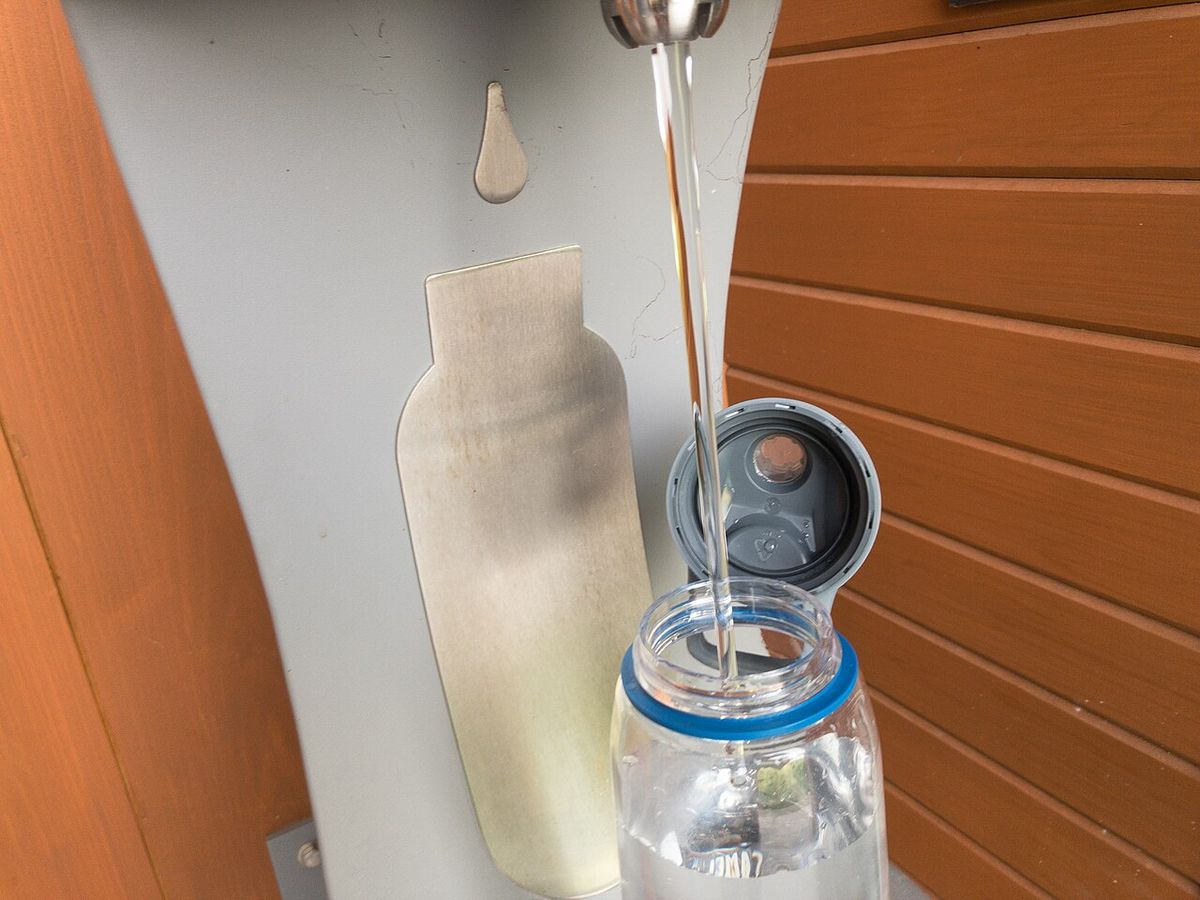
- Water Bottle Refill Station at ParkWikimedia Commons · Image, CC BY 2.0, Tony Webster
General information, not medical advice. This trial compared groups of clubs, and its result does not show what will happen for any one child. BMI z scores are a screening measure, not a diagnosis. If you are concerned about a child's weight, growth or eating, talk to their doctor or a registered dietitian, and do not put a child on a restrictive diet without professional advice.
Analysis by NutroPractic from the sources listed. Written for general readers; it does not replace advice from your own doctor.
From our articles
Read, then eat a little better
Plain-language guides on nutrition and wellness, backed by research.

Global data
Diabetes, obesity, child malnutrition and hunger, 1980 to 2050: what the numbers show
How diabetes, obesity, child malnutrition and hunger have changed since 1980, with sourced figures and a basic projection to 2050. Click a condition to explore the chart and its facts.
5 Oct 2026

Indian kitchen
Rice, roti and blood sugar: building a balanced Indian plate with the ICMR-NIN 2024 guidelines
About one in nine Indian adults has diabetes and many more have prediabetes. You don't have to give up rice or roti. How the ICMR-NIN Dietary Guidelines for Indians (2024) suggest building a plate, plus simple habits that help keep blood sugar steady.
3 Oct 2026

Micronutrients
Vitamin D and B12: two common gaps, from northern winters to vegetarian kitchens
Vitamin D runs low in Canadian and European winters, and surprisingly often in sunny India too. Vitamin B12 is a risk for vegetarians, people over 50 and people on certain medicines. Who is at risk, what the official advice is in North America, Europe and India, and where to get both.
3 Oct 2026
Newsfeed for your website
Want this feed on your website?
Add it to any site with one copy-and-paste snippet. No sign-up, and it updates itself every hour.
Start with a virtual consultation
Tell Dr. Triveni what you want to change. You will leave with a clear next step, whether you are in Toronto, London, New York or Chennai.