Tea · October 11, 2026
Two cups a day of a fungus-fermented Chinese brick tea for 12 weeks: LDL cholesterol fell and arteries widened better than with plain hot water. The artery result is about two and a half times what tea trials usually find
Fuzhuan tea is pressed into bricks and left to grow a yellow fungus the makers call "golden flower". In a trial in rural northern China, 110 healthy adults drank either two 300 mL cups of it a day or the same amount of hot water. LDL cholesterol fell by 0.4 mmol/L more in the tea drinkers, and two ultrasound tests of the arm artery improved by about 6 points. Nobody was blinded, the control was water, and one of the results is hard to explain. Here is what the trial shows and where to be careful.
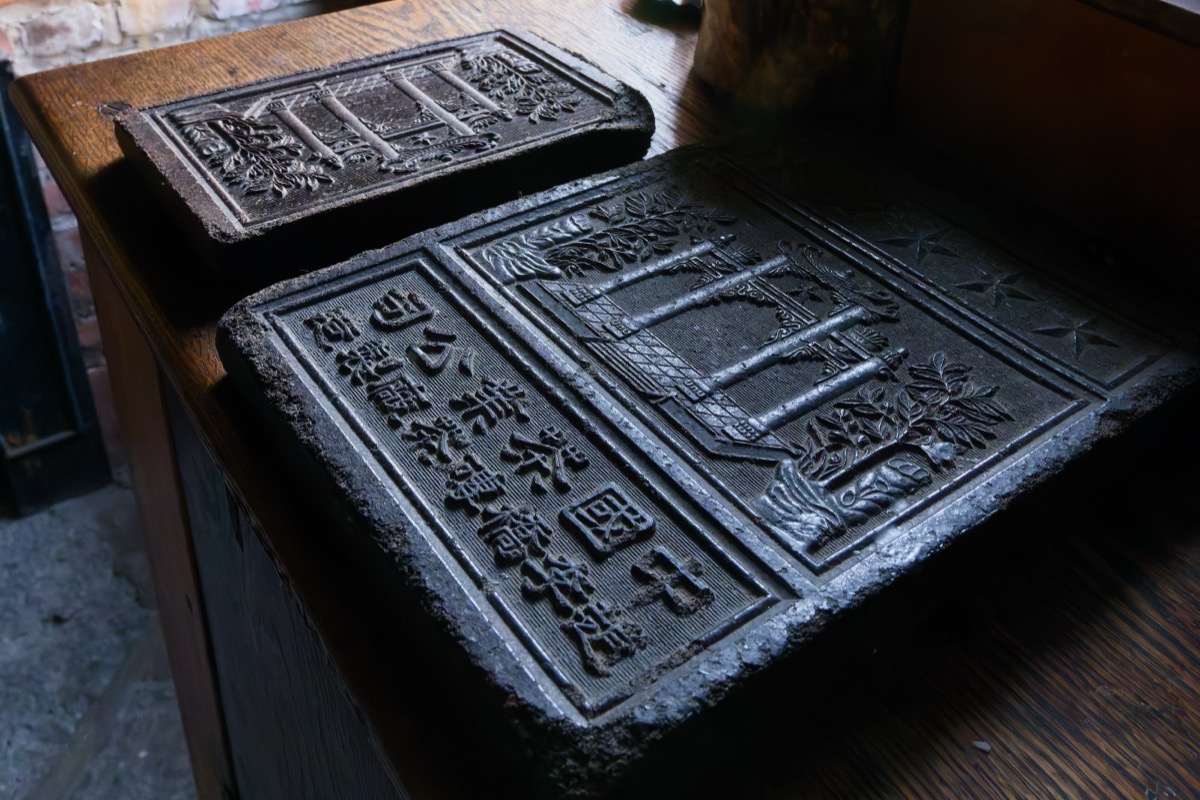
Most of the world's tea is green, black or oolong. Fuzhuan is a "dark" tea from China that goes through an extra step: the leaves are pressed into bricks and kept warm and moist until a fungus, Eurotium cristatum, grows through them as small yellow spots. Tea makers call the spots "golden flower" and count them as a sign of quality. The tea has been drunk in the border regions of northern and western China since the 16th century, and it began in Jingyang, in Shaanxi province. In mice and rats, Fuzhuan tea and its extracts have lowered blood fats and changed gut bacteria. Until now there had been very little evidence in people.
A trial published on 28 September 2026 in Frontiers in Nutrition, by researchers at Shaanxi Provincial People's Hospital and Xi'an Jiaotong University, is the first proper test. In September 2021 they recruited 120 healthy adults aged 20 to 65 from one rural community in northern China, people who did not normally drink tea and took no regular medicines. Half were randomly given two cups a day of Fuzhuan tea, each brewed from a 6 g capsule in 300 mL of water at 90 °C for five minutes in a machine built for the study. The other half drank the same amount of hot water. Everyone kept their usual diet and activity for 12 weeks. Ten people dropped out, five from each group, and the analysis covers the 110 who finished. Their average age was about 54.
The trial had two main measures. The first was blood fats. LDL cholesterol, the kind most closely tied to heart disease, fell by 0.36 mmol/L (about 14 mg/dL) in the tea group and did not change in the water group. In the authors' statistical model, the difference between the groups was 0.40 mmol/L, or about 15 mg/dL. That is a sizeable drop for a drink. A 2015 review of 10 trials of black tea, with 411 people, found an average LDL fall of 4.6 mg/dL. Triglycerides fell in the tea group, but not by significantly more than in the water group, and neither total cholesterol nor HDL differed between the groups.
The second measure was how well the main artery in the arm widens. Flow-mediated dilation (FMD) is checked with ultrasound after a blood pressure cuff has been tightened on the forearm for five minutes and then let go. The artery normally widens as blood rushes back, and that depends on its inner lining. FMD rose by 5.5 percentage points in the tea group and fell by 1.2 in the water group, a gap of about 6.7 points. A 2011 review of nine placebo-controlled tea studies found an average gain of 2.6 points for two to three cups a day. The tea group in this trial also started lower (11.0% against 14.4%). People who start low on a measure often score higher the next time just by chance. The authors adjusted for the starting values and the difference held, at about 6.3 points.
The result that is harder to explain is the second artery test. After FMD, each person was given a small dose of nitroglycerin under the tongue. Nitroglycerin relaxes the muscle in the artery wall directly, without needing the inner lining. This nitroglycerin-mediated dilation also rose by about 6 points more in the tea group. Tea studies usually report a better FMD but no change in the nitroglycerin response, and an earlier green tea study the authors cite found exactly that. A big change in how the artery muscle itself responds, in healthy people after 12 weeks of a drink, would be unusual. Nobody was blinded, and the comparison was plain water, so tea's caffeine and the simple fact of being given something went only to one group. The people who did the ultrasound did not know who was in which group. The blood fat figures also don't quite add up. In the tea group, LDL fell and HDL rose, yet total cholesterol went up slightly. The difference must be carried in other particles, mainly the triglyceride-rich ones, and triglycerides went down. That can happen when LDL is measured directly, as it was here, but the paper doesn't discuss it.
The gut bacteria part of the study is weaker than its title suggests. The researchers sequenced stool samples at the start, at 6 weeks and at 12 weeks. Overall diversity didn't change. The mix of species shifted slightly, and 77 species looked different between the groups at first. Once the analysis allowed for testing so many at once, none of them remained significant, as the authors say. The bacteria they highlight, which make short-chain fatty acids, are a hypothesis, not a finding. Short-chain fatty acids themselves were not measured.
Some context on who is behind it. The trial ran in late 2021 and was published almost five years later. It was paid for by Shaanxi provincial grants, including an industrial innovation project and programmes to develop traditional Chinese medicine. Two co-authors work at a government key laboratory for Fu tea processing in Xianyang, and the tea came from a Xianyang tea company. The authors declare no conflicts of interest. Our reading: this is a reasonable early trial that points the same way as other tea research, with an LDL drop that is large for a drink. The artery results are bigger than tea usually achieves, and one of them doesn't fit how tea is thought to work. The authors themselves call for a double-blind, placebo-controlled trial across several centres. Until then, if you like dark tea, there is no reason to stop. If your LDL is high, tea is not a substitute for what your doctor recommends.
Fuzhuan brick tea (2 × 300 mL a day, 12 g of leaf) against the same amount of hot water for 12 weeks, 110 healthy adults, rural northern China, 2021
110
Adults analysed (55 per group), out of 120 randomised; average age about 54, 63 men and 47 women, none regular tea drinkers
−0.40 mmol/L
LDL cholesterol, tea against water (about −15 mg/dL). Within the tea group −0.36 mmol/L (95% CI −0.47 to −0.26); water +0.03
+6.7 points
Flow-mediated dilation (FMD), tea against water. Tea +5.5 points, water −1.2. About +6.3 after adjusting for the tea group's lower starting value
+6.1 points
Nitroglycerin-mediated dilation, tea against water (tea +5.4, water −0.7). Tea studies usually find no change in this measure
2.6 points
Average FMD gain from tea in a 2011 review of nine placebo-controlled studies, for 2 to 3 cups a day
0 of 77
Gut bacterial species that first looked different between the groups and were still significant after correcting for multiple testing
Figures are from the full open-access paper (Frontiers in Nutrition, 28 September 2026): methods, table 1 and the results on lipids, vascular function and the microbiome. The analysis is per protocol (people who finished), not intention to treat, and the trial was open label with plain hot water as the control. Between-group figures are the group × time differences from the authors' mixed models. The mg/dL conversion and the comparisons with the black tea and tea-FMD reviews are ours. The tea was analysed at about 33 mg of caffeine per gram of leaf; how much of it reached the cup was not reported.
- The "golden flower" in Fuzhuan tea is a fungus, Eurotium cristatum, now often called Aspergillus cristatus. Bricks are kept warm and humid on purpose so that it grows.
- Pressed tea bricks were once used as money in parts of Mongolia, Tibet and Siberia, and were carried along caravan routes from China to Russia.
- In this trial each cup was brewed by a machine made for the study, from a sealed 6 g capsule at 90 °C for exactly five minutes, so that every participant got the same brew.
- For two weeks before the trial, occasional tea drinkers had to stop drinking tea completely, and regular tea drinkers were not allowed to take part.
- Three people dropped out because they started statins during the 12 weeks, and three because they needed antibiotics. Both would have affected the cholesterol and gut bacteria results.
- Daily consumption of Fuzhuan brick tea improves lipid profile and vascular function associated with modulation in gut microbiota composition in healthy adults: a pilot randomized controlled trialFrontiers in Nutrition, 28 September 2026 · The study (open access, CC BY); read in full
- Trial registration ChiCTR2100047294Chinese Clinical Trial Registry · Registered 11 June 2021, before recruitment
- Black tea consumption and serum cholesterol concentration: systematic review and meta-analysis of randomized controlled trials (PMID 24972454)Clinical Nutrition, 2015 · 10 trials, 411 people; LDL −4.64 mg/dL. Abstract read
- Tea consumption enhances endothelial-dependent vasodilation; a meta-analysis (PMID 21394199)PLoS ONE, 2011 · 9 placebo-controlled studies; FMD +2.6 points for about 500 mL a day. Abstract read
General information, not medical advice. This was a small, open-label trial in healthy adults in one community, with hot water as the comparison. If your cholesterol is high or you have heart disease, talk to your doctor before relying on any drink or supplement, and don't stop prescribed medicines.
Analysis by NutroPractic from the sources listed. Written for general readers; it does not replace advice from your own doctor.
From our articles
Read, then eat a little better
Plain-language guides on nutrition and wellness, backed by research.

Global data
Diabetes, obesity, child malnutrition and hunger, 1980 to 2050: what the numbers show
How diabetes, obesity, child malnutrition and hunger have changed since 1980, with sourced figures and a basic projection to 2050. Click a condition to explore the chart and its facts.
5 Oct 2026
Indian kitchen
Rice, roti and blood sugar: building a balanced Indian plate with the ICMR-NIN 2024 guidelines
About one in nine Indian adults has diabetes and many more have prediabetes. You don't have to give up rice or roti. How the ICMR-NIN Dietary Guidelines for Indians (2024) suggest building a plate, plus simple habits that help keep blood sugar steady.
3 Oct 2026
Micronutrients
Vitamin D and B12: two common gaps, from northern winters to vegetarian kitchens
Vitamin D runs low in Canadian and European winters, and surprisingly often in sunny India too. Vitamin B12 is a risk for vegetarians, people over 50 and people on certain medicines. Who is at risk, what the official advice is in North America, Europe and India, and where to get both.
3 Oct 2026
Newsfeed for your website
Want this feed on your website?
Add it to any site with one copy-and-paste snippet. No sign-up, and it updates itself every hour.
Start with a virtual consultation
Tell Dr. Triveni what you want to change. You will leave with a clear next step, whether you are in Toronto, London, New York or Chennai.