Hospital nutrition · October 12, 2026
When a dietitian joined the lung ward every morning, three in four patients got checked for malnutrition. When the job went back to the nurses, it fell to four in ten
A Danish hospital handed daily nutrition care on one ward to dietitians for 16 months, weekends included. Screening went up, more patients ate enough, and the nurses said they were glad of the help, though some admitted they lost track of what their patients were eating. The study is small and the comparison is not a trial, which matters for how far the numbers go.
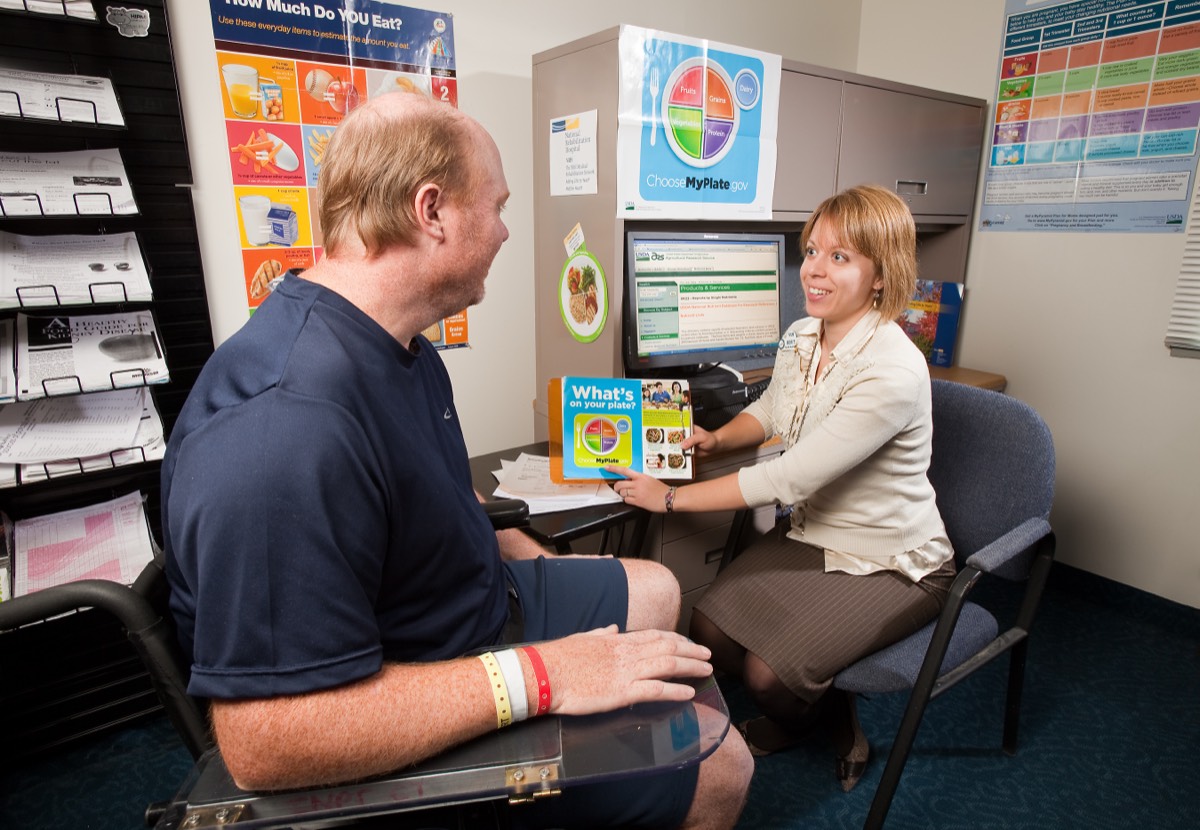
Most people who go into hospital are never seen by a dietitian. In many countries, Denmark among them, the job of spotting who is eating too little sits with the nurses: weigh the patient, ask about appetite and recent weight loss, score the answers, and call in a dietitian if the score is high. Nurses are also doing the medicines, the dressings, the call bells and the discharges, and study after study finds that the nutrition check is the task that slips. That matters because people who are undernourished in hospital stay longer, recover worse and are more likely to die.
A team at Gødstrup Hospital in Herning, Denmark, tried moving the job. On a 27-bed lung ward, from March 2022 to July 2023, a clinical dietitian was on the ward every day from 7 in the morning to 2.30 in the afternoon, weekends and holidays included. The dietitian did the malnutrition screening for every patient expected to stay two days or more, wrote the nutrition plans, sat in on the nurses' meetings and helped patients order their meals from the ward's tablet menu. Nurses kept everything else, including helping people eat. The hospital did this partly because it was short of nurses. The results were published in the Journal of Human Nutrition and Dietetics on 8 October 2026.
The screening numbers are the clearest part. The researchers pulled the records of 1,678 admissions that lasted more than 48 hours, across the dietitian period and the 11 months after it, when the work went back to the nurses. In a typical month with dietitians in charge, 55% of patients were screened within the first 24 hours, as the hospital's own rules require, and 76% were screened at some point. Once nurses had it again, the monthly figures settled at 29% and 43%. On the month-by-month chart the change shows up as a clear shift, not a slow drift.
Then the food. Among patients already flagged as at risk, the team counted what 32 people actually ate over their first three days, using the electronic meal ordering system plus a check with each patient. They compared them with 68 similar patients on the same ward from an earlier study, when nurses ran nutrition care with the same menu system. Nearly eight in ten of the dietitian group (79%) got at least three quarters of the calories they needed, against 57% before (p = 0.023), after allowing for sex, age, body weight and risk score. For protein the gap was smaller, 50% against 35%, and could be chance.
That intake comparison is the weak link, and the authors say so. The control patients were recorded at an earlier time, the hospital has moved to a new building since, and there is no record of how many control patients were invited or said no. The two groups' needs were worked out differently too: dietitians used a formula, while the nurses earlier used standard tables, so 'three quarters of what they needed' does not mean exactly the same thing in both. When the team recalculated everyone's needs the same way, the gap held in direction but narrowed to 76% against 59%, right on the edge of chance (p = 0.052). Their own after-the-fact calculation says proving the protein difference would have taken about 263 and 124 patients, not 68 and 32. They call the findings hypothesis-generating, which is the honest label.
The interviews are what make the paper worth reading. Nine nurses and all five dietitians were asked how it went. Nurses talked about relief: 'nutrition sometimes ends up getting lost among all the other tasks', one said. Having the dietitian on the ward turned an outside expert you phone into a colleague you can tap on the shoulder. But some nurses said they lost their feel for what patients were really eating, and there were collisions, such as breakfast ordered for 8 o'clock when the nurse who had to help the patient eat was still giving out medicines. The dietitians found the work meaningful, but at least one found it hard to be the first person into the room of a very sick patient each morning, and none wanted the ward to be their whole job.
Some of this needs care in reading. The screening comparison runs backwards, dietitians first and nurses after, so it cannot show what nurses managed before anyone intervened, and the authors chose that on purpose because an earlier project on the ward may have raised nurses' attention to food. The model also added a person with protected time, so it tests 'a dietitian on the ward every day' as much as 'dietitians instead of nurses'. Patients in the dietitian period went home sooner (median 4 days against 6), but the study was not built to test length of stay, readmissions or deaths, and it does not claim any of those. It is one ward in one hospital.
What stays with us is the simple point under the numbers: when nutrition is somebody's whole job for the morning, it gets done, and when it is one more box on a busy nurse's list, it often does not. If you or someone you care for goes into hospital, especially an older person or someone who has been eating poorly or losing weight, it is reasonable to ask whether they have been screened for malnutrition and whether a dietitian can see them. Asking costs nothing, and on a busy ward it may be the nudge that gets it done.
Multimethod study on one 27-bed medical pulmonary ward, Gødstrup Hospital, Denmark: dietitian-led nutrition care March 2022 to July 2023, compared with nurse-led care after it (screening) and with a historical control group (intake), plus interviews with staff
76% vs 43%
Median monthly share of admissions screened for malnutrition at any point, dietitian-led against nurse-led care (1,678 admissions of 48 hours or more)
55% vs 29%
Median monthly share screened within 24 hours of admission, as the hospital's guideline requires
79% vs 57%
At-risk patients eating at least 75% of their estimated energy needs over the first three days, dietitian-led (32 patients) against historical nurse-led controls (68), adjusted, p = 0.023
50% vs 35%
The same for protein needs; not statistically significant
76% vs 59%
Energy result when both groups' needs were recalculated by the same weight-based method, p = 0.052
7.00–14.30
Hours a dietitian was on the ward, every day including weekends and holidays, for about 16 months
Figures are from the open-access paper in the Journal of Human Nutrition and Dietetics (doi 10.1111/jhn.70363, volume 39, issue 5, e70363, published online 8 October 2026, CC BY 4.0), read in full on PubMed Central: methods, results, Table 1, figure captions, discussion and limitations. The supporting files (screening criteria, meal ordering screens, the earlier nurses' requirement tables, interview guide, analysis steps, sensitivity analysis including short stays) were not read. Screening (substudy 1): records from 1 March 2022 to 30 June 2024; 4,094 admissions, of which 1,956 lasted 48 hours or less, 293 were readmissions within 7 days and 167 were terminally ill, leaving 1,678 admissions of 1,406 patients (dietitian period 1,020 admissions of 874 patients; nurse period after it 658 of 598). The percentages are medians of monthly proportions read from a run chart, with shifts and too few runs signalling a real change. Some short-term-bed admissions could not be removed, which the authors say may lower the screening figures in both periods. Intake (substudy 2): 55 eligible, 41 consented, 32 analysed (15 May to 29 July 2023); controls were 'intervention group 1' of an earlier quasi-experimental study on the same ward (Okkels et al., Clinical Nutrition ESPEN 2024). At-risk meant a Nutritional Risk Screening 2002 score of 3 or more. Median age 77.5 vs 77; median BMI 23.0 vs 20.6 (p = 0.076); COPD 25% vs 43% of admissions (p = 0.265); median stay 4 vs 6 days (p = 0.009, descriptive only). Dietitians estimated energy with the Harris-Benedict equation times activity and stress factors and protein at 1.2 to 1.5 g/kg (0.8 to 1.1 in kidney impairment); the earlier nurses used standard tables. Sensitivity analyses: standardised energy needs 76% vs 59% (p = 0.052), and 75% vs 50% (p = 0.016) after excluding BMI under 18.5; the original energy analysis with that exclusion 84% vs 56% (p = 0.003); standardised protein at 1.2 g/kg 48% vs 39% (p = 0.406), at 1.3 g/kg 48% vs 34% (p = 0.142). Interviews (substudy 3): 9 nursing staff (8 nurses, 1 nursing assistant) and 5 dietitians, August to September 2023, 14 to 35 minutes, by a dietitian researcher from the same hospital; nurses were identified with the head nurse's help. Quotations are the paper's English translations. 'Sixteen months' is our count of March 2022 to July 2023. Funding: none reported. Conflicts of interest: the authors declare none.
- The screening tool used here, Nutritional Risk Screening 2002 (NRS 2002), was built by a Danish researcher from an analysis of controlled trials and is recommended by the European Society for Clinical Nutrition and Metabolism for hospital patients. It scores recent weight loss, food intake, body mass index, how ill the person is, and adds a point for age 70 or over.
- The ward's patients order their own meals à la carte on a tablet beside the bed, and the same system records how much of each dish they eat, in quarters of the plate. In the study, the ward dietitian helped patients order their meals whatever their risk score.
- A 2023 study in a large teaching hospital, cited in the paper, found limited agreement when nurses and dietitians scored the same patients with NRS 2002, and that nurses' misclassifications were linked to a later dietitian referral and a longer stay.
- The authors suggest the next test should be a stepped-wedge trial, where wards switch to the new model one after another in a random order, so each ward serves as its own comparison.
- Mealtime help stayed with the nurses by choice. Nurses said watching a patient eat tells them how the patient is doing, and some dietitians said feeding someone felt too intimate for their role.
- From Nurse-Led to Clinical Dietitian-Led Nutritional Care in Hospital Practice: Changes in Nutritional Risk Screening Rates, Patient Nutritional Intake and Professional PerspectivesJournal of Human Nutrition and Dietetics, 8 October 2026 · The study. Open access, read in full; supporting files not read
- Full text on PubMed Central (PMC13650250)US National Library of Medicine · Version read for this item
- PubMed record (PMID 42850792)US National Library of Medicine · Abstract and authors
- Individualised nutritional treatment increases the positive effects of a novel à la carte hospital food service concept: results of a quasi-experimental studyClinical Nutrition ESPEN, 2024 · The earlier study the historical control group came from; not read for this item
- Agriculture Research Service (ARS) (8423828231)Wikimedia Commons · Image, public domain, USDA photo by Stephen Ausmus
General information, not medical advice. How hospitals organise nutrition care differs by country and by hospital. If you or someone you care for is in hospital and eating little or losing weight, tell the nurse or doctor and ask whether a dietitian can review them.
Analysis by NutroPractic from the sources listed. Written for general readers; it does not replace advice from your own doctor.
From our articles
Our guides on this subject
Plain-language guides on nutrition and wellness, backed by research.

Global data
Diabetes, obesity, child malnutrition and hunger, 1980 to 2050: what the numbers show
How diabetes, obesity, child malnutrition and hunger have changed since 1980, with sourced figures and a basic projection to 2050. Click a condition to explore the chart and its facts.
5 Oct 2026

Indian kitchen
Rice, roti and blood sugar: building a balanced Indian plate with the ICMR-NIN 2024 guidelines
About one in nine Indian adults has diabetes and many more have prediabetes. You don't have to give up rice or roti. How the ICMR-NIN Dietary Guidelines for Indians (2024) suggest building a plate, plus simple habits that help keep blood sugar steady.
3 Oct 2026

Micronutrients
Vitamin D and B12: two common gaps, from northern winters to vegetarian kitchens
Vitamin D runs low in Canadian and European winters, and surprisingly often in sunny India too. Vitamin B12 is a risk for vegetarians, people over 50 and people on certain medicines. Who is at risk, what the official advice is in North America, Europe and India, and where to get both.
3 Oct 2026
Newsfeed for your website
Want this feed on your website?
Add it to any site with one copy-and-paste snippet. No sign-up, and it updates itself every hour.
Start with a virtual consultation
Tell Dr. Triveni what you want to change. You will leave with a clear next step, whether you are in Toronto, London, New York or Chennai.