Caffeine · October 12, 2026
Twice the caffeine, the same jump: boxers given 6 mg per kilo leapt no higher than on half that dose. Only one of ten strength tests clearly favoured the bigger dose, which for these men meant more than 400 mg in one go
Fifteen trained boxers in Beijing came to the lab three times and swallowed identical capsules: a dummy, a moderate dose of caffeine or a double one. An hour later both doses beat the dummy on the jump test, and doubling up added nothing you could measure. The leg strength machine told a different story. Here is what the trial found, what it could not show about punching, and how its doses compare with official limits.
Caffeine is one of the few supplements with solid evidence that it helps athletes, and the usual advice is a dose somewhere between 3 and 6 milligrams per kilogram of body weight, about an hour before the effort. That is a wide range. For a 74 kg man, the average weight in this study, it runs from about 220 mg to about 440 mg. A trial published in the Journal of the International Society of Sports Nutrition on 7 October 2026 asked whether the top of the range buys anything the bottom does not.
The volunteers were 15 male boxers from Beijing Sport University, average age 21, with about four years of training and a national second-class athlete ranking or better. Each came to the lab three times, a week apart, and swallowed capsules that looked the same every time: maltodextrin alone, 3 mg/kg of caffeine, or 6 mg/kg. Neither the boxers, the testers nor the people analysing the data knew which was which. The order was shuffled so that each dose came first, second and third equally often. For 48 hours before every visit the men were asked to have no coffee, tea or energy drinks.
Each visit followed the same script: a warm-up, a set of tests, the capsules, then the same tests again in blocks starting 30 and 60 minutes later. The tests were a standing jump on a force plate, an explosive push-up in which the hands leave the floor, and a machine that measures the maximum turning force of the shoulder and the knee. Ten measurements in all.
The jump gave the cleanest answer. In the 60-minute block, jump height was 45.0 cm after the dummy capsule, 48.9 cm after the moderate dose and 50.1 cm after the double dose. Both doses beat the dummy clearly, by about 4 and 5 cm, but the 1.2 cm between the two doses was not a real difference by the study's own statistics. Jump power followed the same pattern. On this test, doubling the dose bought nothing that 15 people could detect.
The explosive push-up moved only on the double dose, and only in the 60-minute block. The authors are frank that this result is fragile: the push-up scores wobbled a lot from one attempt to the next, and the gains on the double dose were only about one to one and a third times the test's ordinary measurement error.
The leg machine is where the double dose stood out. Knee extension, the thigh muscles straightening the leg, reached 223 newton-metres in the 60-minute block on the double dose, against 197 on the moderate dose and 182 on the dummy. That was the only one of the ten measurements where 6 mg/kg beat 3 mg/kg by a margin the statistics accepted. Shoulder strength rose on both doses, with no clear edge for the higher one.
Two details in the tables are worth knowing before reading too much into the jump gains. On the dummy days, the boxers got slightly worse as the session went on: their jump fell from 47.1 cm before the capsule to 45.0 cm an hour later, so part of caffeine's lead is the dummy group tiring or cooling off. And on the two caffeine days they started lower, 43.2 and 44.0 cm, before they had swallowed anything. The authors say they did not treat these starting differences as an effect of the capsules, which is right, but they mean the comparison at 60 minutes is less tidy than the headline numbers suggest.
The authors list the other limits themselves. Fifteen people is too few to call the two doses equal on the tests where they did not differ. The trial was not registered in advance and no single main outcome was named before it began. Nobody measured caffeine in the men's blood, asked how much coffee they normally drank, or recorded side effects with a proper questionnaire, and the 48-hour break from caffeine may have left regular drinkers in mild withdrawal on the dummy days. Most of all, none of the tests was a punch. The authors stress that a jump, a push-up and a knee machine measure qualities that matter in boxing, not boxing itself.
Where does that leave someone weighing up a pre-training coffee? This is one small study in young male athletes, and it fits earlier work: the moderate dose did most of what caffeine does here, and the double dose added a clear gain on one leg test of ten. The cost side matters too. The European Food Safety Authority says single doses up to about 200 mg, roughly 3 mg/kg, raise no safety concern for healthy adults, including before hard exercise, and that up to 400 mg spread over a day is fine for healthy adults other than pregnant women. A 6 mg/kg dose for a 74 kg man is about 444 mg in one go, more than that whole daily figure.
15 trained male boxers, each tested after a dummy capsule, 3 mg/kg and 6 mg/kg of caffeine, a week apart; figures from the testing block starting 60 minutes after the capsules
45.0 / 48.9 / 50.1 cm
Jump height after the dummy, 3 mg/kg and 6 mg/kg; both doses beat the dummy, the two doses did not differ
182 / 197 / 223 N·m
Knee extension strength after the dummy, 3 mg/kg and 6 mg/kg; the only test where the double dose beat the moderate one
1 of 10
Measurements on which 6 mg/kg was clearly better than 3 mg/kg
About 222 / 444 mg
The two doses for a 74 kg man, the boxers' average weight (our calculation)
47.1 → 45.0 cm
Jump height on the dummy day, before the capsule and an hour after: part of caffeine's lead is the dummy group fading
200 mg
EFSA's single dose of caffeine with no safety concern for healthy adults, about 3 mg/kg
Trial figures are from the open-access paper in the Journal of the International Society of Sports Nutrition (doi 10.1080/15502783.2026.2743368, published 7 October 2026, CC BY 4.0), read in full on PubMed Central: methods, Table 1 (participants), Table 2 (means ± SD at each time point and the ANOVA) and Table 3 (caffeine-versus-placebo differences with 95% CIs), results, discussion and limitations. Randomized, double-blind, placebo-controlled crossover with a Latin-square order (5 men per sequence) and a one-week washout; all 15 completed every condition. Testing blocks started at 30 and 60 minutes and lasted about 15 minutes, so the jump came earlier in each block than the knee and shoulder tests. All ten condition × time interactions were significant after Holm adjustment; pairwise comparisons were Bonferroni-adjusted within each outcome. 60-minute differences versus placebo: jump height +3.9 cm (3 mg/kg) and +5.1 cm (6 mg/kg); knee extension +41.4 N·m (6 mg/kg); knee extension 6 versus 3 mg/kg +26.0 N·m (P = 0.021). The trial was not prospectively registered, had no single primary outcome, received no specific funding and the authors report no conflicts of interest. The dose in milligrams for a 74 kg man is our calculation from the mean body mass in Table 1. Safety figures are from the European Food Safety Authority's caffeine topic page (based on its 2015 scientific opinion); the coffee figure in the side facts is from the US FDA's consumer update on caffeine (content current as of 28 August 2024).
- A 12-ounce mug of ordinary brewed coffee carries 113 to 247 mg of caffeine, according to the US FDA, so the moderate dose in this trial is roughly one large coffee and the double dose two.
- Caffeine mainly works by blocking adenosine, a chemical that builds up in the brain during waking hours and makes effort feel harder. The trial did not measure this; it is the standard explanation from earlier research.
- How fast a person clears caffeine depends partly on a liver enzyme gene, CYP1A2, which is one reason two people can feel the same coffee very differently.
- EFSA's 200 mg single-dose figure specifically covers taking caffeine less than two hours before intense exercise in normal conditions, which is exactly how athletes use it.
- Each boxer's dose was worked out from his body weight, weighed on a laboratory balance and packed with maltodextrin, a starch powder, so that the dummy and both caffeine capsules looked and filled the same.
- Acute effects of 3 and 6 mg·kg−1 caffeine on strength–power performance and isokinetic peak torque in competitive male boxers: a randomized, double-blind, placebo-controlled crossover trialJournal of the International Society of Sports Nutrition, 7 October 2026 · The study. Open access, read in full
- Full text on PubMed Central (PMC13647396)US National Library of Medicine · Version read for this item, including Tables 1 to 3
- CaffeineEuropean Food Safety Authority · Single-dose and daily figures for healthy adults, including before exercise
- Spilling the Beans: How Much Caffeine is Too Much?US Food and Drug Administration, current as of 28 August 2024 · 400 mg a day figure and caffeine in brewed coffee
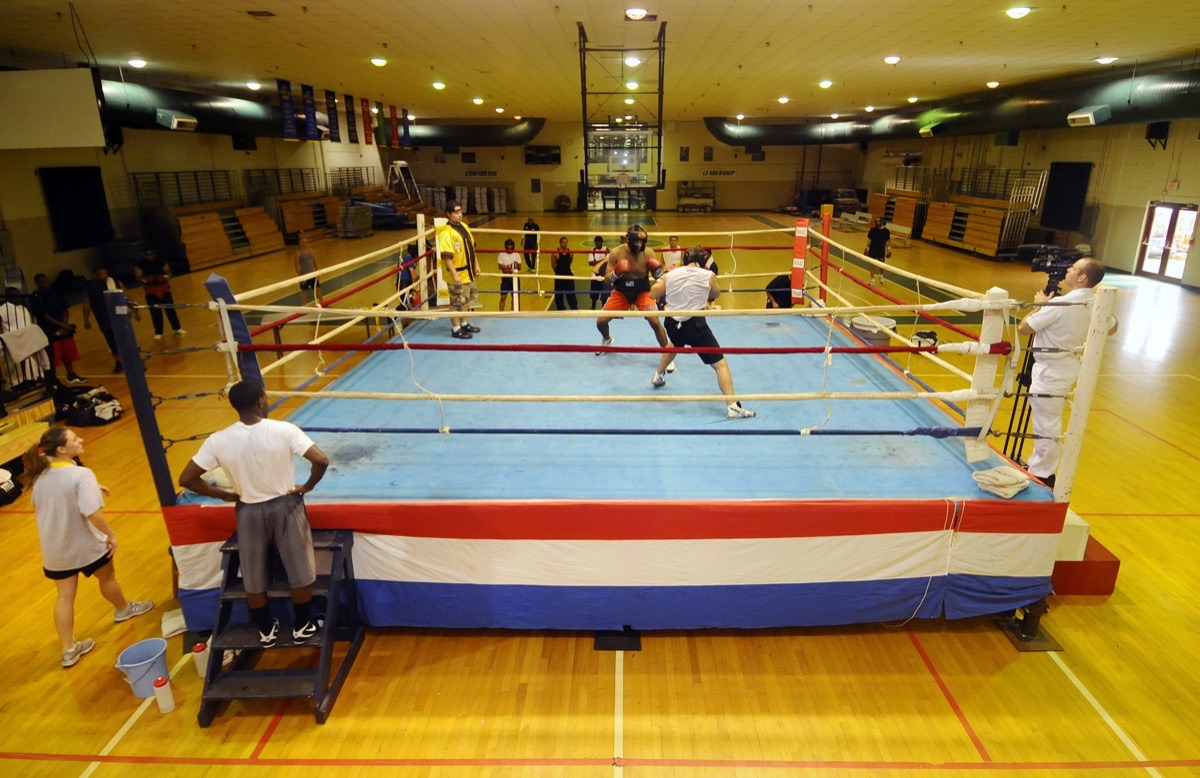
- US Navy 081011-N-5345W-134 Navy boxers spar during the All-Navy Boxing Team mini-campWikimedia Commons · Image, public domain, U.S. Navy photo
General information, not medical advice. This was a small study in healthy young male athletes. If you are pregnant, have a heart condition, high blood pressure, anxiety or trouble sleeping, or take medicines, talk to a doctor before using caffeine to boost performance, and be careful with caffeine pills and powders, where a large dose is easy to take by mistake.
Analysis by NutroPractic from the sources listed. Written for general readers; it does not replace advice from your own doctor.
From our articles
Read, then eat a little better
Plain-language guides on nutrition and wellness, backed by research.

Global data
Diabetes, obesity, child malnutrition and hunger, 1980 to 2050: what the numbers show
How diabetes, obesity, child malnutrition and hunger have changed since 1980, with sourced figures and a basic projection to 2050. Click a condition to explore the chart and its facts.
5 Oct 2026

Indian kitchen
Rice, roti and blood sugar: building a balanced Indian plate with the ICMR-NIN 2024 guidelines
About one in nine Indian adults has diabetes and many more have prediabetes. You don't have to give up rice or roti. How the ICMR-NIN Dietary Guidelines for Indians (2024) suggest building a plate, plus simple habits that help keep blood sugar steady.
3 Oct 2026

Micronutrients
Vitamin D and B12: two common gaps, from northern winters to vegetarian kitchens
Vitamin D runs low in Canadian and European winters, and surprisingly often in sunny India too. Vitamin B12 is a risk for vegetarians, people over 50 and people on certain medicines. Who is at risk, what the official advice is in North America, Europe and India, and where to get both.
3 Oct 2026
Newsfeed for your website
Want this feed on your website?
Add it to any site with one copy-and-paste snippet. No sign-up, and it updates itself every hour.
Start with a virtual consultation
Tell Dr. Triveni what you want to change. You will leave with a clear next step, whether you are in Toronto, London, New York or Chennai.