Early-life nutrition · October 12, 2026
Adults who were heavier babies had 'younger' guts, kidneys and livers on a blood test half a lifetime later. The gaps were small, and the birthweights were whatever people in their fifties remembered
Researchers in Xi'an took blood-protein 'organ ages' for tens of thousands of middle-aged Britons and set them against two things the volunteers recalled about their first weeks: what they weighed at birth and whether they were breastfed. Heavier babies came out a little younger in 11 of 19 measures. Breastfeeding showed up in three, and in one of them, the thyroid, it pointed the wrong way.
The first number most of us are ever given is a weight. For forty years researchers have wondered how long that number follows a person around. Babies born small have turned up, decades on, with more heart disease, more diabetes and weaker kidneys, and the idea that life before and just after birth leaves a lasting mark now has its own field. A team at Xi'an Jiaotong University in China has asked a newer version of the question: does it show up in how fast each organ seems to be ageing?
They used the UK Biobank, the study of about half a million Britons who were aged 37 to 73 when they signed up between 2006 and 2010. Some 53,000 of them had close to 3,000 proteins measured in a blood sample. Because many proteins are made mainly by one organ, a model can be trained to guess a person's age from, say, the kidney's proteins alone. If the guess comes out older than the birth certificate, that organ is said to be ageing fast; younger, and it is ageing slowly. The team built 19 of these 'age gaps': 18 organs and tissues, and one overall score. The paper appeared in Aging Cell on 9 October 2026.
Then they went back to the start of life, or to what people remembered of it. At their first visit, volunteers had been asked what they weighed at birth and whether they were breastfed as a baby: yes, no or don't know. That left 21,446 people with a birthweight and 29,713 with a breastfeeding answer, average age about 55. The average birthweight was 3.33 kg, and 73% said they had been breastfed.
Birthweight gave the broader result. After allowing for age, sex, ethnicity, body size at ten, adult weight, education, deprivation, smoking, alcohol, exercise, high blood pressure, diabetes and heart disease, a higher birthweight went with a younger-looking organ in 11 of the 19 measures. The gut led the list, followed by the oesophagus, stomach, immune system, kidney and liver, then the salivary glands, thyroid, adrenal glands, skin and muscle. Brain, heart, arteries and lungs were not among them.
Breastfeeding was patchier. People who said they were breastfed had slightly younger-looking intestines and adrenal glands, and slightly older-looking thyroids. The authors offer a possible reason for the thyroid, to do with the iodine and thyroid hormone in breast milk, and say themselves that it is speculation. When birthweight and breastfeeding were put in the same model, only the gut result held firm. People who were both heavier than the middle of the group at birth and breastfed had the best profile, with the gut again showing the biggest gap.
Now the size of all this. The largest figure in the paper is 0.069: the gut's age gap was lower by about seven hundredths of one standard deviation for a higher birthweight (the paper measures birthweight in kilograms). Most of the others are between 0.03 and 0.05. In ordinary terms, the spread between people is wide and birthweight nudges someone a very short way along it. Even the best-off group, heavier and breastfed, sat 0.13 of a standard deviation below the lighter, never-breastfed group for the gut. These are real statistical signals in a big sample. They are not differences anyone would feel, and the paper does not translate them into years.
The other caution is where the early-life facts came from. Nobody looked up a birth record. A 55-year-old was asked what they weighed as a newborn, which mostly means what their mother told them, and whether they were breastfed, with no detail on how long or whether formula was used alongside. The authors argue that fuzzy recall would blur real links rather than create false ones, which is fair as far as it goes. But only people who knew their birthweight are in that analysis, and they may differ from those who did not. Families that breastfed in mid-century Britain also differed from those that did not, in income, class and health, in ways a handful of adult measures cannot fully cancel.
Two smaller points. The models adjust for adult weight, blood pressure, diabetes and heart disease, which are among the very things low birthweight is thought to lead to, so some of any true effect may have been adjusted away; that is our reading, not something the paper discusses. And the team's headline finding on mechanism, that 35% of the birthweight link with skin ageing runs through 'allostatic load', a ten-marker score of bodily wear and tear, rests on a model in which the overall link between birthweight and skin ageing was itself too uncertain to tell from zero.
What can you do with this? Not much, and nothing about your own first week. Nobody can revise their birthweight, and a 'younger' gut on a research blood test is not a diagnosis or a prize. The study adds a modest piece to an older and better-supported picture: growth in the womb matters for decades, which is an argument for looking after pregnant women well, and breastfeeding has good evidence behind it for reasons that have nothing to do with organ clocks. If you were a small baby or were bottle-fed, this paper is no cause for worry. Blood pressure, weight, smoking and exercise in adult life move these same markers too, and those are still open to change.
Recalled birthweight (21,446 people) and breastfeeding (29,713 people) against 19 blood-protein 'age gaps' in UK Biobank adults, average age about 55
11 of 19
Organ ageing measures that were lower (younger) with a higher birthweight, after full adjustment and correction for multiple tests
-0.069
Largest link in the paper: change in the intestine's age gap, in standard deviations, with higher birthweight (95% CI -0.089 to -0.050)
3 of 19
Measures linked with having been breastfed: intestine (-0.047) and adrenal gland (-0.030) younger, thyroid (+0.033) older
-0.13
Intestine age gap, in standard deviations, for people above the middle birthweight and breastfed, against people below it and never breastfed
73%
Share of the breastfeeding sample who said they were breastfed as a baby (21,687 of 29,713); 'don't know' answers were left out
35.3%
Share of the birthweight link with skin ageing put down to allostatic load; in that model the overall link was not clearly different from zero (p = 0.118)
Figures are from the open-access paper in Aging Cell (doi 10.1111/acel.70762, volume 25, issue 10, e70762, published online 9 October 2026, CC BY 4.0), read in full on PubMed Central: methods, results, Tables 1 and 2, figure captions, discussion and limitations. The supporting tables and figure (S1 to S4, Figure S1) were not read. UK Biobank recruited about 500,000 people aged 37 to 73 between 2006 and 2010. Proteins: 2,923 measured on the Olink Explore 3072 platform in 52,999 people; after quality checks, 44,817 people and 2,916 proteins. Age gaps are the residual of protein-predicted age on actual age for each organ, standardised (z-scored); 18 organ or tissue measures plus one composite. Birthweight: self-reported at a verbal interview, in kilograms, values under 0.5 kg or over 6 kg dropped; mean 3.33 kg (SD 0.66). Breastfeeding: one touchscreen question, yes or no. Samples: birthweight 60.2% women, 96.5% white, mean age 55.4; breastfeeding 56.8% women, 93.2% white, mean age 56.0. Model 3 adjusted for age, sex, ethnicity, body size at age 10, BMI, Townsend deprivation index, education, smoking, alcohol, physical activity, hypertension, diabetes and coronary heart disease. The paper gives coefficients for birthweight as a continuous measure in kilograms without stating the unit beside each one. Birthweight coefficients: intestine -0.069, oesophagus -0.055, stomach -0.053, immune -0.045, kidney -0.044, liver -0.042, salivary -0.034, thyroid -0.033, adrenal -0.029, skin -0.029, muscle -0.027. With both exposures in one model, 9 of the 11 birthweight links stayed significant and of the breastfeeding links only the intestine did. Joint analysis split birthweight at the median; heavier and breastfed against lighter and never breastfed: intestine -0.13 (-0.17 to -0.09), stomach -0.09, kidney -0.08, liver -0.07, adrenal -0.07, lung -0.06. Allostatic load: a count of 10 metabolic, cardiovascular and inflammatory markers; share of the birthweight link mediated: skin 35.3%, adrenal 30.5%, thyroid 19.8%, salivary gland 18.1%, kidney 15.2%, intestine 11.6%, oesophagus 8.3%, immune 7.3%, stomach 5.0%; C-reactive protein mediated 4.8% for the liver; no mediation was found for breastfeeding. The paper says the links were stronger in women and in better-off groups; the subgroups named differ a little between its results and discussion sections. Funding: Shaanxi Provincial Health Research Innovation Capacity Improvement Program and Xi'an Jiaotong University central university funds. The authors declare no conflicts of interest.
- The World Health Organization counts a baby as low birthweight below 2,500 g, whatever the length of the pregnancy.
- The idea that conditions before birth shape disease in adult life is often called the Barker hypothesis, after the British epidemiologist David Barker, who in the late 1980s matched old English birth ledgers to later deaths from heart disease.
- Allostatic load, the 'wear and tear' score used in this study, was named in 1993 by the neuroscientist Bruce McEwen and the psychologist Eliot Stellar to describe the cost to the body of adapting to stress again and again.
- The World Health Organization recommends breast milk alone for the first six months of life, then breastfeeding alongside other foods up to two years or beyond.
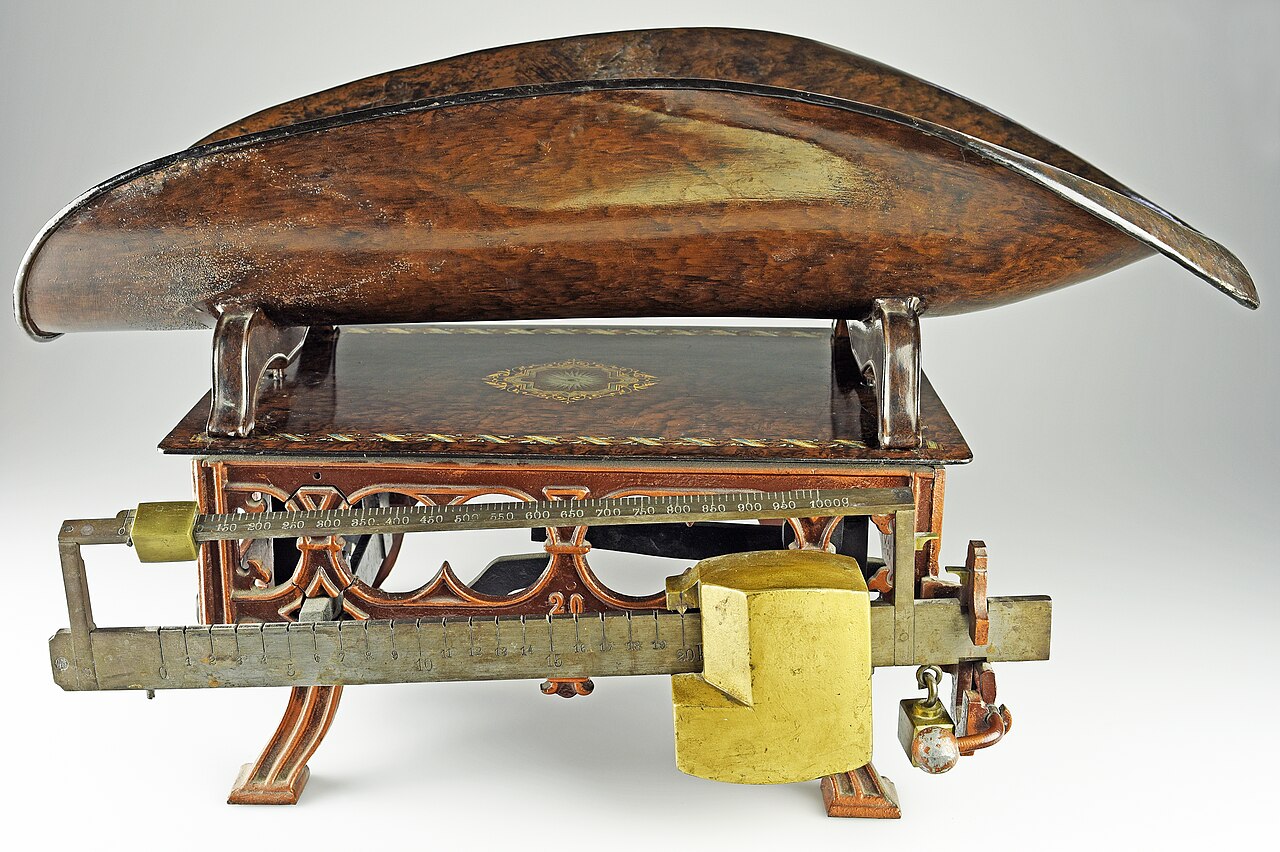
- The scale in the photo was bought for Gothenburg's first children's hospital, which opened in 1859. It weighs a baby the way a market scale weighs flour, by sliding brass weights along a marked beam.
- Birthweight and Breastfeeding Shape Patterns of Biological Aging Across Adult OrgansAging Cell, 9 October 2026 · The study. Open access, read in full; supporting tables not read
- Full text on PubMed Central (PMC13650733)US National Library of Medicine · Version read for this item
- PubMed record (PMID 42852525)US National Library of Medicine · Abstract and authors
- Low birth weightWorld Health Organization, Nutrition Landscape Information System · Definition of low birthweight
- BreastfeedingWorld Health Organization · Breastfeeding recommendations
- Weighing scales for newbornsWikimedia Commons · Image, CC BY 4.0, photo by Thomas Gütebier, Medicinhistoriska museet, VGR
General information, not medical advice. This study shows associations, not cause and effect, and the organ 'ages' it uses are research measures, not clinical tests. Decisions about feeding a baby are personal and depend on your circumstances; talk to a doctor, midwife or lactation consultant about yours, and to a doctor about any concern over your own health.
Analysis by NutroPractic from the sources listed. Written for general readers; it does not replace advice from your own doctor.
From our articles
Read, then eat a little better
Plain-language guides on nutrition and wellness, backed by research.

Global data
Diabetes, obesity, child malnutrition and hunger, 1980 to 2050: what the numbers show
How diabetes, obesity, child malnutrition and hunger have changed since 1980, with sourced figures and a basic projection to 2050. Click a condition to explore the chart and its facts.
5 Oct 2026

Indian kitchen
Rice, roti and blood sugar: building a balanced Indian plate with the ICMR-NIN 2024 guidelines
About one in nine Indian adults has diabetes and many more have prediabetes. You don't have to give up rice or roti. How the ICMR-NIN Dietary Guidelines for Indians (2024) suggest building a plate, plus simple habits that help keep blood sugar steady.
3 Oct 2026

Micronutrients
Vitamin D and B12: two common gaps, from northern winters to vegetarian kitchens
Vitamin D runs low in Canadian and European winters, and surprisingly often in sunny India too. Vitamin B12 is a risk for vegetarians, people over 50 and people on certain medicines. Who is at risk, what the official advice is in North America, Europe and India, and where to get both.
3 Oct 2026
Newsfeed for your website
Want this feed on your website?
Add it to any site with one copy-and-paste snippet. No sign-up, and it updates itself every hour.
Start with a virtual consultation
Tell Dr. Triveni what you want to change. You will leave with a clear next step, whether you are in Toronto, London, New York or Chennai.