Probiotics · October 10, 2026
A probiotic for psoriatic arthritis, tested against a dummy powder for 12 weeks. More people got better on the dummy
Doctors in Austria gave people with psoriatic arthritis an everyday shop-bought probiotic or a look-alike placebo to stir into water each morning. The bacteria reached the gut in most of those taking it, yet joints, skin, gut-leakiness markers and the microbiome looked no different from placebo. The same team's earlier, unblinded pilot had looked promising, which is part of the story.
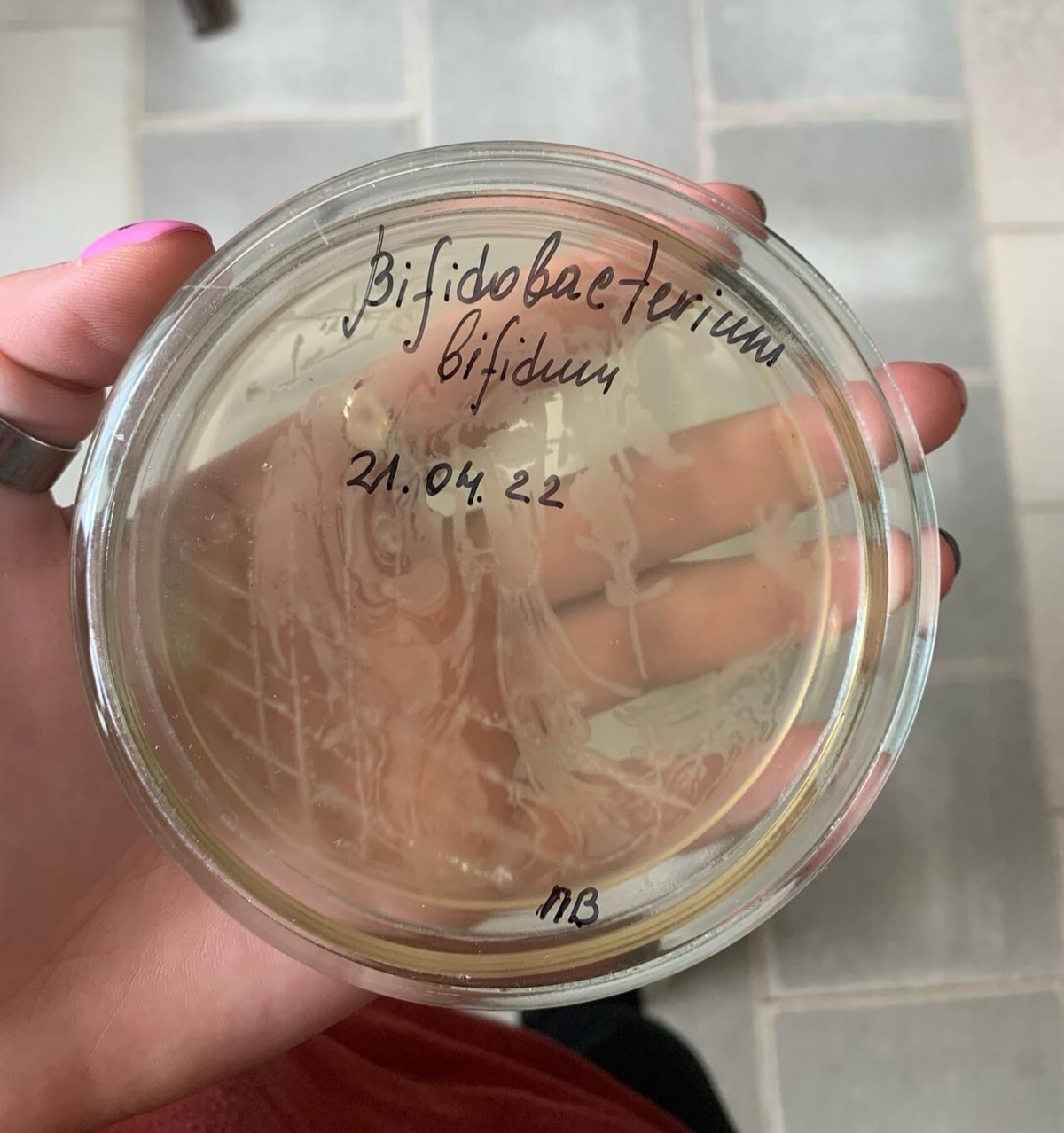
Psoriatic arthritis is the joint disease that comes with psoriasis: swollen fingers and toes, sore tendons, stiff backs and, often, the skin plaques too. Rheumatologists have grown interested in the gut, because about one in five people with the condition has quiet, symptom-free bowel inflammation and many have an unusual mix of gut bacteria. Many patients have drawn their own conclusion and take a probiotic. At the Medical University of Graz in Austria, a team noticed that a lot of their patients were using the same over-the-counter powder of Lactobacillus and Bifidobacterium strains, and an open-label pilot they ran in 2020 suggested it helped. So they tested it properly.
The trial, published online in Rheumatology on 5 October 2026, was double-blind: neither patients nor doctors knew who was getting what. Between November 2020 and September 2022, 66 adults with moderately active disease, all on a stable treatment for at least 12 weeks, were randomised to the probiotic or a placebo powder that looked, tasted and smelled the same. Each took a dose stirred into a glass of water once a day on an empty stomach for 12 weeks. Five people turned out to have been enrolled by mistake because of an error calculating their disease score, and four dropped out, which left 56 in the main analysis: 30 on the probiotic and 26 on placebo.
The goal was to bring disease activity down to low or remission on a composite score called PASDAS, without needing a change of medicine. That happened for 13 of 30 people on the probiotic (43%) and 17 of 26 on placebo (65%). The gap could be chance, but it ran the wrong way for the probiotic, and it did so in every check the authors made: counting the five wrongly enrolled people, filling in missing data statistically, or looking only at probiotic takers whose stool showed the bacteria had arrived (19 of the 23 tested). Swollen joint counts, blood inflammation, gut-leakiness markers such as zonulin, immune cells and the stool microbiome showed no difference between the groups either. Side effects were about as common on both: 19% on the probiotic and 21% on placebo.
Why did so many placebo takers improve? The authors point out that people with moderate rather than severe disease cross the line into 'low activity' more easily, and that the parts of the score that moved most were pain and patients' own rating of how they felt, which shift for many reasons besides inflammation. That also helps explain why the pilot, where everyone knew they were on the probiotic, saw 60% respond. The trial was small, at one centre, all participants were White, it tested a single product for three months, and the groups weren't perfectly matched at the start (the probiotic group was older, had had the disease longer and used more biologic drugs). The study was paid for by an Austrian public research programme; one co-author has had research grants from probiotic makers. What it shows is narrow but useful: this common kind of probiotic, taken for three months, did not calm psoriatic arthritis better than a dummy.
Multispecies probiotic against placebo in psoriatic arthritis
66
Adults with moderately active psoriatic arthritis randomised at one Austrian centre; 56 in the main analysis
12 weeks
One dose a day of an over-the-counter Lactobacillus and Bifidobacterium powder, or a look-alike placebo, stirred into water
43% vs 65%
Reached low disease activity or remission without a change of medicine, probiotic against placebo (13 of 30 against 17 of 26)
19 of 23
Probiotic takers whose week-12 stool sample contained at least one of the product's strains; none in the placebo group
No difference
In gut-leakiness markers (zonulin, calprotectin, alpha-1 antitrypsin), immune cells or the stool microbiome
60% vs 20%
The response rates the team expected, probiotic against placebo, when planning the trial from their earlier pilot
Figures are from the accepted manuscript of the open-access paper in Rheumatology (published online 5 October 2026), read in full. The difference in the main result was not statistically significant (p = 0.167; odds ratio 0.4, 95% confidence interval 0.13 to 1.18), so the right reading is 'no benefit shown', not 'the probiotic made things worse'. Counting the five people enrolled in error gives 45% against 60%. Side effects were counted over 24 weeks, including an optional open-label phase in which everyone could take the probiotic.
- The agreed scientific definition of a probiotic, set out by an international panel in 2014, is live microorganisms that give a health benefit when taken in adequate amounts. A product can contain live bacteria and still not meet the second half of that definition for a given condition.
- This isn't the first gut-bacteria treatment to disappoint in psoriatic arthritis. In a 2021 Danish trial of 31 patients, a single faecal transplant from a healthy donor led to treatment failure in 60% of patients, against 19% after a sham procedure.
- The placebo response in earlier drug trials of biologic medicines for psoriatic arthritis was about 4 to 16%, the authors note. Those trials enrolled people with more active disease.
- The paper quotes a market estimate putting worldwide probiotic sales at about 88 billion US dollars in 2023, forecast to reach 220 billion by 2030.
- Lifestyle does seem to matter in psoriatic disease. A 2024 Greek study of 355 patients found that those who exercised more had lower disease activity, and closer adherence to a Mediterranean diet went with milder skin disease, though a snapshot study like that can't show cause and effect.
- Efficacy and safety of probiotic supplementation in psoriatic arthritis - a randomized controlled trialRheumatology, published online 5 October 2026 · The study (open access, CC BY); methods, results, discussion, funding and competing interests read in the full accepted manuscript
- PubMed record and abstract (PMID 42832303)PubMed · Abstract, authors, publication date
- The MEDIPSA Clinical Trial (NCT04588623)ClinicalTrials.gov · The trial registration given in the paper
- Effects of Probiotic Strains on Disease Activity and Enteric Permeability in Psoriatic Arthritis: A Pilot Open-Label StudyNutrients, 2020 · The same team's earlier open-label pilot
- The International Scientific Association for Probiotics and Prebiotics consensus statement on the scope and appropriate use of the term probioticNature Reviews Gastroenterology & Hepatology, 2014 · Background: the definition of a probiotic
- Safety and efficacy of faecal microbiota transplantation for active peripheral psoriatic arthritis: an exploratory randomised placebo-controlled trialAnnals of the Rheumatic Diseases, 2021 · Background: the faecal transplant trial; figures from the abstract
- Mediterranean diet and exercise are associated with better disease control in psoriatic arthritisClinical Rheumatology, 2024 · Background: diet, exercise and disease activity; from the abstract
General information, not medical advice. This trial tested one multispecies probiotic for three months in adults with moderately active psoriatic arthritis who stayed on their usual treatment; it doesn't tell us about other strains, other conditions or longer use. Don't stop or change arthritis medicines in favour of supplements, and talk to your rheumatologist before adding one, especially if you take drugs that affect your immune system.
Analysis by NutroPractic from the sources listed. Written for general readers; it does not replace advice from your own doctor.
Newsfeed for your website
Want this feed on your website?
Add it to any site with one copy-and-paste snippet. No sign-up, and it updates itself every hour.
Start with a virtual consultation
Tell Dr. Triveni what you want to change. You will leave with a clear next step, whether you are in Toronto, London, New York or Chennai.