Fermented drinks · October 10, 2026
A bottle of kombucha a day for 12 weeks of running: the antioxidant score it was meant to lift didn't move, and the four results that did faded on a stricter test
Kombucha is sold on its antioxidants, and hard exercise is one of the few everyday things that reliably stirs up oxidative stress, so new runners looked like the ideal people to test it on. A Brazilian team gave 90 of them green tea kombucha, a grape-skin version or nothing extra, and trained them three times a week. The headline measure stayed flat. What makes the paper worth reading is how plainly it says so.
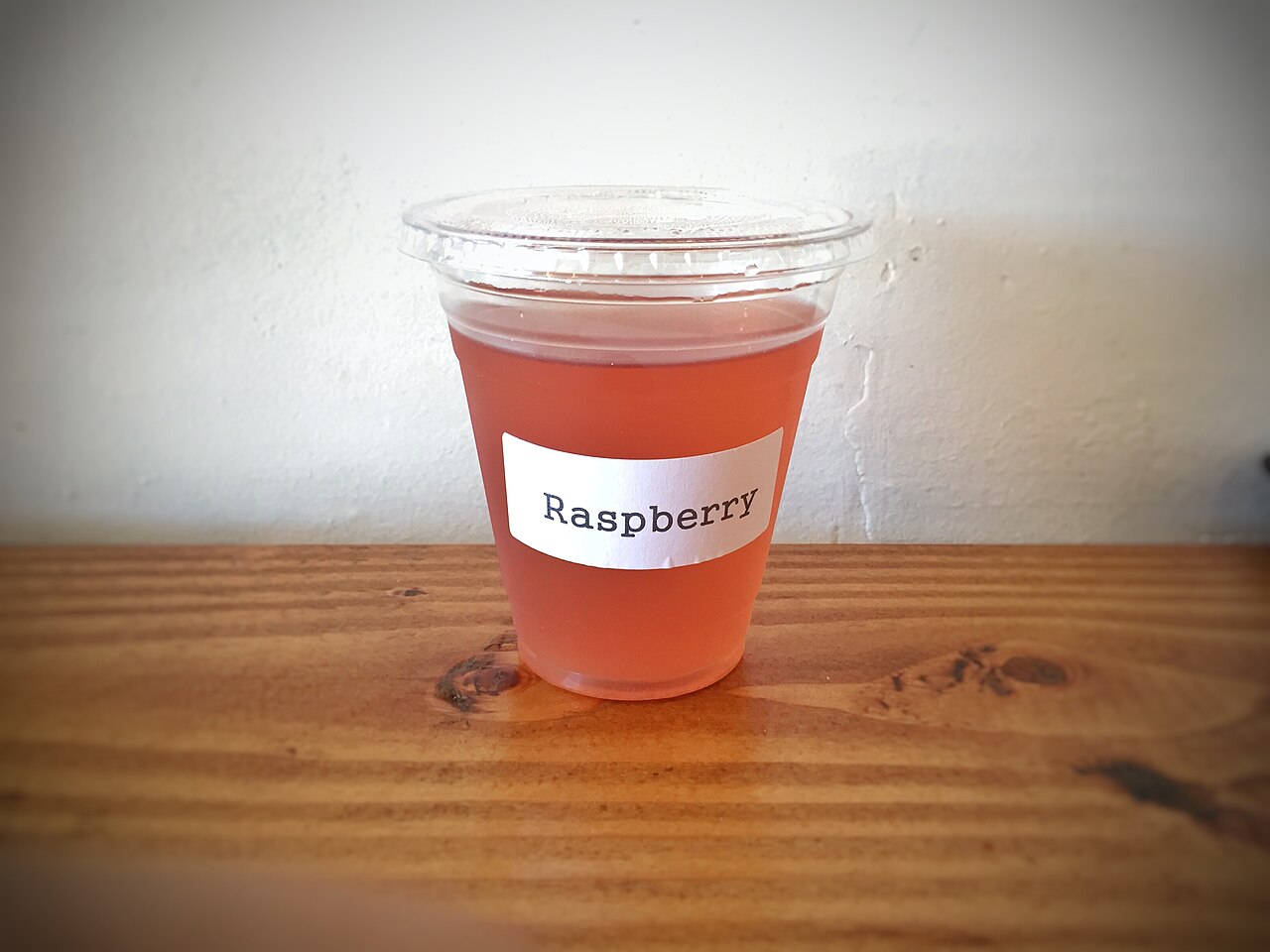
Kombucha is sweetened tea left to ferment with a mat of bacteria and yeast, and it comes out sour, lightly fizzy and full of the plant compounds that tea is known for. That is the basis of its reputation as an antioxidant drink. Researchers at the Federal University of Viçosa in Brazil, who brew their own for research, wanted to see whether that reputation holds up where it should matter most: in people whose bodies are under fresh physical strain. Their trial appeared online in the Journal of Food Science on 26 September 2026, and they describe it as the first randomised trial of kombucha in runners.
They started with 1,120 people who filled in an online form and ended up randomising 90: healthy adults aged 18 to 45, about 25 on average, at a normal weight, not very active, and not in the habit of drinking kombucha, green tea or other fermented foods. Thirty got a 200 ml bottle of green tea kombucha every day, thirty got the same kombucha with a grape-skin extract stirred in (the team hoped the extra polyphenols would add to the effect), and thirty were the control group. Everyone ran on an athletics track three times a week for 12 weeks under supervision, with the distance creeping up each week. Blood was taken at the start and the end, both after an overnight fast and within ten minutes of running to exhaustion.
The measure the trial was built around is called FRAP, a lab test of how much antioxidant power a sample of blood plasma has. After 12 weeks it was no different in the kombucha groups than in the controls, fasting or after exercise. A single bottle drunk an hour and a half before the first all-out run did nothing measurable either: white blood cells surged and settled the same way in all three groups. The authors say this directly in the abstract, which begins its results with the words 'not associated with significant changes in the primary outcome'.
Four secondary results did cross the usual line. In the plain kombucha group, neutrophils went from about 52% to 59% of white blood cells and lymphocytes fell from 38% to about 31%, shifts the other two groups didn't show (P = 0.026 and 0.023). An antioxidant enzyme, catalase, held up slightly better than in the controls. And a marker of fat damage measured after exercise, MDA, fell by 54% in that group. Each of those comes with a catch the paper spells out. The actual numbers of neutrophils and lymphocytes didn't differ between groups, only their shares. The catalase difference was not backed by the test that asks whether groups changed differently over time (P = 0.157). The MDA result passed that test but no pair of groups differed when compared head to head. And when the team corrected for the number of things they had measured, none of the four stayed significant. They call them exploratory.
The grape-skin version is its own small lesson. It had more phenolic compounds than the plain kombucha, 0.94 against 0.72 mg per ml, and it produced none of the four signals. More of the ingredient that is supposed to do the work, and less to show for it. The authors suggest the plain drink's higher acidity may matter for absorption, but they did not measure how much of anything reached the blood, and say so.
The rest is our reading. Nobody was given a dummy drink, because, as the authors put it, kombucha's sourness is impossible to disguise; everyone knew what they were getting, though blood counts are hard to sway by expectation. Twenty-seven of the 90 dropped out, leaving exactly the 21 per group the sums required, and the losses were lopsided: the grape group went from 18 women to 10. The trial was also sized to catch a large effect, borrowed from a grape juice study in athletes, so a modest benefit could have gone unseen. That is a fair reason not to read this as proof that kombucha does nothing. But the clearest finding in the paper has nothing to do with the drink. Twelve weeks of running changed nearly every marker in every group, and not in the tidy direction supplement adverts imply: hydrogen peroxide went up and catalase went down across the board. Training was the big lever. Each bottle, for what it's worth, carried about 9 g of sugar. The work was paid for by Brazilian public research agencies and the authors declare no conflicts of interest.
Green tea kombucha, with or without grape-skin extract, during 12 weeks of running training in 90 beginners (Viçosa, Brazil)
90 → 63
People randomised (30 per group) and people who finished (21 per group), from 1,120 who answered the first questionnaire
200 ml
Kombucha per day for 12 weeks, alongside three supervised runs a week; the control group ran without it
No change
FRAP, the plasma antioxidant measure chosen in advance as the main outcome, fasting or after exercise
52% → 59%
Neutrophils as a share of white blood cells in the plain kombucha group (P = 0.026); absolute counts did not differ between groups
0 of 4
Nominally significant secondary results that stayed significant after correction for multiple testing
9.3 g
Sugar in each 200 ml bottle of the plain kombucha (sucrose, fructose and glucose added together)
Figures are from the full open-access paper (Journal of Food Science, published online 26 September 2026): its methods, tables 1, 2 and 4, results and limitations. The trial was open-label with three parallel arms, allocated by minimisation on sex, age, BMI and activity level; only the laboratory staff were blinded. On the two test days the control group drank 200 ml of water in place of kombucha; the paper describes no substitute drink for them during the 12 weeks. Average age at the start was 25.7 (control), 25.2 (kombucha) and 25.6 (kombucha with grape skin). Dropouts: 9 for missing training sessions, 5 stopped drinking the kombucha, 5 for illness or medication, 3 for injuries, 5 for personal reasons. Women: 21, 21 and 18 at the start; 15, 15 and 10 at the end. Fasting neutrophils in the kombucha group went from 52.2% to 59.0% and lymphocytes from 38.0% to 30.8%; in the control group they were 52.7% and 53.0%, and 37.9% and 36.3%. Lymphocyte interaction P = 0.023. Catalase: group effect P = 0.037, group-by-time interaction P = 0.157 (abstract). Post-exercise MDA: interaction P = 0.033, no significant pairwise differences; the 54.19% fall is the paper's figure for the kombucha group. The paper's oxidative stress values are shown in a figure, so we quote no FRAP numbers. Sugar per bottle is our sum of the paper's per-serving figures (4.45 g sucrose, 2.51 g fructose, 2.30 g glucose); the grape version works out at about 7.5 g. Phenolic content is in gallic acid equivalents. The sample size assumed an effect size of 0.80 with 80% power, which needs 21 per group. The paper reports no adverse events judged to be related to kombucha. The points about the lack of a placebo, the uneven dropout, the size of effect the trial could detect and training outweighing the drink are our own reading of the published methods and tables. Trial registration: RBR-6hxvph7 (Brazilian Registry of Clinical Trials).
- The rubbery disc that floats on fermenting kombucha is mostly cellulose, spun by acetic acid bacteria. Brewers call it a SCOBY, short for symbiotic culture of bacteria and yeast.
- In this trial a single run to exhaustion pushed the white blood cell count from about 5,800 to about 9,000 per cubic millimetre within minutes, in people who had drunk water. It is a normal response: the cells are flushed into the bloodstream from the vessel walls and the spleen.
- The study's kombucha fermented for five days at 25 °C. The finished drink contained about 2 g of acetic acid per litre, the same acid that makes vinegar sour, though vinegar has roughly 20 times more.
- Each millilitre of the plain kombucha held around 20 million live lactic acid bacteria, 11 million acetic acid bacteria and 16 million yeast cells.
- FRAP stands for 'ferric reducing antioxidant power'. The test measures how readily a sample turns one form of iron into another, which is a chemical property of the liquid and not a direct reading of anything happening inside cells.
- Acute and Chronic Effects of Green Tea Kombucha With and Without Grape Skin Extract on Immune and Oxidative Stress Markers in Beginner Runners: A Randomized Controlled TrialJournal of Food Science (Wiley, Institute of Food Technologists), 26 September 2026 · The study (open access, CC BY 4.0); methods, tables, results, limitations, funding and conflict statements read in full
- Full text on PubMed Central (PMC13615550)PubMed Central · The full text used for the figures
- PubMed record and abstract (PMID 42799570)PubMed · Abstract, authors, publication details
- Trial registration RBR-6hxvph7Brazilian Registry of Clinical Trials (ReBEC) · The registration given in the paper; we did not check the registry entry against the paper
General information, not medical advice. This was a small open-label trial in healthy young adults that measured blood markers only, so it can't show that kombucha improves or harms health, immunity or recovery from exercise. Home-brewed kombucha can be contaminated or very acidic, and unpasteurised kombucha is generally not advised in pregnancy or for people with a weakened immune system; talk to your doctor or a registered dietitian if you have a medical condition or are unsure.
Analysis by NutroPractic from the sources listed. Written for general readers; it does not replace advice from your own doctor.
Newsfeed for your website
Want this feed on your website?
Add it to any site with one copy-and-paste snippet. No sign-up, and it updates itself every hour.
Start with a virtual consultation
Tell Dr. Triveni what you want to change. You will leave with a clear next step, whether you are in Toronto, London, New York or Chennai.