Gut bacteria · October 10, 2026
Most people in the West can't turn soy into equol, the compound that may be doing soy's best work. Twelve trials tried to change that with soy, probiotics, bran and seaweed. None of them managed it
Whether soy does much for you may depend less on the soy than on who is living in your gut. Some people's bacteria turn one of soy's compounds into something stronger, called equol; most Westerners' don't. For 25 years researchers have tried to switch that ability on. A review has now lined up every randomised trial that tried, and the score is twelve attempts, no conversions. The reviewers' explanation for the probiotic trials is almost embarrassingly simple.
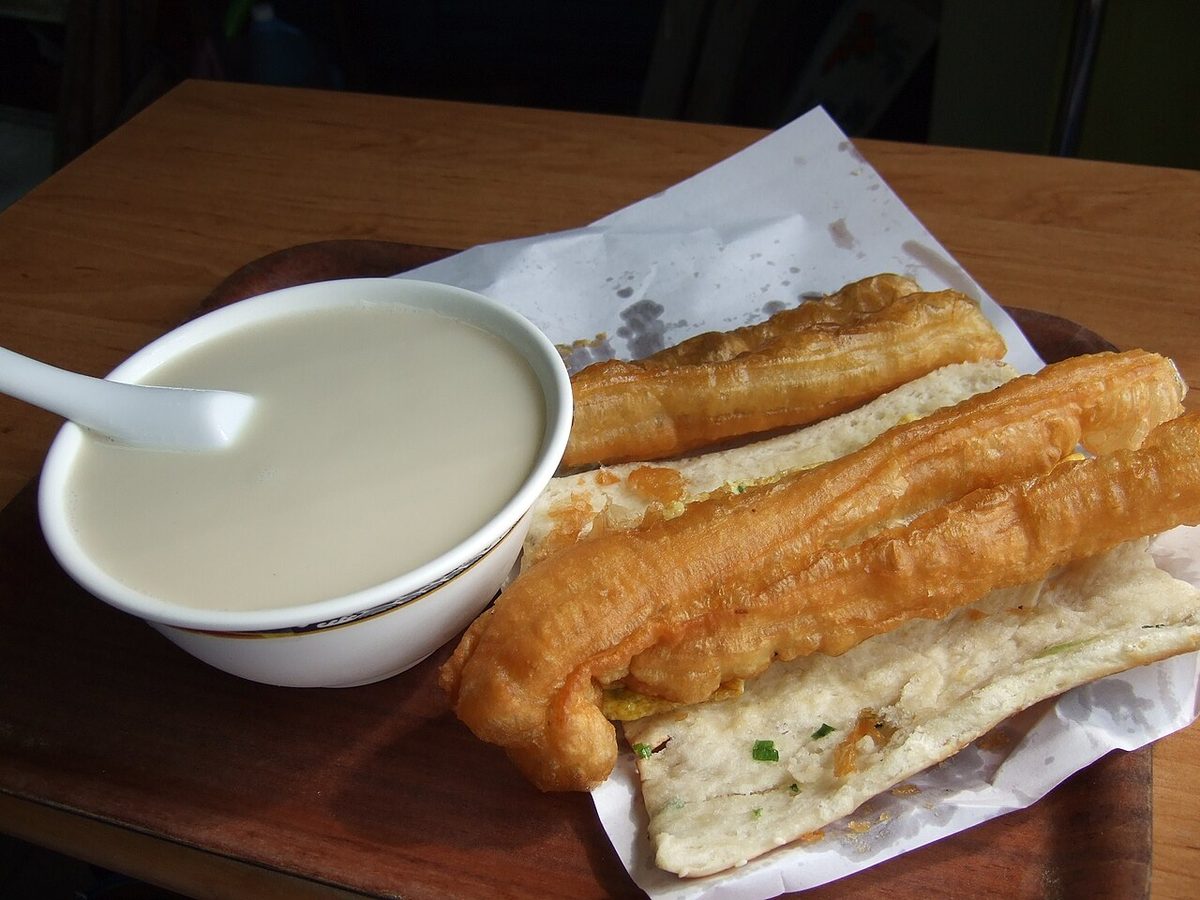
Soy has a strange record in research. In studies that simply watch what people eat, mostly in East Asia, soy eaters tend to do well on hot flushes, heart health and memory. In randomised trials in Europe and the United States, where people are handed soy or a dummy, the results have been all over the place. One explanation has been around for more than twenty years. Soy contains a compound called daidzein, and certain gut bacteria turn it into another one, equol, which acts more strongly on the body's oestrogen receptors and is absorbed more easily. Not everyone has the right bacteria doing the right work. According to the figures the reviewers quote, up to 70% of East Asians produce equol, against 20 to 30% of people in Western countries. If equol is where much of the benefit comes from, most Westerners in a soy trial were never going to get it.
So the obvious next question is whether a non-producer can be turned into a producer. A team led from the University of Pittsburgh, with colleagues in Japan and elsewhere in the US, went looking for every randomised trial that measured people's equol status before and after trying something. Their review came out in Food Science & Nutrition on 27 September 2026. From 503 records they ended up with 12 trials: seven from the US, two from Australia and one each from the UK, Japan and Brazil. The review counts 730 people enrolled, 624 of them women. Six trials took only women past the menopause.
The trials tried most of the sensible ideas. Three simply gave soy isoflavones, for ten weeks, six months and two and a half years. Five added probiotic capsules or yoghurt, or a prebiotic fibre meant to feed helpful bacteria. Two used soy that had already been fermented. One added wheat bran, one seaweed. The shortest was a single serving of soy biscuits followed by 48 hours of urine collection. The answer was the same every time: no intervention turned non-producers into producers to a degree that statistics could tell from chance. The nearest thing to a success was a two-week Australian trial of fermented soy milk in which two of eight women became producers, and that wasn't enough to count either. A few trials saw people who already made equol make somewhat more of it, on probiotics or seaweed, but that is a different thing from switching it on.
The reviewers' reading of the probiotic trials is the most useful paragraph in the paper. The capsules were mostly Lactobacillus acidophilus and Bifidobacterium longum, the ordinary shop-shelf strains. Those bacteria can do the first step, snipping a sugar off soy's isoflavones so that daidzein is released. They cannot do the next steps, the ones that turn daidzein into equol. That job belongs to a small group of oxygen-shy specialists with names like Slackia isoflavoniconvertens and Adlercreutzia equolifaciens, and no trial gave anybody those. Even having them may not be enough: studies the review cites have found equol-making bacteria in producers and non-producers alike, and stable producers tend to have a more varied gut community all round. The reviewers think the wider neighbourhood decides whether the specialists get to work.
They are also frank about how weak the twelve trials are. None was rated good quality; seven were fair and five poor. All but one skipped the calculation of how many people would be needed to see an effect. Five lost more than a fifth of their volunteers, and one lost 55%. Only four used the standard test of feeding everyone soy for three days before measuring. So the authors refuse to call the question closed. 'These negative findings should not be interpreted as evidence that conversion is biologically impossible,' they write, and they point to studies without a control group in which it seemed to happen, including one where eight of 20 non-producers were making equol after 16 weeks of drinking a litre of soy milk a day.
The rest is our reading. The best finding in the review cuts against that hopeful note. In the longest trial, 350 older women took soy isoflavones or a placebo for two and a half years, and some women's equol status flipped back and forth, on the placebo as well. A Japanese study the review cites found that about a quarter of 498 adults did not hold the same status across four years of annual tests. If people drift in and out by themselves, then a study with no comparison group will always find some who 'converted', and the litre-a-day result can't be told apart from that drift. The same goes for two women out of eight. The dose-and-time argument also has a hole in it, since the two longest randomised trials gave soy alone for six months and for two and a half years and saw nothing. And one step further back, the case that equol is the active ingredient rests mostly on comparing producers with non-producers in East Asia. The reviewers themselves note that producers may simply be people with healthier, more varied gut bacteria, in which case equol would be the sign of a good gut and making more of it would not buy the benefit. A US trial that gives equol itself to older adults is under way, and the review's senior author is first author of the paper describing its design. That trial, more than another probiotic study, is the one that could say whether any of this matters. The review was funded by the US National Institutes of Health and the authors declare no conflicts of interest.
Randomised trials that tried to turn people who don't make equol from soy into people who do (systematic review, 12 trials)
12
Randomised trials found from 503 records, with 730 people enrolled and 653 finishing, as the review's text counts them
0
Trials in which the intervention significantly converted non-producers into equol producers
20–30% vs up to 70%
Share of people who produce equol in Western and in East Asian populations, as quoted by the review
0 of 12
Trials rated good quality on the US NHLBI checklist: seven were rated fair and five poor
4 of 12
Trials that used the standard three-day soy challenge before measuring who was a producer
48 hours to 2.5 years
Range of trial lengths, from a single serving of soy biscuits to 30 months of daily isoflavones
Figures are from the full open-access review (Food Science & Nutrition, published online 27 September 2026): its methods, results, tables 1 and 2, discussion and limitations. The supplementary tables (quality scoring, measurement methods, the non-randomised studies) were not read. Trials by intervention: soy isoflavones alone (3: 104 mg a day for 10 weeks in a UK trial, 50 mg a day for 6 months, 90 mg a day for 2.5 years), probiotics or prebiotics with or without soy (5, lasting 2 to about 8 weeks), fermented soy (2: a single dose, and 14 days), wheat bran with soy protein (1) and seaweed with isoflavones (1, 7 weeks). Eight of the 12 were crossover trials; eight enrolled only women. The reviewers did not pool the results into a meta-analysis because the trials were too few and too different. The paper's own numbers do not always agree: the text gives 730 enrolled (624 women), while the sample sizes listed in its table 1 add up to 810 (704 women) by our sum; the abstract says the search covered 1991 to 2025 and the methods say 1994 to January 2026; the text says 14% of postmenopausal and 11% of premenopausal women changed equol status during the two long trials, where table 2 gives 6 to 11% for the premenopausal one; and the discussion describes the isoflavone trials as 'lasting at most 10 weeks' although two of them ran for 6 months and 2.5 years. We use the text's totals and say so. Several entries in the reference list also carry a title that is not the cited paper's (the PubMed identifiers beside them lead to the right papers), so we describe the individual trials only as the review's tables and text do. The non-randomised results mentioned are as the review reports them: 8 of 20 non-producers converting after 1,000 mL of soy milk a day for 16 weeks, 3 of 5 young women after 33 days of soy, and 2 of 10 men after 3 months. The Japanese cohort figure is 26.1% of 498 adults with unstable status across yearly tests over four years. The ongoing US equol trial is registered as NCT05741060. The points about natural drift and uncontrolled studies, the two long soy-only trials, and equol as a possible marker of a healthy gut are our own reading; the last of these builds on a possibility the reviewers raise themselves.
- Vegetarians in Western countries have been reported to produce equol at about four times the rate of non-vegetarians, close to the rates seen in Asia, according to work the review cites. The reviewers think a fibre-rich, plant-heavy diet builds the kind of gut community the equol makers need.
- The standard way to find out whether someone is a producer is to have them eat soy for three days and then measure equol and daidzein in their urine. Only one of the 12 trials used the recommended cut-off for reading that test.
- Adlercreutzia equolifaciens, one of the few bacteria known to make equol, was first described in 2008 after being isolated from human faeces.
- The seaweed trial lost 55% of its volunteers before the end, the highest dropout of the twelve. Its soy dose was set by body weight: 2 mg of isoflavones per kilogram a day, with or without 5 g of seaweed.
- There is a shortcut: equol itself can be taken as a supplement, and a Japanese trial the review cites found it eased hot flushes in postmenopausal women who didn't make their own. The reviewers' point is that a supplement has to be kept up, whereas a converted gut would make equol from ordinary soy foods.
- Converting Equol Nonproducers to Producers: A Systematic Review of Randomized Clinical TrialsFood Science & Nutrition (Wiley), 27 September 2026 · The review (open access); methods, results, tables 1 and 2, discussion, limitations, funding and conflict statements read in full. Supplementary tables not read
- Full text on PubMed Central (PMC13617254)PubMed Central · The full text used for the figures
- PubMed record and abstract (PMID 42807573)PubMed · Abstract, authors, publication details
General information, not medical advice. This is a review of small, mostly short trials, and it does not show that soy foods are unhelpful or that producing equol improves health. Anyone thinking about soy or equol supplements for menopausal symptoms, or who has a hormone-sensitive condition, should talk to their doctor or a registered dietitian first.
Analysis by NutroPractic from the sources listed. Written for general readers; it does not replace advice from your own doctor.
Newsfeed for your website
Want this feed on your website?
Add it to any site with one copy-and-paste snippet. No sign-up, and it updates itself every hour.
Start with a virtual consultation
Tell Dr. Triveni what you want to change. You will leave with a clear next step, whether you are in Toronto, London, New York or Chennai.