Spices and supplements · October 10, 2026
Cadets given cinnamon capsules threw a ball 30% farther in six weeks. Nobody was given a dummy capsule, and some of the sums don't add up
A trial at a military academy in Tehran reports that half a teaspoon of cinnamon a day, with no extra training, made young cadets lighter, fitter and stronger, and that adding it to hard interval sessions beat the sessions alone. Those are large effects for a kitchen spice. The paper's own tables are the best reason to hold off on buying any.
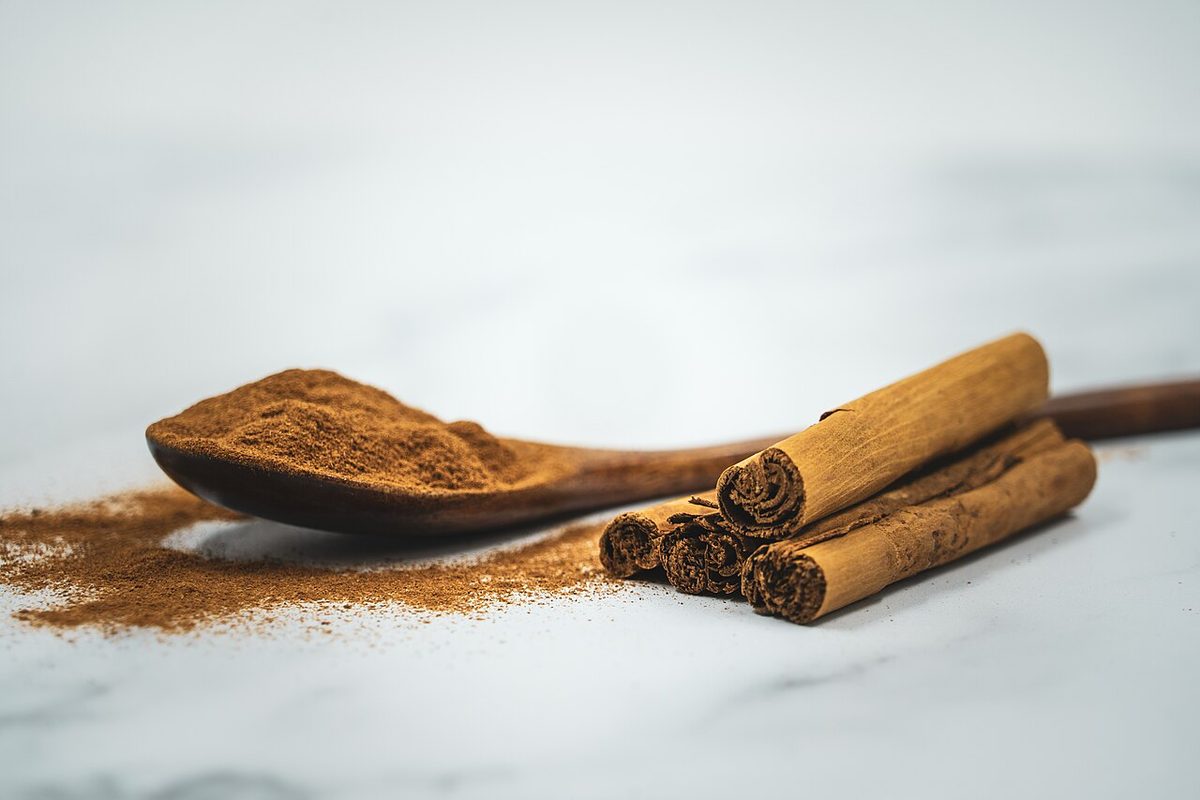
Cinnamon has been tested for years as a help with blood sugar, with mixed results. Its use as a fitness supplement is newer and rests mostly on animal work. Two exercise physiologists at the University of Mohaghegh Ardabili in Iran wanted to know whether it adds anything to Tabata training, the short, very hard interval format of 20 seconds of effort and 10 seconds of rest. Their trial was published online in the Journal of the International Society of Sports Nutrition on 7 October 2026.
They recruited 48 male officer cadets aged 20 to 25 at a military academy in Tehran and randomly split them four ways: Tabata sessions three times a week, cinnamon alone, both together, or neither. The cinnamon was Ceylon cinnamon (Cinnamomum zeylanicum) in capsules, 1.5 g a day in three doses with meals. All the cadets kept eating the academy's food and doing its routine drills. Before and after six weeks they took the six-event fitness test designed by the US Army (deadlift, backward medicine-ball throw, push-ups, a sprint-drag-carry shuttle, leg tucks and a two-mile run, scored out of 600), had their body composition estimated on an electrical impedance scale, and gave blood for irisin, a hormone-like protein that muscle releases during exercise.
Forty-five cadets finished. On the paper's figures every treated group improved and the untreated group stood still. The average test score rose from 430 to 467 with Tabata alone, from 444 to 497 with Tabata and cinnamon, and from 468 to 496 with cinnamon alone, while the control group went from 481 to 479. The cinnamon-only cadets, who did no extra exercise, are reported to have lost 2.2 kg, thrown the medicine ball 2.3 metres farther (7.6 to 9.9 m) and raised their irisin by about a third. The combined group lost 5.7 kg and their body fat reading fell from 21.3% to 17.3%. Food diaries showed no change in how much anyone ate.
That is the part to slow down on. There was no placebo: cadets in the cinnamon groups knew they were swallowing capsules, and the control group swallowed nothing. A fitness test rewards effort, and people who believe they are on something tend to try harder, which is exactly why supplement trials use dummy capsules. The authors list this as a limitation themselves, and say the combined effect should be read as possible or additive, not proven. The four groups also started far apart for a randomised study, from 430 points to 481, with the control group managing about nine leg tucks at the start against two or three in the Tabata group. Groups of nine to thirteen can end up lopsided like that by chance, and although the analysis adjusted for starting values, small uneven groups make shaky comparisons.
Then there are the numbers themselves, and this reading is ours, not the paper's. In the combined group body weight fell by 7% while body mass index fell by 16%. BMI is weight divided by height squared, so in adults who are not shrinking the two percentages have to match. The methods describe six weeks at three sessions a week, which is 18 sessions, but give the total as 24; the food diaries are said to have been collected after an eight-week intervention. The trial gives no registration number, so there is no public record of what the researchers planned to measure before they began. None of this proves the cadets didn't get fitter. It does mean a result this good, a spice with no training matching a good share of what hard intervals achieved, needs repeating with a placebo and a registered plan before anyone leans on it. The work was funded by the Iran National Science Foundation and the authors report no conflict of interest.
Tabata training, cinnamon, both or neither for six weeks in male military cadets
45 of 48
Cadets randomised who finished: 13 on Tabata training, 10 on cinnamon, 13 on both and 9 in the control group. Three left on medical leave unrelated to the study
1.5 g a day
Ceylon cinnamon powder in capsules, split into three doses with meals. No group was given a placebo capsule
468 to 496
Fitness test score out of 600 in the cinnamon-only group, with no added exercise. The control group went from 481 to 479
444 to 497
Score with Tabata plus cinnamon, a 12% rise, against 430 to 467 (under 9%) with Tabata alone
7% and 16%
Reported falls in body weight and in BMI in the combined group. With height unchanged the two should be the same
0
Trial registration numbers given in the paper, which states 'not applicable'
Figures are from the full open-access paper (Journal of the International Society of Sports Nutrition, published online 7 October 2026), tables 1 and 3 and the methods, rounded to whole points for the scores (429.6 to 466.8, 443.6 to 497.2, 467.8 to 496.4, 480.6 to 479.0). Cinnamon-only group: body mass 82.1 to 79.9 kg, standing power throw 7.6 to 9.86 m, irisin 4.8 to 6.3 micrograms per mL. Combined group: body mass 78.2 to 72.5 kg, BMI 23.4 to 19.54, body fat 21.3% to 17.3%. The 7% and 16% are our arithmetic from those averages (5.7 on 78.2; 3.86 on 23.4); the paper's table gives 7.2% and 16.4%. The same mismatch appears in the Tabata-only group (weight down 4.1%, BMI down 11.9%). The count of 18 sessions is ours (six weeks at three a week); the paper says 24. 'Half a teaspoon' is our conversion, taking a level teaspoon of ground cinnamon as about 2.6 g. Body composition came from a bioelectrical impedance device, which the authors note is less precise than a DXA scan and is affected by hydration, which they did not check. The paper says the assessors were blinded; the cadets were not.
- Tabata training is named after the Japanese scientist Izumi Tabata, whose 1996 paper tested seven to eight 20-second all-out cycling bouts with 10 seconds of rest between them. The whole thing takes about four minutes.
- Irisin was described in 2012 and named after Iris, the messenger goddess of Greek myth, because it seemed to carry a message from exercising muscle to body fat. How reliably blood tests measure it in people is still argued over, and the study's authors say human findings have been inconsistent.
- Most cinnamon sold in supermarkets in North America is cassia, not the Ceylon cinnamon used in this trial. Cassia can contain a lot of coumarin, a compound that may harm the liver in sensitive people when taken in large amounts for a long time; Ceylon cinnamon has only traces.
- The cadets took the fitness test in uniform, boots and cap included.
- The researchers worked out beforehand that they needed 44 participants in total across the four groups. They finished with 45.
- Effects of Tabata-style functional training and cinnamon supplementation on army combat fitness test performance, serum irisin, and body composition in military cadets: a randomized controlled trialJournal of the International Society of Sports Nutrition, published online 7 October 2026 · The study (open access, CC BY 4.0); methods, tables, limitations, funding and disclosure statements read in full
- Full text on PubMed Central (PMC13647388)PubMed Central · The full text used for the figures
- PubMed record and abstract (PMID 42841356)PubMed · Abstract, authors, publication date
- Cinnamon: usefulness and safetyNational Center for Complementary and Integrative Health (US National Institutes of Health) · Background on cassia and Ceylon cinnamon, coumarin and what the research on cinnamon supplements does and doesn't show
- Effects of moderate-intensity endurance and high-intensity intermittent training on anaerobic capacity and VO2maxMedicine and Science in Sports and Exercise, 1996 · Izumi Tabata's original paper on the 20 seconds on, 10 seconds off protocol
- A PGC1-alpha-dependent myokine that drives brown-fat-like development of white fat and thermogenesisNature, 2012 · The paper that first described and named irisin
General information, not medical advice. This was one small six-week trial in fit young men, without a placebo, so it doesn't show that cinnamon supplements improve fitness or cause weight loss. Cinnamon in food is safe for most people; supplements are a larger, regular dose. Speak to your doctor before taking them, particularly if you have liver disease or diabetes, are pregnant or breastfeeding, or take regular medicines.
Analysis by NutroPractic from the sources listed. Written for general readers; it does not replace advice from your own doctor.
Newsfeed for your website
Want this feed on your website?
Add it to any site with one copy-and-paste snippet. No sign-up, and it updates itself every hour.
Start with a virtual consultation
Tell Dr. Triveni what you want to change. You will leave with a clear next step, whether you are in Toronto, London, New York or Chennai.