Ancient grains · October 10, 2026
Two flatbreads with about the same calories. Pregnant women given the amaranth one gained 2 kg more
In ten communities in southern Ethiopia, anaemic pregnant women were brought a 200 g flatbread at home every day for six months: maize in five places, amaranth and chickpea in the other five. The amaranth group put on more weight, and far fewer of them ended the trial with the thin upper arm that signals undernutrition. What nobody recorded is how the babies did, and the paper's own numbers don't always agree with each other.
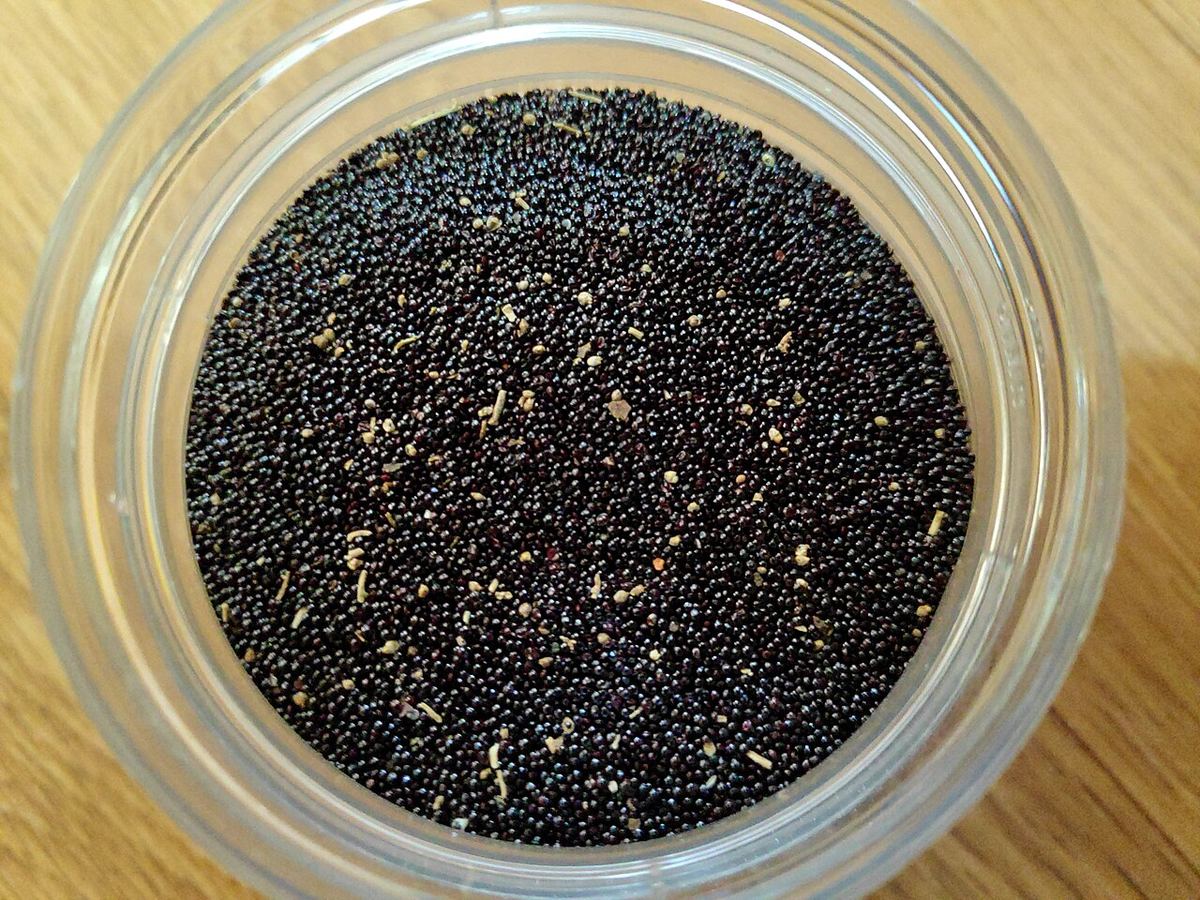
Most trials of pregnancy nutrition test a tablet or a sachet. This one tested bread. In Hawela Lida, a farming district in the Sidama region of southern Ethiopia where maize is the everyday staple, researchers from Hawassa University wanted to know what would happen if part of that staple were swapped for amaranth, a tiny-seeded grain that grows well in dry conditions and carries more protein, iron and calcium than maize.
The trial, published in PLOS One on 8 October 2026, was randomised by community, not by person. Ten kebeles, the smallest local administrative units, were drawn by lot: five got the amaranth bread and five got the comparison bread. In them, 306 women who were less than three months pregnant and had mild to moderate anaemia took part. Every day for six months a distributor brought each woman a flatbread of about 200 g and watched her eat it. One was 70% amaranth and 30% chickpea, the other all maize, and the grains had been soaked, sprouted, roasted and fermented first. The two breads were made to look alike, and the lab analysis found they had about the same energy; the amaranth one had more protein, iron and calcium. Both groups had the same nutrition counselling.
By the end, 293 women were still in the study. Those on the amaranth bread had gained 8.1 kg on average since enrolment, against 5.9 kg on maize. Their upper arms, a quick field measure of how well-nourished someone is, averaged 25.3 cm against 23.7 cm. At the start about 28% of the women in both groups had an arm measurement under 23 cm, the cut-off used for undernutrition. At the end it was 12% in the amaranth group and still 29% in the maize group. And 64% of the amaranth group had gained weight in the recommended range, against 41%.
Those are big differences for one food, so the cautions matter. With only ten communities, a chance difference between a few of them can sway the result, and wealth, media use and diet variety weren't evenly balanced at the start (the analysis adjusted for them). Nobody measured what else the women ate, so we can't tell whether the bread added to their meals or changed them. The trial didn't follow up birth weight or the babies' health, which is the reason weight gain in pregnancy matters at all. The figures also wobble inside the paper: the abstract gives slightly different averages from the results table, and the drop in undernutrition is reported as 59% in one place and 65 to 68% in another. The Nestlé Foundation paid for the study and, the authors say, had no part in running or reporting it. A reasonable reading is that a better staple helped undernourished women in a place where food is short. It says nothing about amaranth for a well-fed pregnancy.
Amaranth-chickpea flatbread against maize flatbread in pregnancy
306
Pregnant women with mild to moderate anaemia in 10 communities; 293 completed the trial
200 g a day
Flatbread delivered to each woman's home for six months: 70% amaranth and 30% chickpea, or all maize
8.1 vs 5.9 kg
Average weight gained from enrolment to the end of the trial, amaranth against maize
25.3 vs 23.7 cm
Average upper-arm circumference at the end, amaranth against maize (both groups started at about 23 cm)
12% vs 29%
Women with an upper arm under 23 cm at the end, amaranth against maize (about 28% of all women at the start)
64% vs 41%
Women whose weight gain was in the recommended range, amaranth against maize
Figures are from the results tables and text of the full open-access paper in PLOS One (published 8 October 2026). The abstract gives slightly different averages (for example 8.4 against 6.1 kg of weight gain), and the adjusted difference in weight gain appears as 2.05 kg in one table and 2.23 kg in the abstract; we have used the results tables and rounded where the paper disagrees with itself. Weight gain was measured from enrolment at about 11 weeks of pregnancy to about 36 weeks or delivery, so it isn't the gain over a whole pregnancy.
- Amaranth is called a pseudocereal: it is cooked and milled like a grain, but the plant isn't a grass the way wheat, maize and rice are.
- The trial's authors point to lysine as one reason amaranth might help. It is an amino acid the body can't make, and amaranth has more of it than maize.
- A tape around the upper arm is one of the simplest nutrition checks there is: it needs no scale and no height measure, which is why the authors call it a tool that fits routine antenatal care where clinics are basic.
- For a woman who starts pregnancy at a normal weight and is carrying one baby, the US Institute of Medicine's recommended gain is 25 to 35 pounds, about 11 to 16 kg, across the whole pregnancy. Women who start underweight are advised to gain more.
- Food makers have tried adding amaranth to pasta for the same nutritional reasons. A 2026 review of 38 studies found it raised protein, minerals and fibre at 10 to 25% of the flour, but it also made the pasta less firm and more of it was lost to the cooking water.
- Effect of amaranth flatbread on maternal anthropometry during pregnancy: Evidence from a cluster-randomized controlled trial in Southern EthiopiaPLOS One, 8 October 2026 · The study (open access); design, results tables, limitations and funding statement read in the full text
- PubMed record and abstract (PMID 42848819)PubMed · Abstract, authors, publication date
- Trial registration NCT06536153ClinicalTrials.gov · The registration number given in the paper
- Weight gain during pregnancyUS Centers for Disease Control and Prevention · Background: Institute of Medicine recommended ranges by weight before pregnancy
- Amaranth fortification in pasta: a systematic review of nutritional enhancement, processing parameters, and sensory attributesFood Chemistry, 2026 · Background: amaranth as a pseudocereal, lysine, and what happens to pasta; from the abstract
General information, not medical advice. This trial was in undernourished, anaemic women in rural Ethiopia and did not measure how their babies did; it doesn't show that amaranth improves pregnancy outcomes, or that gaining more weight is better for every pregnancy. How much weight to gain depends on your weight before pregnancy and your health, so talk to your doctor or midwife before changing your diet in pregnancy.
Analysis by NutroPractic from the sources listed. Written for general readers; it does not replace advice from your own doctor.
Newsfeed for your website
Want this feed on your website?
Add it to any site with one copy-and-paste snippet. No sign-up, and it updates itself every hour.
Start with a virtual consultation
Tell Dr. Triveni what you want to change. You will leave with a clear next step, whether you are in Toronto, London, New York or Chennai.